
The useful question is which part of the day the paddle replaces
I would pay for kayaking at Ang Thong if being close to the island shore is something I want to do, rather than an activity added to make the booking look fuller. A kayak lets me spend part of the visit at water level instead of watching the coastline from the tour boat. That is a distinct reason to choose it. If my main aim is the Wua Talap panorama, the better itinerary may be the one that leaves enough time and energy for the climb.
An optional paddle on a sightseeing cruise and a tour built around kayaking can allocate the same day quite differently. Highsea Tour's current big-boat program reserves approximately 50 minutes at Tum Rang Beach for guests who select kayaking. The wider route includes Wua Ta Lap, Koh Sam Sao, and Mae Ko. That makes the paddle a defined part of a sightseeing day, with equipment and an escorted tutorial, rather than a full day spent in a kayak.
The Blue Stars route starts its paddling around Koh Tai Plao, then visits Mae Ko before Wua Talap. At that last island, the published program offers a choice between another paddle around a neighboring islet and shore activities including the viewpoint. For me, that choice matters more than the number of activities listed at the top of a page. The morning paddle could give me the kayaking I want while leaving the afternoon for the climb. Trying to fit the second paddle and the full viewpoint hike into one activity slot would need a different arrangement.
The speedboat versus big-boat comparison deals with the boat journey. Here, I would compare the actual kayaking stop and what happens while that group is away. A tour description that includes both hiking and kayaking does not establish that every traveler completes every activity.
Mae Ko's lagoon visit is a separate experience
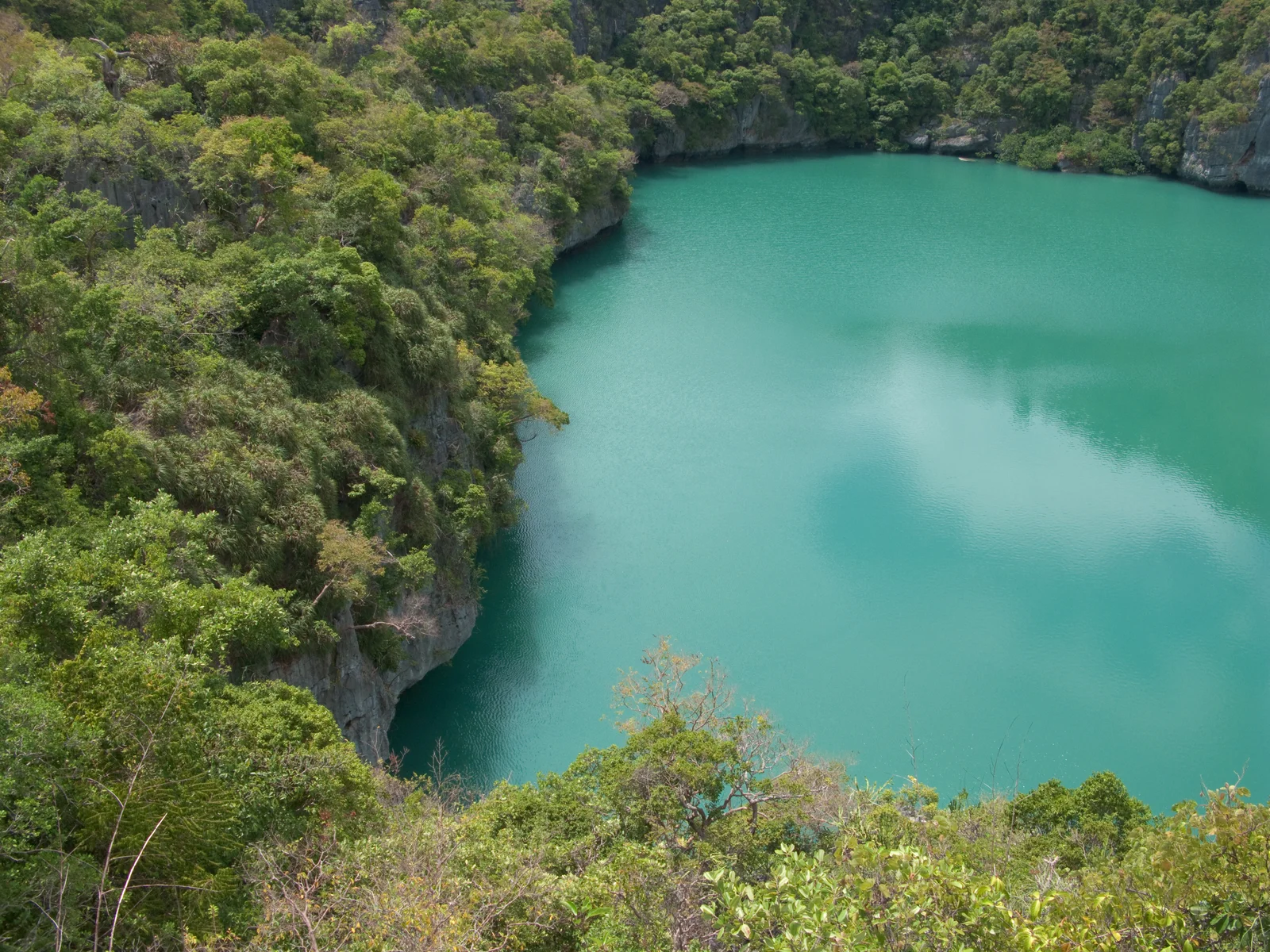
Mae Ko can be confusing because tour descriptions use “lagoon” for different parts of Ang Thong. The Emerald Lake visit is a shore excursion to a viewing platform reached by a short, steep climb. It is separate from Blue Stars' northern kayaking around Tai Plao and from Highsea's Tum Rang segment. A lagoon photograph beside a kayak itinerary does not mean the paddle takes place on that photographed lake.
If the lake view is the main reason I am booking, I would check that Mae Ko is an intended stop and that the shore time suits my pace. The kayak option adds a different perspective elsewhere. It does not remove the stairs involved in seeing the lake, and it does not turn that viewing-platform visit into a water activity. Those distinctions are useful when someone in the group prefers the boat and beach to climbing.
For a photographer, the question is also what kind of image I hope to make. The lake and the broad island panorama are views from land. A paddle is more about the nearby shoreline and the changing angle as the kayak moves. If I want the elevated landscape first, I would protect the land stop instead of booking a longer paddle on the assumption that it covers the same sights.
The Wua Talap climb changes the value of a second paddle
The Wua Talap viewpoint is an active part of the day, not a quick photo stop beside the beach. Footwear suitable for uneven ground makes more sense here than treating the whole excursion as a swimsuit-only outing. Highsea's visitor notes mention fixed ropes and ladders on the route. The useful planning consequence is that the ascent and descent need their own time, including pauses; finishing the climb is only half the return to the boat.
On a route with an afternoon choice, I would decide my priority before leaving the mother boat. Starting a paddle because it is included and then hoping to squeeze in the viewpoint can turn both into a rushed exercise. A morning kayak session followed by an afternoon climb is a coherent combination if the itinerary offers it. Two paddles are more appealing when I am happy to spend the final island stop near sea level.
Energy is only part of the calculation. Returning from a paddle involves getting out, sorting wet belongings, and reaching the next meeting point. A person can be fit enough for both activities but still dislike the transitions. Someone who would enjoy sitting on the beach during that interval does not lose the island scenery by declining the kayak. The better choice depends on what they would do with that time.
For friends with different priorities, the boat's meeting arrangement needs to be clear. One person may choose the viewpoint while another joins a paddle, provided the operator offers that split and both can return to the agreed point. I would ask about that specific arrangement rather than assume everyone must stay together throughout every shore activity.
Beginner-friendly equipment still needs a workable seating plan
Blue Stars uses Malibu II sit-on-top kayaks, with a published capacity of two adults or two adults and one small child. Life vests and dry bags are included. For a pair, the practical question is whether both people are comfortable sharing the effort and coordinating strokes. A tandem can be a pleasant way to do an introductory paddle, but the stronger person should know whether they are expecting to do most of the work.
Traveling solo raises a different question: who shares the kayak? I would want to know whether I will be paired with another guest, accompanied by a guide, or offered a different seating arrangement. The advertised boat capacity does not answer that. Asking before reservation also gives the crew time to plan, instead of leaving the decision until the group is ready to enter the water.
For a first paddle, the briefing should explain how to enter and leave the kayak, how the group stays together, and what to do if someone needs assistance. The presence of a guide does not mean the guide will paddle my boat for me. If I need help with boarding or cannot sustain the proposed activity, I would describe that to the operator and ask what support is available on that particular route.
A non-swimmer needs an explicit participation answer from the operator, including the life-vest fit and the procedure if the kayak tips. Equipment being included is not enough information to decide suitability. The same applies to someone with limited shoulder movement: the relevant issue is the repeated paddling and transfer into a low seat, rather than a generic fitness label.
Highsea excludes pregnant travelers from the whole excursion. Choosing its non-kayaking option would not remove that restriction. This is a participation condition for that operator, separate from deciding how much paddling to do.
Young children need a confirmed answer before the adults choose
Blue Stars' main page excludes children aged three and under from kayaking, while its booking page displays a minimum age of five. A four-year-old falls into that gap. I would get written confirmation for that child's age before relying on the small-child seating description. A free boat ticket for a young child does not establish permission to kayak.
Even when a child is accepted, the useful details are the seating arrangement and whether the supplied life vest fits. The adults also need to know what the child does if one parent joins the paddle and the other stays aboard or ashore. That supervision plan belongs in the decision about the add-on, especially if the itinerary splits kayakers from the rest of the group.
For a family with different comfort levels, a sightseeing cruise with an optional kayaking segment can be easier to evaluate than a tour whose main appeal is repeated paddling. I would compare the non-kayaking activity at the same stop. If the alternative is enjoyable and supervision is straightforward, only the interested family members need the paddle. If the family would spend the interval separated in a way nobody wants, the add-on loses value.
Weather can change the route before it changes the whole trip
A tour can reach Ang Thong without delivering every advertised kayaking passage. An exposed shoreline or a narrow opening may be unsuitable even when another beach stop is workable. The question I would put to the operator is what happens to my paid kayak option if the crew changes the route: a different paddle, another activity, or a price adjustment. The booking terms should answer that before departure.
The exact cancellation policy matters more than a forecast screenshot saved weeks earlier. I would distinguish a canceled excursion from a sailing that proceeds with altered activities, because the refund terms may differ. If kayaking is the whole reason I want this trip, I would prefer a booking whose treatment of that change is clear. If the archipelago visit itself is enough, an adjusted route may still suit the day.
Park access is another separate condition. An operator's available calendar is not proof that every park area is open on that date. For travel near a seasonal closure, I would confirm the actual park access with the operator before choosing the excursion. This is particularly relevant when an overnight stay or an onward connection depends on the trip running; I would not attach an unverified reopening date to that plan.
What I would keep dry, and where I would leave the rest
The phone decision is easier before the kayak briefing. A dry bag needs a proper closure and a place where it stays secured, not just a promise that it is waterproof. I would ask how it is attached and whether the guide recommends taking it along. If carrying the phone would mean stopping to open the bag repeatedly, leaving it in the designated boat storage could make the paddle more enjoyable.
A change of dry clothing is useful for the return crossing, particularly after swimming as well as paddling. The towel and spare layer should stay in a separate dry bag from wet swimwear. Highsea has luggage storage and two bathrooms aboard its big boat, but that does not establish a private changing space at every shore stop. Clothes I can change into easily are more practical than relying on a hurried change beside the kayak launch.
Shoes are another small decision with a real effect. The pair suited to the viewpoint may be inconvenient for water transfers. I would arrange a dry place for walking shoes if I expect to use separate footwear for the paddle. Taking only beach sandals because the tour includes water activities can make the land part harder than it needs to be.
The booking comparison I would actually use
For an occasional paddler, my comparison would start with the duration of the kayak segment and the activity it replaces. A clearly described 50-minute option can be enough if I mainly want to try the shoreline perspective. A tour with a northern paddle and an optional second session makes more sense when kayaking is one of my main interests. I would not pay extra solely because a listing has a longer collection of activity icons.
The total quote also needs to identify the park entrance fee and hotel transfer. Both checked operators describe park-fee inclusion on their direct sites; the confirmation for the selected date should match that wording. I would compare the final amount for the same passengers and pickup address, including any kayak supplement, rather than assume a lower headline price buys the same day.
For hotel-location questions, the Samui tour-pickup guide covers the transfer decision. Chaweng versus Bophut is more useful for choosing the evenings between excursions. A shorter water outing is covered in Koh Tao full day versus Pig Island half day, while the Koh Samui destination guide connects the wider stay.
Operator sources, park reference and photo credits
Checked October 12, 2026: Highsea Tour direct itinerary and equipment notes; Blue Stars direct itinerary, kayak equipment and child rule; Blue Stars booking-page minimum age and inclusions. The main Blue Stars page excludes kayaking for ages three and under; its booking page shows a minimum age of five. The article leaves age four for operator confirmation.
Department of National Parks visitor-safety update, April 15, 2026: park visitor-service and rescue readiness. Kayak participation conditions in this article are tied to the named operators; the park reference does not provide a reopening date.
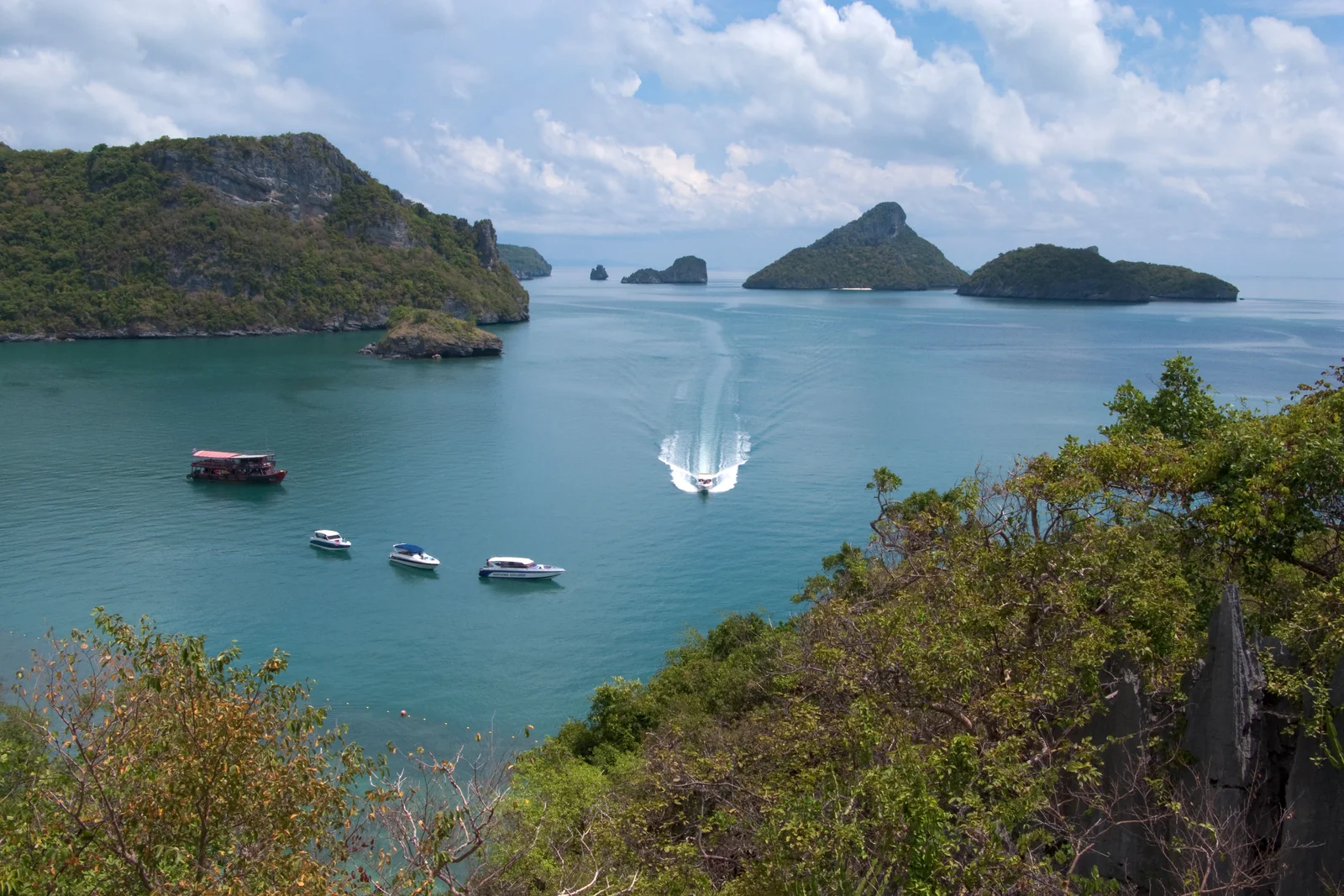
Both photographs are by © Vyacheslav Argenberg, photographer's website, taken March 27, 2009, licensed under CC BY 4.0. Image 1: Mu Ko Ang Thong, Bay, Thailand — original Commons file, showing boats and islands across a bay. Image 2: Mu Ko Ang Thong, Island lagoon, Thailand — original Commons file, showing an island lagoon from above. The Commons descriptions identify the national park; neither image is presented as a photograph of the advertised kayak route.


Adaptations: resized to 1600 pixels wide and converted to WebP; separate 320×200 center-cropped WebP thumbnails. The article layout crops the displayed images. Original author credit and license apply to both sizes.