
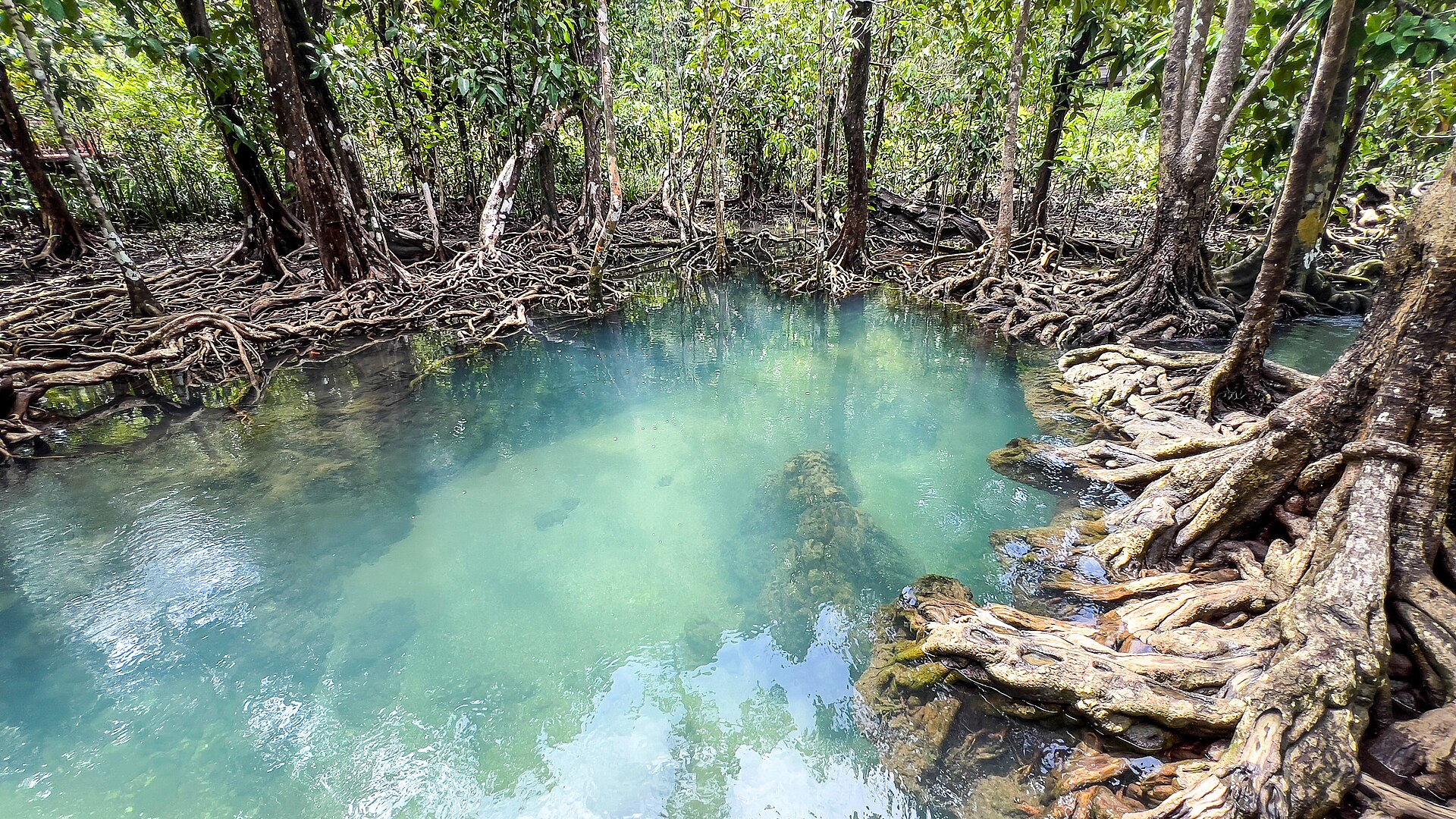

This is not another “which mangrove is prettier?” comparison. The two places ask different things from you. Ao Thalane is an activity first: you sit low on the water, paddle, steer and keep moving. Tha Pom is an ecology stop first: the clear canal, swamp forest, mangrove transition and changing freshwater–seawater mix are the subject, while the boardwalk makes observation the main mode. Tourism Authority of Thailand currently pairs Thalane Bay and Tha Pom in the same Krabi day-trip suggestion, which is useful precisely because they are complementary rather than interchangeable.
If you would be disappointed without a paddle in your hands, choose Ao Thalane. If you want nature to lower the day’s effort rather than raise it, choose Tha Pom. For most travelers already doing Hong Islands, Phi Phi or Railay activities, Tha Pom is the better counterweight. For a traveler whose Krabi wish list specifically says “mangrove kayaking,” Ao Thalane deserves the slot.
Ao Thalane makes you participate in the landscape
Ao Thalane works because the movement is not incidental. The route is built around kayaking through a coastal mangrove environment and limestone scenery. Current operator products still sell it specifically as a kayaking experience, and our separate Ao Thalane half-day vs full-day guide shows why duration matters only after you have decided that paddling is worth the energy.
That active quality is its advantage. You are not looking at a canal from a viewing deck for most of the visit; you are navigating the water. It is a better choice for friends who want to do something together, couples who prefer an activity to sightseeing stops, and solo travelers who want a structured nature experience rather than arranging a car to an attraction and walking it alone.
The cost is predictable: shoulders, sun, humidity, splash, wet shorts, and a higher chance that you will want a shower before the next polished part of the day. If you are choosing between time slots, use the Ao Thalane morning vs afternoon guide instead of assuming “morning is always better.” Tide and the exact operator programme matter.
Tha Pom is lower effort, but it is not generic “freshwater scenery”
Tha Pom Klong Song Nam literally earns its identity from two waters. TAT describes the canal as connected to the sea: when the tide is low, freshwater can dominate and the canal appears exceptionally clear; as the tide rises, seawater moves inland and the water becomes brackish or saline. That change supports a transition between swamp/evergreen vegetation and mangrove ecology. Treating Tha Pom as a static crystal pool misses the point.
The current TAT Japan attraction page describes a boardwalk through the mangrove/swamp environment and lists access from Krabi Town by road. Thailand’s CBT tourism database likewise describes a boardwalk nature walk and notes that only some designated areas permit entering the water. TAT conservation material warns that swimming outside designated areas can damage the fragile root environment. This is a look-and-learn place first, not an “Emerald Pool but quieter” substitute.
Choose Ao Thalane if…
You want an active half-day, kayaking is a named priority, and you are happy to manage splash, sun and post-paddle changing. It also makes sense when the activity itself gives structure to the day and you do not want to plan a separate vehicle-and-walk attraction stop.
Choose Tha Pom if…
You want a gentler nature block, you are traveling with mixed fitness levels, or you are deliberately balancing harder days. It fits especially well when Krabi Town or another road-based inland stop is already in the plan and you want scenery without committing the upper body to another activity.
The energy difference is larger than the distance difference
On a map, both sit north of the busiest Ao Nang–Krabi Town strip. The more useful planning distinction is what happens after you arrive. Ao Thalane asks for sustained participation. Tha Pom asks for walking and observation. If your previous day was Phi Phi and tomorrow is Railay climbing, that distinction can decide whether the trip still feels good by day four.
This is why Tha Pom pairs better with an inland or town-oriented day than with another wet activity. If you are already questioning how many marine days your trip can absorb, read the rainy-day island vs inland guide. If the broader issue is where to sleep during weather-variable weeks, the Ao Nang vs Krabi Town rainy-season comparison and Krabi Town vs Ao Nam Mao in rainy season solve the accommodation layer.
For women traveling light, “how wet do I want to be?” is a real planning question
Ao Thalane is easier when you pack for it deliberately: quick-dry clothes, sun protection, a secure dry bag or operator-provided storage you have actually confirmed, and a plan for your phone. Do not schedule a dress-up dinner or a long transfer immediately after the advertised return time without allowing for delays and changing.
Tha Pom is easier to keep tidy and lower-friction because the core visit is a walk. That matters when you are doing the day with minimal luggage, when hair and clothes need to survive until dinner, or when one person in the group is enthusiastic about nature but not about sitting in a kayak. It is also more forgiving after a hot climbing or temple day—though the boardwalk can still be humid and slippery, so sensible footwear matters.
The canal is tide-influenced. TAT explains that freshwater and seawater conditions change with the tide, which changes the look and ecology of the canal. A high-water visit is not a failed visit; it is a different version of the two-water system. If exceptionally clear freshwater is your priority, check local tide/conditions rather than treating every hour as visually identical.
Opening hours are currently published differently, so build margin
Two official/public tourism sources currently disagree slightly. The Tourism Authority of Thailand Japan page lists Tha Pom at 08:00–17:00, while Thailand’s CBT tourism database lists 08:30–16:30. Because the attraction is locally administered, do not make a tight late-afternoon plan around the outer edge of either window. Arrive comfortably earlier and reconfirm locally if the visit is date-critical.
Likewise, Older fee figures are omitted; confirm the current foreign-visitor entrance fee with the local authority or at the entrance before budgeting. That is more useful than building a budget around stale numbers. If a fee matters to your cash plan, confirm it with the Khao Khram local authority or at the attraction on the day.
Weather changes which choice is safer, but neither is weather-proof
Ao Thalane is more exposed to the decision of whether paddling conditions are acceptable. A competent operator may adjust or cancel for wind, rain, tide or water conditions; the fact that it is “only mangroves” does not make every weather window suitable. Tha Pom removes the kayak decision, but heavy rain can still change walking comfort, water appearance and road conditions. If your trip is in a wet period, preserve a Plan B rather than treating either one as an all-weather guarantee.
For an inland-heavy itinerary, Klong Muang vs Krabi Town for inland days explains why a quieter coast can create repeated road friction. And if you are comparing Tha Pom with the better-known Khlong Thom water attractions, use Emerald Pool vs Hot Springs before forcing all three into one overfilled day. If Tiger Cave is also on the list, the Emerald Pool + Hot Springs: add Tiger Cave? guide is the more relevant workload test.
At Tha Pom, the roots and water system are the attraction. TAT material specifically warns against treating the whole canal as a swimming area; only use designated zones and follow current site instructions. At Ao Thalane, follow the guide’s route and keep wildlife encounters observational rather than trying to approach or feed animals.
Which one fits your trip?
Solo traveler with no scooter: Ao Thalane can be simpler if the exact tour includes your hotel pickup, because transport becomes part of the product. Tha Pom is easy once you have a car/driver, but it is not a walk-out attraction from Ao Nang or Krabi Town.
Couple after two island days: Tha Pom. The trip already has enough salt, boats and wet clothing. Use the contrast.
Friends who want an activity, not sightseeing: Ao Thalane. If you are undecided between mangroves and offshore scenery, compare Ao Thalane vs Hong Islands kayaking rather than switching to Tha Pom.
Mixed-age or mixed-energy group: Tha Pom is usually easier to keep inclusive, provided everyone is comfortable with the boardwalk and current site conditions.
Very short first Krabi trip: Ao Thalane only if kayaking is a priority. Otherwise, Tha Pom works best as a road-day addition rather than stealing a full island day.
Final decision
Choose Ao Thalane for participation. Choose Tha Pom for observation. Ao Thalane is the better standalone experience when you want to remember the act of paddling through mangrove and limestone scenery. Tha Pom is the better balancing experience when you want a quieter ecological stop, a lower-effort day, or a road-based nature contrast to Krabi’s boats and beaches.
The mistake is buying both for the same reason. They are strongest when you give each its real job.
Check the exact current version before you go
Ao Thalane operator schedules can change with tide and weather. Tha Pom is locally managed and currently has slightly different published visitor-hour windows across official/public tourism sources.
Check current Ao Thalane product Check TAT Tha Pom information