

The decision in one sentence
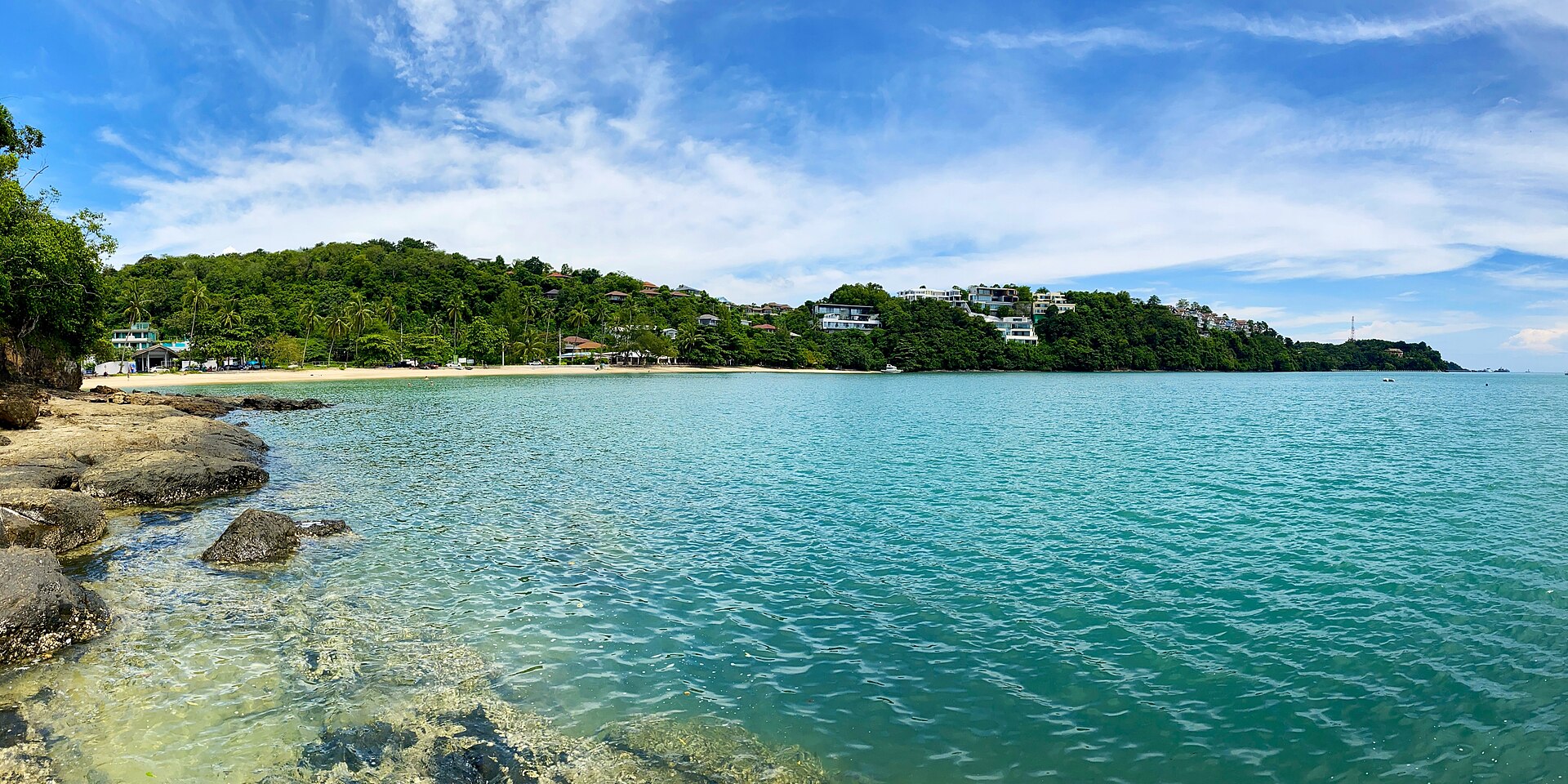
Ao Yon is beach-first; Cape Panwa is peninsula-first. That distinction matters because “Cape Panwa” is not one simple public-beach product. If you go expecting a west-coast-style beach strip with obvious public access, you may be solving the wrong problem.
Both sit on Phuket's quieter south-east side, so it is easy to lump them together as interchangeable escape options. They are not. Phuket Provincial Government describes Ao Yon as a bay with two small beaches separated by rocky headlands. Cape Panwa, meanwhile, is a wider cape area anchored by Phuket Aquarium, viewpoints, hotel zones and several pieces of shoreline rather than one continuous visitor beach.
| Decision | Ao Yon | Cape Panwa |
|---|---|---|
| Main reward | A quieter beach-led pause | A south-east peninsula outing with more non-beach backup |
| Best if you have | 2–4 hours and actually want sand | 3–5 hours and want to combine coast + aquarium/viewpoint |
| Transport style | Return ride should be solved before you relax | Better as a deliberate road route with multiple stops |
| Backup if weather turns | Limited unless you leave the bay | Phuket Aquarium gives the cape a genuine indoor anchor |
| Biggest trap | Assuming every part of the bay is equally good for swimming | Assuming “Panwa Beach” means one obvious freely accessible public beach |
| Best for | Beach reset, couples, slower afternoon | Curious first-timers, mixed-weather day, broader scenic drive |
Ao Yon vs Cape Panwa Phuket: start with what you want to do for 90 minutes
If you picture the next 90 minutes as sitting under shade, reading, walking the sand, looking at anchored boats and doing very little, Ao Yon is the more coherent choice. Phuket's provincial guide calls the bay tranquil and notes the two small beaches; Wichit Municipality also treats Ao Yon as one of the area's principal visitor beaches.
If you picture the next 90 minutes as moving between a viewpoint, an aquarium, the end of the cape and a meal or coffee, Cape Panwa is stronger. Phuket Aquarium is a real operational anchor at the southern end of the cape, not a vague “something nearby” suggestion: its official site currently lists daily opening from 08:30 to 16:30, with ticket sales closing at 16:00.
Pick Ao Yon when the beach is the activity
Do not overbuild the afternoon. Arrive, choose the part of the bay that actually looks comfortable that day, and let the beach earn the time. If you still feel restless after 20 minutes, you probably wanted a route rather than a beach.
Pick Cape Panwa when variety is the activity
The cape is more forgiving when one element disappoints. Haze can weaken a viewpoint; a beach access point may not suit you; weather may turn. You still have the aquarium and the peninsula itself as reasons for the drive.
Check Ao Yon’s swimming conditions before entering
This is where a simple “quiet beach” article can become misleading. Phuket's English provincial page describes Ao Yon as tranquil and popular for relaxing, while Wichit Municipality's visitor page warns that parts of this east-coast shoreline can be muddy and not ideal for swimming. Those two official descriptions are not actually impossible to reconcile: the bay has more than one small beach, conditions vary, and tide changes how an east-coast shore looks and feels.
Use a beach test, not a reputation test
When you arrive, judge the section in front of you. Check the water, local flags or warnings, tide exposure and weather. If the shore does not invite you in, Ao Yon can still work as a sit-and-walk beach break — but do not force a swim because a photo online looked turquoise.
If your trip already has major swim or island days, this becomes easier. Keep those higher-stakes marine experiences for the days built around them — the Racha Yai vs Coral Island guide helps choose a proper island day — and use Ao Yon as the lower-commitment coastal reset it is better at being.
The Cape Panwa trap: “the beach” is not one simple public-access promise
Phuket Provincial Government's Cape Panwa page says there are beaches where visitors can swim, but one access description specifically sends visitors toward Cape Panwa Hotel and says the beach can be reached via the hotel. That is a good reason not to treat Cape Panwa like Kata, Karon or Nai Harn, where the public-beach decision is much more straightforward.
If your only goal is “I want a quiet public beach and I do not want to negotiate access geography,” Ao Yon is easier to understand. If you are happy treating Cape Panwa as a peninsula outing — aquarium, viewpoints, shoreline, food, perhaps a beach if the access is suitable — the ambiguity matters much less.
Cape Panwa wins when you need a weather-proof half-day
A quiet coastal plan can collapse quickly if cloud, rain or uncomfortable shoreline conditions remove the only activity. Cape Panwa has a better fallback structure because Phuket Aquarium is at the tip of the cape and operates as part of the Phuket Marine Biological Center. Its official site describes freshwater, marine, reef, mangrove and deep-sea displays, which means the cape can still be a coherent half-day when beach conditions are not the headline.
That does not make Cape Panwa a universal rainy-day answer. If weather is unsettled across the island, solve the bigger day first with the Phuket cancelled-boat Plan B guide. And if the inland alternative is what you really want, compare Khao Rang vs Phuket Old Town rather than driving south-east simply because “Panwa sounds quiet.”
Two half-day plans that do not overpack the route
Transport is the hidden price of both choices
Wichit Municipality's Ao Yon visitor information explicitly notes that no regular public bus runs through the beach area and says private transport is the practical way to get there. For a visitor, that means the “cheap quiet beach” can stop being low-friction if you arrive without a confirmed way back.
Cape Panwa also works best as a deliberate road outing rather than a spontaneous extension of a west-coast day. If you are tempted to solve the problem by renting a scooter only for this half-day, use the Phuket scooter vs Grab guide first. A quiet road is not automatically an easy road for someone who does not normally ride.
Geography also matters. If you are already spending the day around Phuket Town, either south-east option can be more logical than crossing back to the west coast. If you are still deciding how much town time belongs in the trip, the Old Town full-day vs evening guide and Wat Chalong vs Phuket Old Town solve the cultural side of that allocation.
Women travelling solo: solve the return before you earn the quiet
The main practical difference from Patong, Kata or central Old Town is not personal safety theatre; it is transport optionality. A quieter coast has fewer obvious fallback moves if your ride cancels, your phone battery is low or you decide to leave after dark. Confirm your pickup point before settling in, keep enough battery for navigation and ride-hailing, and avoid making an unfamiliar scooter your emergency transport plan.
If you need tourist assistance in Thailand, the Tourist Police currently list the national hotline as 1155. For the evening itself, “easy to leave” is a useful quality criterion, especially if the point of the half-day is to relax rather than create a new logistics problem.
Who should choose Ao Yon?
Choose Ao Yon if your Phuket plan already has enough sightseeing, markets and island logistics and what you are missing is a genuinely slower coast block. It also fits travellers who would rather repeat a simple beach rhythm than collect another viewpoint or attraction.
If the south coast is already in your plan, compare that choice with the Nai Harn & Ya Nui vs Rawai afternoon guide. Those areas give you a different mix of public-beach clarity, viewpoints and dinner geography, while Ao Yon is about choosing the quieter south-east side on purpose.
Who should choose Cape Panwa?
Choose Cape Panwa if you dislike a half-day that depends on one beach being perfect. The aquarium, cape landscape and viewpoints give the outing more structure. It is also the better choice for travellers who are curious about Phuket's south-east geography rather than trying to recreate the west coast somewhere quieter.
If what you really want is an elevated city view, keep the route tighter with Khao Rang vs Monkey Hill. If your first full day is still undecided, solve that higher-level question first with beach recovery vs Old Town.
Final rule
Ao Yon wins when the beach itself is enough. Cape Panwa wins when you want the south-east peninsula to keep working even if the beach does not. If you are still comparing every Phuket corner at once, go back to the Phuket destination hub or the Experiences guides and choose the trip layer you are actually missing.