
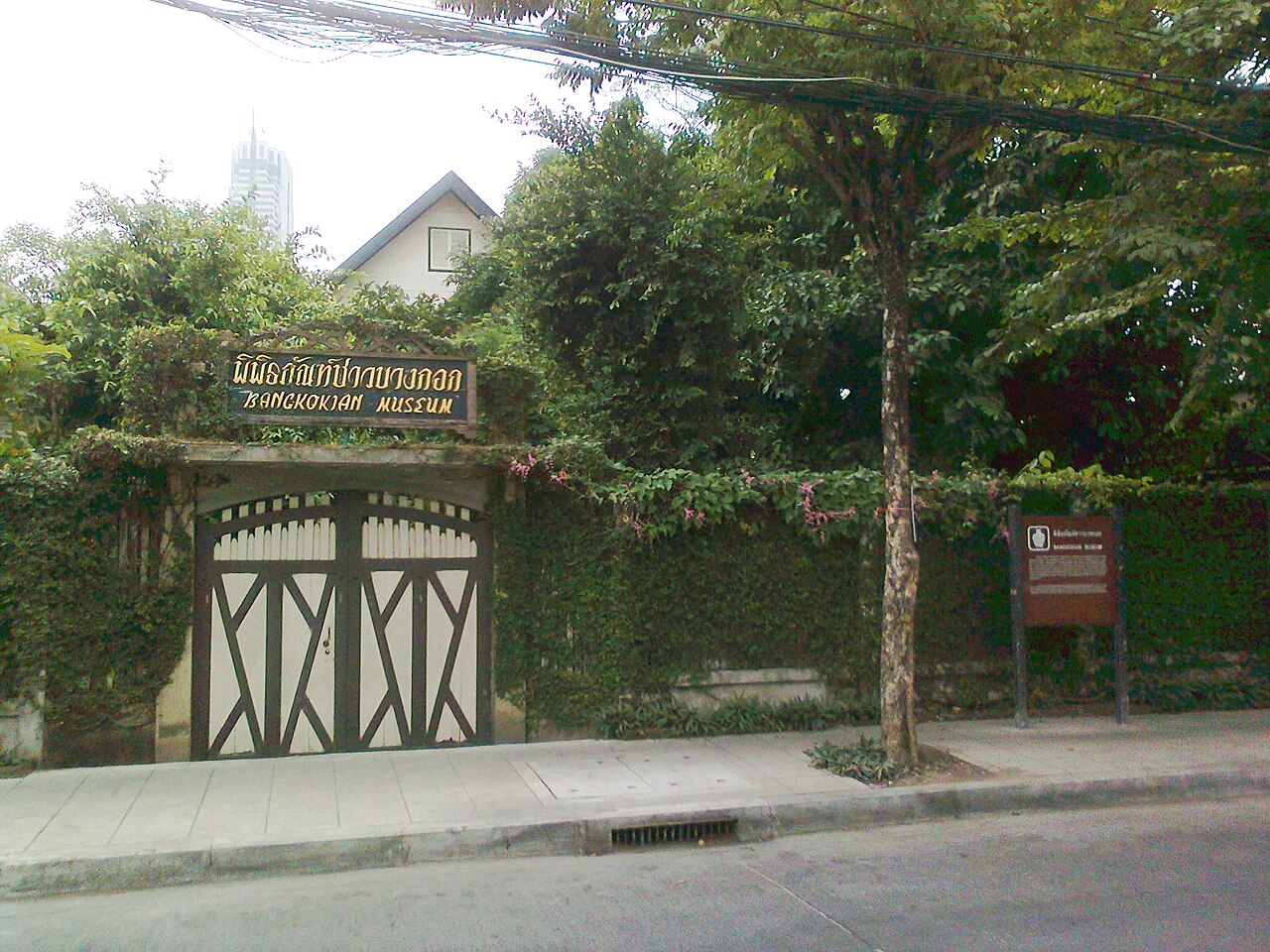
The useful difference is not “famous museum vs hidden museum”
These two houses preserve different Bangkoks. Jim Thompson House is the carefully assembled home of a wealthy collector, architect and Thai-silk entrepreneur. Bangkokian Museum preserves rooms and possessions from a Bangkok family and uses them to explain everyday urban life. If you choose by fame alone, you miss the point of both.
If you are actually deciding between a contemporary-art stop and Jim Thompson House, use BACC vs Jim Thompson House instead. This guide assumes you specifically want a historic domestic setting and are deciding what kind of Bangkok story you want that home to tell.
Choose Bangkokian Museum
The Bangkok Metropolitan Administration describes the museum as a former residence donated to the city and used to show the life of a middle-class Bangkok household before and after World War II. The rooms, furniture and ordinary objects are the point. You are looking at how a family lived, not at a celebrity residence dressed as a lifestyle set.
Choose Jim Thompson House
Jim Thompson reassembled six old Thai houses in 1958–59, using traditional structures from Bangkok and Ayutthaya-area sources to create his home beside the Ban Krua silk-weaving community. The house, garden and Asian art collection form one designed experience rather than a snapshot of ordinary domestic life.
Bangkokian Museum is stronger if you want social history rather than spectacle
Bang Rak District's museum description is unusually specific about what survives inside. The first house contains a reception room, dining room, library, bedrooms and a European-style dressing room. Another building holds household tools, kitchenware, writing equipment and handicraft objects, while the upper floor explains Bang Rak's physical history, international communities and Western influence on the district.
That makes the museum useful after — or before — a walk through the older commercial side of Bang Rak and Charoen Krung. If your day already includes the workshop lanes and merchant streets around Talat Noi or Song Wat, Bangkokian Museum gives you a domestic counterpoint: not another street to photograph, but evidence of how people furnished rooms, ate, worked and absorbed new technologies and tastes.
It is also a better fit if your museum question is not “what are Thailand's most important objects?” but “what did a normal urban household look like?” If you want the national-collection or national-identity question instead, compare Bangkok National Museum vs Museum Siam.
Jim Thompson House is stronger if the building itself must justify the visit
The James H.W. Thompson Foundation says Thompson built the compound in 1958–59 from six old Thai houses. The oldest major section dates to around 1800; traditional walls and timber elements were dismantled, transported and reassembled, while Thompson also introduced his own architectural choices. The current collection includes Thai paintings, Buddhist sculpture, Chinese ceramics and other Asian objects.
That gives Jim Thompson House a much higher visual and architectural ceiling. Even if you know very little about Thompson before arriving, the compound has a clear “main event”: teak architecture, garden, collection and guided narrative. The museum's current visitor information also requires a guide for the main house, so the experience has more structure than a casual drop-in heritage home.
It fits most naturally into a Siam or National Stadium day. If you are still choosing where to base yourself, the broader Where to Stay Bangkok guide helps before you over-optimise around a single museum.
Check the current hours before you build the day around either museum
Bangkok Learning City's current Bangkokian Museum page lists Tuesday–Sunday, 09:00–16:00 at 273 Charoen Krung 43. Older museum databases still show slightly different opening windows, so use the BMA listing as the better current planning source and re-check if your schedule is tight.
Jim Thompson House's current visitor-information page lists daily 10:00–17:00, with the last guided tour at 17:00 and adult admission currently listed at 250 baht. Some older Foundation material still shows earlier hours, so the current visitor-information announcement should win for same-day planning. The official site also warns that the museum does not sell tickets through online platforms; tickets are sold at the museum ticket office.
For women travelling solo, the difference is mostly visit structure
Neither museum needs to be framed as a “safety challenge”. The practical difference is how much control you want over pace and exit timing. At Jim Thompson House, the main-house visit is guided, bags over 20 cm must be left in the locker area, shoes come off before entering, and the official visitor page warns that the house involves several stairways with no elevator. That is useful to know if you are travelling with a larger day bag, wearing footwear that is awkward to remove, or managing a mobility issue.
Bangkokian Museum's current BMA page gives the address and opening window but does not publish an equally detailed accessibility note. If stairs, heat tolerance or step-free access materially affects your day, call the museum before going rather than assuming an old wooden residence works like a modern gallery.
If you are finishing a Charoen Krung day after dark, decide your next transport step before leaving the last indoor stop. If you want the evening to keep moving toward Chinatown, use Old Town & Chinatown: Same Day or Separate? to avoid stacking too many heritage blocks into one exhausted night.
Build the museum around the neighbourhood, not the other way around
Bangkokian Museum route: use it with Bang Rak / Charoen Krung, then continue toward Talat Noi, Song Wat or another river-side heritage layer. If you want a culture-focused Thonburi half-day instead, Khlong Bang Luang vs Kudi Chin solves a different decision.
Jim Thompson House route: use it with Siam, National Stadium or BACC. A food-first central evening can then move in a completely different direction; Banthat Thong vs Yaowarat helps if dinner is the next major decision.
If your first full day is already overloaded: solve the day-level geography first with Bangkok First Full Day: Old Town or Stay Central?. A museum should clarify the day, not make the whole route worse.
Which one would I choose on a first Bangkok trip?
If I only had room for one and had no strong preference, I would choose Bangkokian Museum when I had already scheduled the headline temples and wanted a quieter explanation of ordinary Bangkok life. It adds a kind of context the iconic attractions do not.
I would choose Jim Thompson House when architecture, design or Asian art was already one of my trip priorities, or when I wanted one polished, self-contained museum stop that fits neatly into a Siam day. It is the stronger standalone attraction; Bangkokian Museum is the more intimate social-history lens.
The final rule
Choose the house whose original occupants answer your question. Want to know how a Bangkok family lived? Bangkokian Museum. Want to see how a famous collector assembled Thai architecture, art and garden into one home? Jim Thompson House.
Then keep planning through the Bangkok Experiences hub or return to the Bangkok destination hub.