
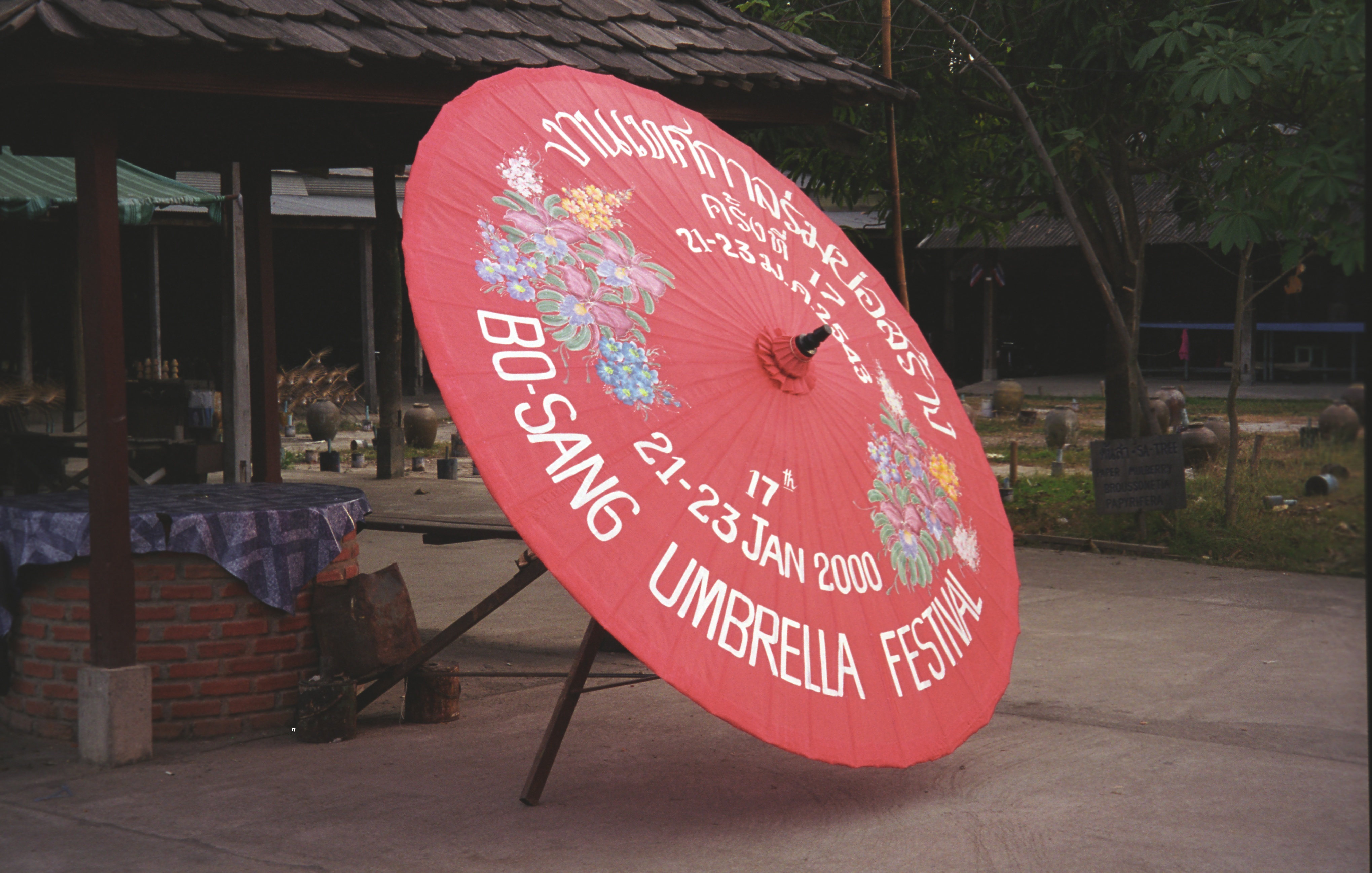

These two places are often saved into the same “crafty Chiang Mai” folder, but they solve different travel goals. Bo Sang is a traditional production village in San Kamphaeng whose identity is inseparable from umbrella making. Baan Kang Wat is a newer creative community near the Wat Umong side of Suthep, built around independent makers and creative small businesses. If your time is limited, the question is not which one is more photogenic. It is whether you want craft heritage or contemporary creative culture.
The shortest answer
For first-time visitors who specifically want traditional Northern Thai craft, pick Bo Sang. The umbrella-making process is the reason to go, not a decorative side note.
For travellers who want a softer half-day of studios, small shops, workshops and coffee, pick Baan Kang Wat. It is easier to let the experience be casual rather than instructional.
Why Bo Sang is the stronger traditional-craft choice
Tourism Authority of Thailand describes Bo Sang as a San Kamphaeng community where umbrella making has been practised for more than a century. The process matters: bamboo is shaped into the frame, Saa paper or fabric is prepared for the canopy, and hand-painted motifs turn the finished umbrella into the object most visitors recognise.
That makes Bo Sang valuable when you want to see how a specific craft tradition works, not simply shop for handmade goods. TAT still highlighted the Bo Sang umbrella in 2026 as a living example of Lanna handicraft, and the village remains tied to the annual umbrella-and-handicrafts festival tradition. The craft is not a theme created for tourists; it is the place’s defining economic and cultural identity.
Bo Sang also has a clearer beginning and end than many shopping districts. The official TAT visitor information currently lists the umbrella village daily from 08:00 to 17:00 and places it in San Kamphaeng, east of central Chiang Mai. Use those hours as a starting point; check individual workshops and shops before travelling.
Why Baan Kang Wat is the stronger contemporary-maker choice
Baan Kang Wat works differently. Thailand’s Creative Economy Agency described it in its 2025 Creative Excellence Awards as a “community of living art” built around art, craft, creative entrepreneurship and sharing. CEA’s research on Chiang Mai craft ecosystems also describes a village-like setting where makers both work and sell, with workshops forming part of the visitor experience.
That gives Baan Kang Wat a looser rhythm. You can browse ceramics, illustration, textiles or small-batch design, stop for coffee, and decide on the day whether a workshop is worth adding. If your real comparison is Baan Kang Wat versus a polished city design-retail stop, use the existing Baan Kang Wat vs One Nimman guide instead; this article is specifically about contemporary maker culture versus a traditional craft village.
TAT’s current visitor listing places Baan Kang Wat near Wat Umong and currently lists opening Tuesday to Sunday, 10:00 to 18:00, with Monday closed. The project’s own current public channels also continue to publish workshops, pop-up markets and craft events, so individual activities can change even when the community itself is open.
Route friction should break a close tie
Bo Sang is an east-of-city commitment. If San Kamphaeng handicrafts are already part of the plan, that is a feature. If the rest of your day is Old City, Nimman or Suthep-side, it is a real cross-city detour.
Baan Kang Wat fits the Suthep / Wat Umong side. If you are already comparing quieter temple stops such as Wat Pha Lat vs Wat Umong, the creative stop can share the same side of town rather than creating a new travel axis.
If your whole day still has too many competing districts, use the Chiang Mai 4-day itinerary to make sure craft is adding contrast rather than replacing a more important mountain, market or history block.
Do you want a demonstration, or do you want discovery?
This is the decision I would use before checking opening hours or transport.
Bo Sang is better when you want a demonstration-led experience. The satisfaction comes from watching a recognisable process: frame, paper or cloth, construction, painting and finished object. You leave knowing more about one craft.
Baan Kang Wat is better when you want discovery-led browsing. The value comes from not knowing exactly which studio, maker, object or workshop will interest you. You leave with a wider impression of contemporary Chiang Mai creative life.
If your interest is actually food-market culture rather than makers, compare Jing Jai Market vs Warorot Market. If you want craft mixed into a large street-market night, Saturday Wua Lai vs Sunday Walking Street is the more relevant decision.
What changes the answer in real life
Monday: Baan Kang Wat is currently listed as closed, so Bo Sang becomes the cleaner craft-first choice if your date cannot move.
Rain or hard midday heat: neither place should be treated as a sealed indoor attraction. Bo Sang has workshop and shop cover; Baan Kang Wat has studios and cafés, but part of its appeal is moving through a leafy outdoor community. Keep the plan flexible rather than forcing a long outdoor browse in bad conditions.
You already have several shopping blocks: choose only one craft stop. If your trip already contains Sunday Walking Street or Night Bazaar, another shopping-heavy half-day needs to add something genuinely different.
Which one teaches you more about Chiang Mai?
They teach different things. Bo Sang gives you a narrow but deeper story about traditional material culture, local skill and one craft industry that became internationally recognisable. Baan Kang Wat shows how Chiang Mai’s creative identity is still evolving: small studios, contemporary products, workshops and community-led creative business.
If you want historical interpretation rather than craft production, the City Arts & Cultural Centre vs Lanna Folklife Museum guide is a better use of the half-day. If you want a civic orientation anchor before any creative stop, compare Three Kings Monument vs Tha Phae Gate.
Practical notes for women travelling solo or with friends
Do not make transport an afterthought. Both places sit outside the most walkable Old City core. Confirm your return ride before the last shop or workshop closes, especially if the day is drifting later than planned.
Baan Kang Wat is easier to shorten. You can browse a few studios, stop for coffee and leave. Bo Sang makes more sense when you are willing to give the craft process enough time to justify travelling to San Kamphaeng.
Comfort matters more than “authenticity.” If rain, heat or low energy makes the longer detour unattractive, choosing the lower-friction option is sensible travel planning, not a lesser cultural experience.
How each fits with the rest of your trip
Pair Bo Sang with: an east-side craft-focused day, or another San Kamphaeng stop if you already have one that genuinely matters. Do not stack it with three unrelated city districts just because the drive looks short on a map.
Pair Baan Kang Wat with: Wat Umong-side plans, then return toward Nimman or the Old City. If you are deciding where your evening should land, Mae Kha Canal vs Ping River gives the night a different texture from another craft market.
If gardens or nature are competing for the same half-day: use Royal Park Rajapruek vs Queen Sirikit Botanic Garden or Mae Sa Waterfall vs Queen Sirikit Botanic Garden instead of forcing craft into a trip that actually needs more green space.
One last test before you choose
Imagine you leave without buying a souvenir. If Bo Sang would still feel worthwhile because you watched the umbrella-making process and understood the craft better, choose Bo Sang. If Baan Kang Wat would still feel worthwhile because you spent a relaxed afternoon around working makers, small studios and a creative community, choose Baan Kang Wat.
If neither statement feels true, skip both and use the Chiang Mai destination hub or Chiang Mai experiences index to give the half-day a stronger job. If your bigger trip question is still where to base yourself, Old City vs Nimman answers that separately.
The final pick
Choose Bo Sang for traditional craft heritage and a process you specifically want to understand. Choose Baan Kang Wat for contemporary maker culture and a more flexible creative-community half-day.
For a first trip with no strong preference, I would give Bo Sang the edge only if traditional Lanna craft is genuinely one of your priorities. Otherwise Baan Kang Wat is the easier creative block to fit around the rest of Chiang Mai.