
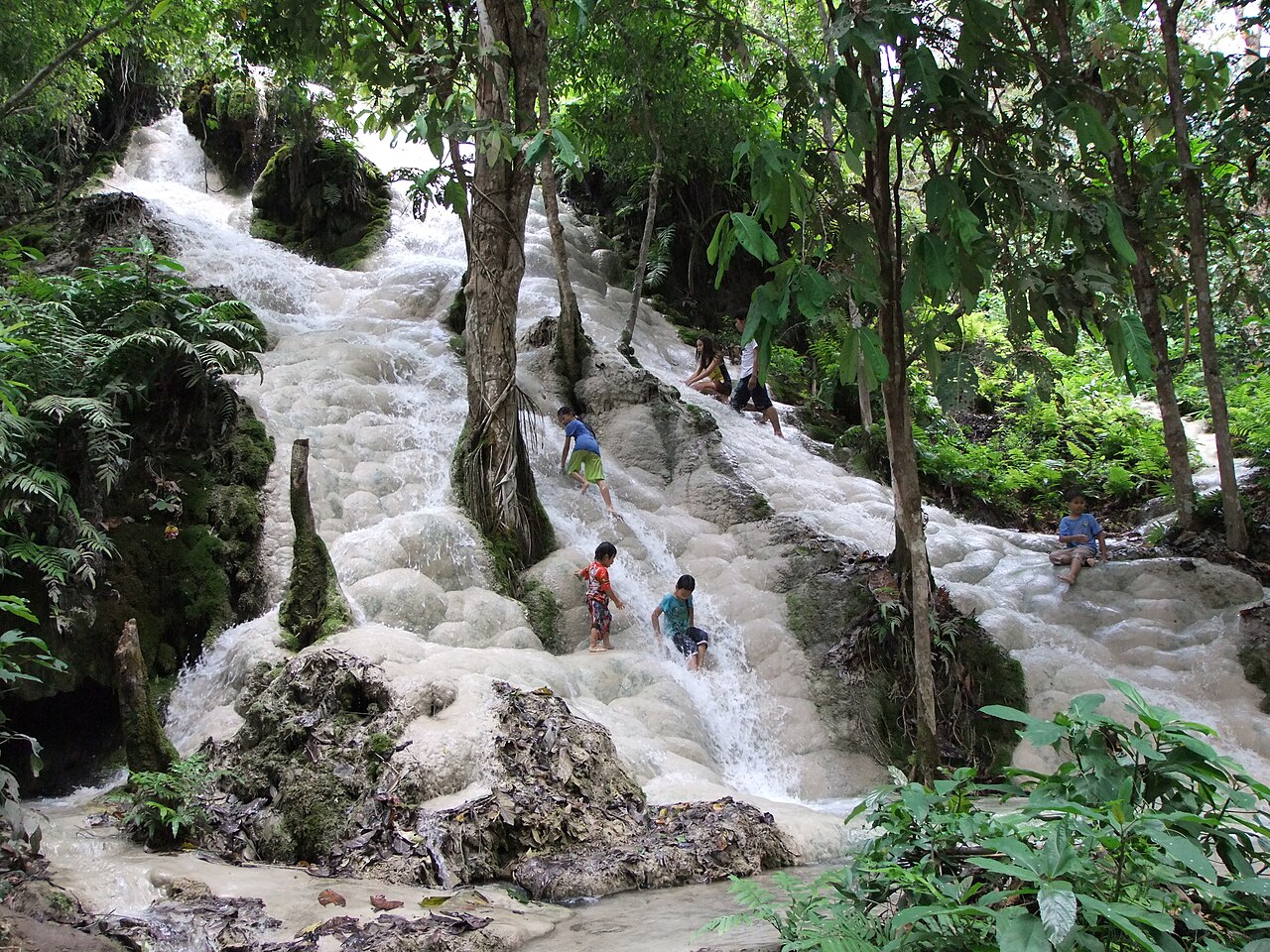
These two waterfalls solve different trip-planning problems. Bua Tong—often called the Sticky Waterfall—is north of Chiang Mai and is famous because mineral-rich limestone creates a pale, grippy cascade that people can move across. Mae Sa Waterfall sits on the Mae Rim side inside Doi Suthep-Pui National Park and works more naturally as part of a broader Mae Rim route.
That is why the useful question is not “which waterfall is prettier?” It is whether you want a waterfall-led activity or a waterfall stop inside another day.
Choose Bua Tong
You want the unusual waterfall-climbing experience itself, can protect a substantial half-day and do not mind making the road journey specifically for it.
Choose Mae Sa
You are already heading towards Mae Rim, want forest and moving water without making one waterfall the entire point of the day, and value easier pairing with other Mae Rim decisions.
Bua Tong is the more distinctive activity
The Tourism Authority of Thailand highlighted Bua Tong again in June 2026, describing the white limestone surface as the feature that lets visitors move up and down the cascades. The Department of National Parks has separately documented the geology: mineral-rich spring water carries calcium and silica through the limestone system, and the waterfall extends through four main levels over roughly 280 metres.
That changes the experience. You are not simply looking at a waterfall from a path. The physical interaction with the limestone is part of the attraction. If you want one nature stop that feels unlike the rest of a normal Chiang Mai first trip, that is a strong reason to give Bua Tong the slot.
But “sticky” does not mean “impossible to slip”. Natural surfaces change. Algae, wet edges, uneven limestone, flow and recent rain all matter. Treat the official nickname as a description of the unusual traction—not as a safety guarantee.
The 30-second Bua Tong test
Choose Bua Tong if the long round-trip drive and wet, uneven footing suit your plans; check current trail conditions because some sections may be unsuitable that day. If those details make the outing sound like work, Mae Sa is the cleaner choice.
Mae Sa is easier to fit into a Mae Rim day
The Department of National Parks confirms Mae Sa Waterfall as part of Doi Suthep-Pui National Park and lists visitor facilities at the Mae Sa waterfall zone. The site sits in the Mae Rim geography that already contains several major Chiang Mai attractions, so its planning advantage is obvious: you can build a coherent regional day instead of creating a single-purpose detour.
This is exactly why the existing Mae Sa Waterfall vs Queen Sirikit Botanic Garden guide is useful. That decision asks whether your Mae Rim nature time should be a forest-waterfall walk or a more structured botanical destination. This article asks the earlier question: if you specifically want a waterfall, should you commit to Bua Tong or keep the waterfall inside Mae Rim?
If Mae Rim is already the centre of the day, the choice becomes even easier. Mon Cham vs Queen Sirikit Botanic Garden helps decide how substantial you want the mountain/nature portion to be, while Royal Park Rajapruek vs Queen Sirikit Botanic Garden covers a different garden-focused trade-off.
Bua Tong
Best when: the waterfall is a headline experience. The road commitment is justified by the distinctive limestone activity.
Mae Sa
Best when: you are already using the Mae Rim corridor and want a nature stop that does not force the entire day to orbit one attraction.
Neither
Best when: your trip already contains Doi Inthanon or another major nature day and you would be cutting higher-priority city, market or temple time simply to add “a waterfall”.
Which one is better in August or the rainy season?
Neither waterfall should be chosen from a generic “rain = better waterfall” rule. Rain can increase flow and make greenery more dramatic, while also making paths, stairs, rocks and road conditions less forgiving.
Bua Tong has year-round spring-fed flow according to DNP background material, but the condition of individual surfaces and access points still matters. Mae Sa sits within a national-park environment where current staff instructions and local restrictions should override an itinerary written days earlier.
Do not chase maximum flow
A high-flow waterfall is not automatically a better visitor experience. If water is muddy, current speed is visibly stronger, staff restrict an area, or the approach becomes slick enough that you are negotiating every step, the correct decision is to reduce the plan—not to “get the photo because you came this far”.
If weather is already destabilising your trip, use the broader Chiang Mai in 4 Days framework to protect the most important blocks instead of forcing every outdoor stop into its original date.
Which waterfall is better for a first Chiang Mai trip?
Bua Tong wins on uniqueness. Temples, markets and mountain viewpoints dominate most first-trip Chiang Mai plans. A climbable limestone waterfall creates a genuinely different sensory experience.
Mae Sa wins on route efficiency. It is easier to justify when you already have Mae Rim on the map. If you are debating other Mae Rim stops, the Dara Phirom Palace Museum worth-it guide and Mae Sa vs Queen Sirikit Botanic Garden help keep the day coherent rather than turning Mae Rim into a six-stop checklist.
Neither wins if you are over-scheduling. If your nature quota is already covered, a local reset such as Huay Tung Tao vs Ang Kaew can preserve more time for the city. If what you really want is an east-side wellness detour rather than another waterfall, compare the commitment with San Kamphaeng Hot Springs.
What to wear and carry
For Bua Tong, dress as if you expect to get wet rather than as if you are visiting a roadside viewpoint. Secure anything you do not want submerged, protect your phone, and use footwear you can manage on uneven wet surfaces. Do not assume bare feet are automatically safer simply because other visitors are doing it.
For Mae Sa, the practical challenge is more conventional: forest paths, wet ground, stairs and changing waterfall spray. Good grip and a small rain layer matter more than a polished outfit. A compact dry bag is useful at either site if you are carrying a passport, electronics or medication.
For women travelling solo
The main issue is not a made-up “which waterfall is safer?” ranking. It is control of your return journey and your physical margin. Confirm how you are getting back before you start walking, keep enough phone battery for the return, and do not let a driver or pickup arrangement become vague because you are worried about sounding demanding. At a natural-water site, there is also no reward for matching another visitor's pace. If a section feels awkward in your shoes or with your bag, turn around.
Thailand Tourist Police currently lists 1155 as the traveller-assistance hotline.
How to pair each waterfall without wrecking the day
Bua Tong: keep the pairing light. The waterfall deserves enough time that the drive does not become the largest part of the experience. Do not add an unrelated Old City museum, major market and evening event simply because they fit on a spreadsheet.
Mae Sa: pair by geography, not by attraction count. One second Mae Rim stop can make sense. Five usually means you spend the day getting in and out of a vehicle. If craft culture is the priority instead, Bo Sang Umbrella Village vs Baan Kang Wat is a completely different half-day decision and should not be forced into the same route just because it is also outside the Old City.
For a broader first-trip check, use the Three Kings Monument vs Tha Phae Gate and City Arts & Cultural Centre vs Lanna Folklife Museum guides to see whether your city-history priorities are still under-protected before adding another out-of-centre nature block.
My call
Pick Bua Tong if you want one memorable waterfall activity and can give it the road time it deserves. Pick Mae Sa if Mae Rim is already part of the day and you want forest-waterfall time without turning one attraction into a logistical project. If your itinerary already has a major nature day, consider skipping both and keeping Chiang Mai less rushed.
Continue with the Chiang Mai Experiences hub or the Chiang Mai destination guide.
Sources checked
Tourism Authority of Thailand — Bua Tong Waterfall, 4 June 2026
Department of National Parks — Bua Tong Waterfall and Seven Colors Spring geology/background
Department of National Parks — Doi Suthep-Pui National Park / Mae Sa waterfall zone
Thailand Tourist Police — 1155 contact
Image note: the Bua Tong hero is exact current TAT destination media from the June 2026 official article. Mae Sa Waterfall was visually verified against current Doi Suthep-Pui / destination sources, but no rights-safe stable first-party image URL was added to the repo in this run rather than substituting a third-party or visually similar waterfall.