
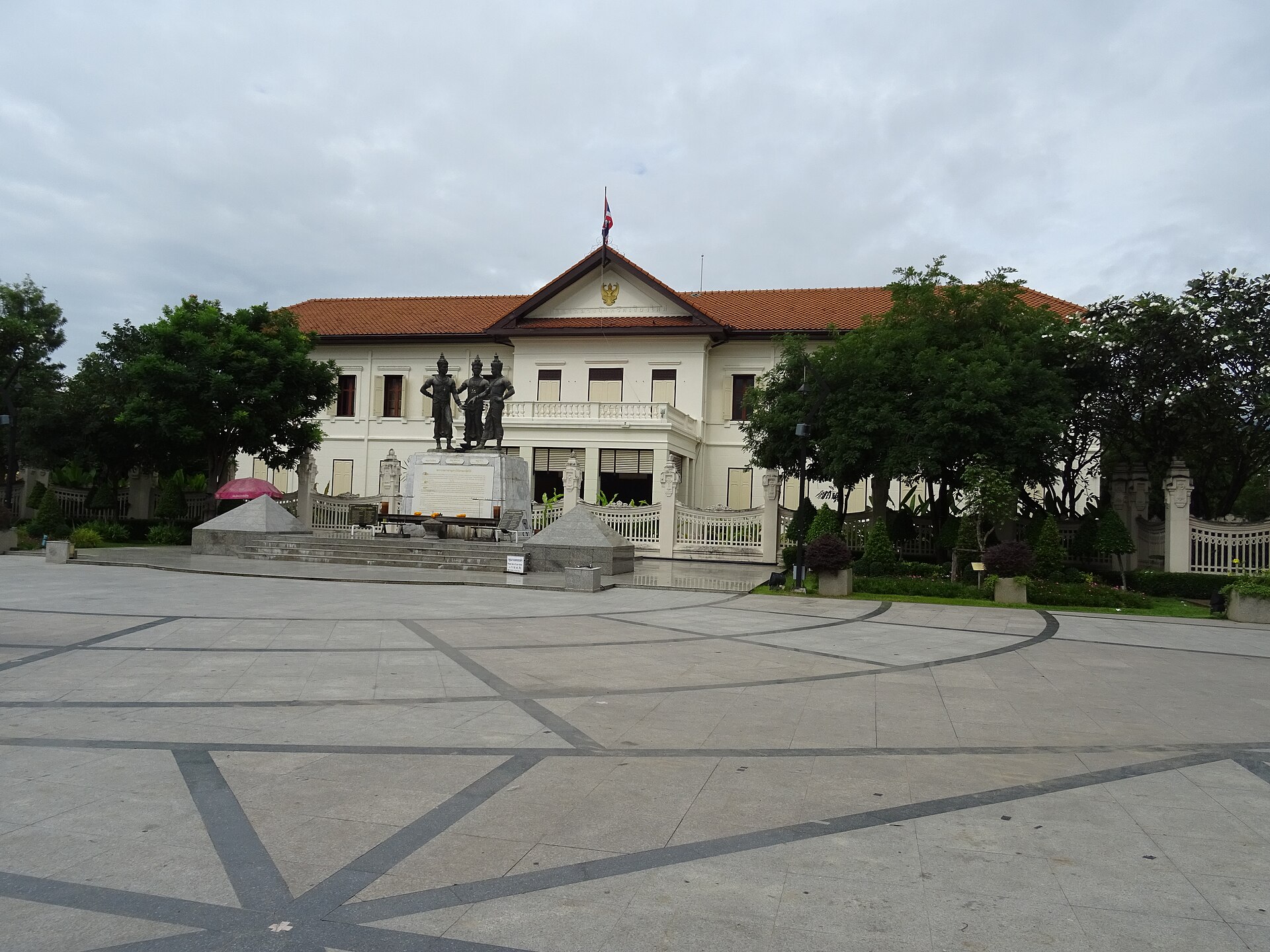
The two museums are easy to confuse because they belong to the same municipal heritage network, sit in the same Old City museum cluster and currently publish the same standard opening pattern and admission price. Their jobs are different. One is a story of Chiang Mai as a city. The other is a story of Lanna culture as a lived system.
A naming note before you plan: the municipal heritage network currently labels the first museum “Chiang Mai Cultural Centre” on its English site, while Tourism Authority of Thailand material and many travellers still know it as the Chiang Mai City Arts & Cultural Centre. This guide is referring to that same central museum opposite the Three Kings Monument area.
Use this one question
Do you want context for the city you are about to explore, or detail about the culture you have already started noticing?
If you want context, go to the City Arts & Cultural Centre. If you want the details behind temple decoration, ritual objects, textiles, murals and craftsmanship, go to the Lanna Folklife Museum.
Choose the City Arts & Cultural Centre
You want the big picture: pre-Chiang Mai settlement, King Mangrai, city formation, outside relations, rulers, the Ping River, trade, administration and the way modern Chiang Mai emerged.
Choose the Lanna Folklife Museum
You want close-up cultural texture: Buddhist ritual objects, temple architecture, mural traditions, sculpture, ceramics, lacquerware, textiles, music, agricultural life and Lanna craft.
These museums answer different questions
The City Arts & Cultural Centre is the better first layer
The municipal museum’s permanent exhibition is arranged through a sequence of city-history themes rather than one narrow art collection. Its current official description says the galleries cover development from prehistory through the city’s rise and decline as an independent capital and continue into modern Chiang Mai. The rooms move through subjects such as pre-Chiang Mai settlement, constructing the city, external relations, rulers, life along the Ping River, city life, Buddhism, annual traditions, agriculture and hill communities.
That is unusually useful at the start of a trip. After you have seen how the city was founded and how the moat, river, trade, religion and political history connect, an Old City walk becomes less like “temple, coffee, temple, photo” and more like one place with a logic.
If your next block is the historic centre, use the museum before choosing between Wat Chedi Luang and Wat Phra Singh. If you are deciding whether to leave the walls for an archaeological site, Wiang Kum Kam vs Chiang Mai Old City is the more useful follow-up question.
The Lanna Folklife Museum is better when objects are the story
The Lanna Folklife Museum is not simply “more Chiang Mai history.” Its current permanent exhibits are organised around lived culture and material culture: temple courtyards, Buddha halls, worship offerings, sculpture, mural painting, ceramics, lacquerware, music, textiles and religious traditions. The official museum description explicitly frames Lanna culture through Buddhism, belief, craftsmanship and ways of living.
That makes it the stronger choice after you have already noticed details and want them decoded. If you have spent a morning looking at temple roofs, painted interiors and ritual spaces, this museum can answer questions the city-history museum only touches briefly.
It also gives your trip a different texture from simply adding another temple. If you are already temple-heavy, compare that museum block with a non-religious creative stop such as Baan Kang Wat vs One Nimman before filling the afternoon with one more sacred site.
Same opening pattern, same standard price — so schedule is not the real tie-breaker
As checked on 14 August 2026, both official museum pages list 08:30–16:30, Wednesday to Sunday, including public holidays, closed Monday and Tuesday. Both currently publish standard admission of 90 baht for adults and 40 baht for children.
That means the decision is not really about money or opening hours. It is about what kind of understanding you want. Because museum hours and ticketing can change, re-check the municipal heritage site close to your visit rather than treating these figures as permanent.
If you are doing an Old City morning, choose the museum that fixes the missing piece
A first-time Old City morning usually already contains visible religious heritage. If you are planning temples at normal daytime hours, the Old City temple timing guide explains why you do not need to turn the morning into a dawn mission. Add the City Arts & Cultural Centre when you need chronology; add Lanna Folklife when you want to understand the decorative and ritual layer behind what you have just seen.
The same logic applies to evening planning. If Sunday is available, Sunday Walking Street vs Night Bazaar is a better use of your late-day decision than trying to squeeze both museums into the final hour before closing.
Should you visit both?
Yes, if museums are one of your main Chiang Mai interests. The municipal heritage network explicitly presents its central museums as “three museums one location,” and Tourism Authority of Thailand’s 2025 Chiang Mai itinerary places the City Arts & Cultural Centre and Lanna Folklife Museum together on the same Old City day.
But do not visit both just because they are close. If your total Chiang Mai stay is short, two museums can consume the same scarce culture block that could instead give you a very different experience.
For a four-day trip, the Chiang Mai 4-day guide is a useful reality check before doubling up on museums. If your itinerary already includes several culture-heavy city blocks, a green reset such as Huay Tung Tao vs Ang Kaew or a garden decision such as Royal Park Rajapruek vs Queen Sirikit Botanic Garden may create more contrast.
Heat, rain and energy: this is one of the easiest blocks to move around
Both museums are indoor-heavy Old City attractions, so they work well when you need relief from midday heat or a shower. That does not mean you should automatically save them for “bad weather.” The City Arts & Cultural Centre is most valuable before you have finished the Old City, because its city-history layer changes how you read the streets afterwards.
If your accommodation decision is still open, Old City vs Nimman helps explain why these museums are almost frictionless from an Old City base but become a more deliberate cross-city block from Nimman.
Women travelling solo: the practical advantage is simplicity
This is one of Chiang Mai’s easier culture decisions for solo travellers. The museums sit in the central Old City heritage cluster rather than at the end of an isolated nature route, and you can plan a normal daytime visit without creating a complicated return problem.
The practical issue is energy, not drama. Museum reading fatigue is real. If you are travelling alone and like to read exhibits properly, one museum followed by lunch or coffee is often more satisfying than forcing both just because nobody else is waiting for you. If you want a daytime market instead, Jing Jai vs Warorot Market gives you a completely different cultural lens.
Who should choose which museum?
Choose the City Arts & Cultural Centre if this is your first Chiang Mai trip, you want the city’s timeline to make sense, you are about to explore the Old City, or you prefer maps, models, chronology and urban history.
Choose the Lanna Folklife Museum if you already know the broad story, you care about textiles, ritual, religious art, craft or everyday culture, or you want to understand the details you keep seeing inside temples and local heritage spaces.
Choose both only if the museum cluster itself is a priority. If you are simply trying to “cover culture,” one museum plus a different kind of Chiang Mai experience is usually the stronger trip design.
The final call
First trip, one museum: start with the City Arts & Cultural Centre. It gives you the framework. Already have the framework and want the texture: choose Lanna Folklife.
Then move on. Chiang Mai rewards contrast. Open the Chiang Mai destination hub or the Chiang Mai experiences index and use the next block for something that changes the pace rather than repeating the same category.