
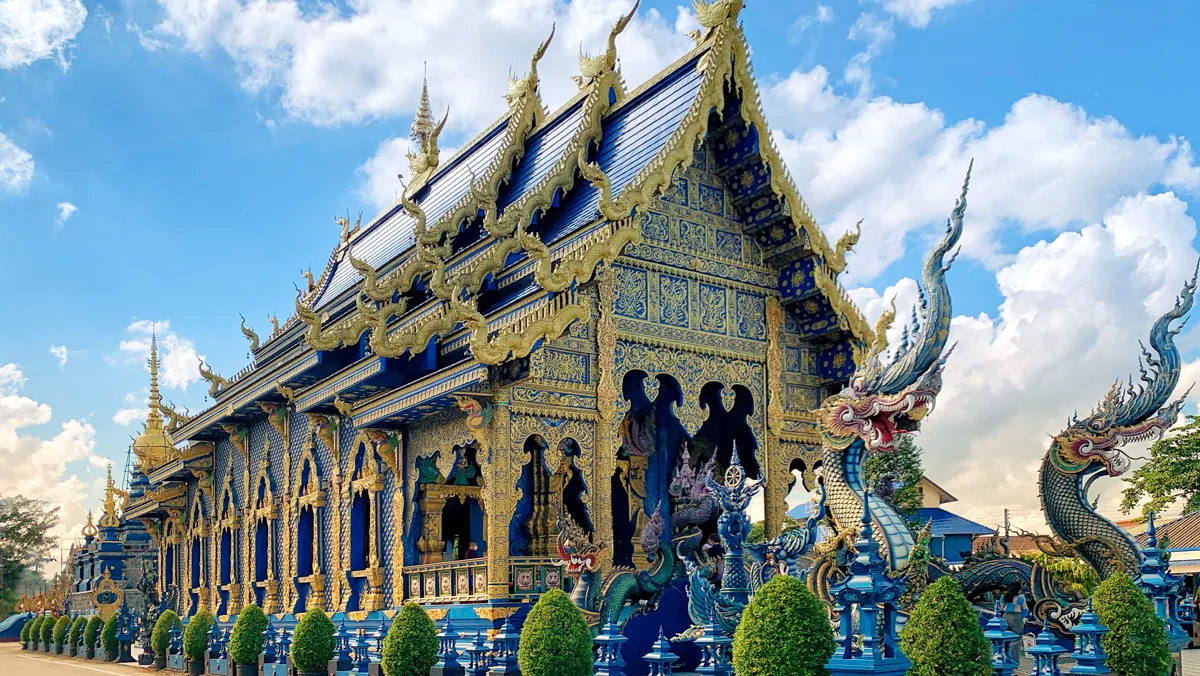
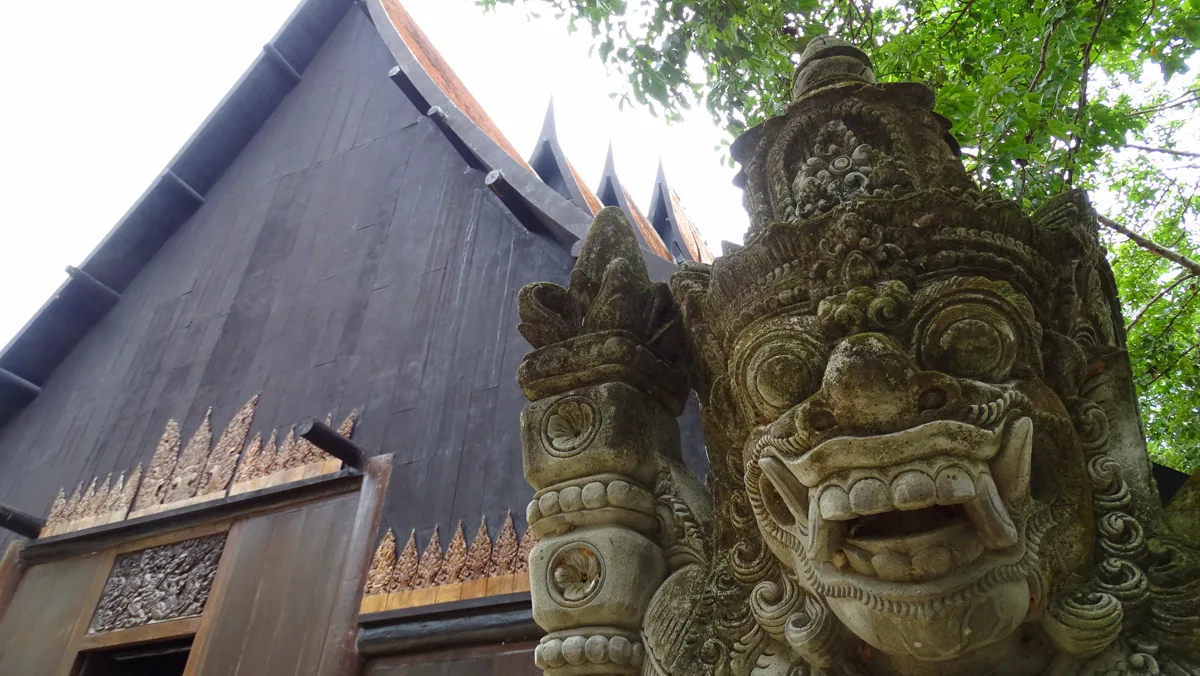
Chiang Rai makes it easy to collect famous names and hard to picture the day between them. The White Temple sits south of the city. The Blue Temple is near the Kok River on the city’s north side. Baan Dam, often called the Black House, is farther north in Nang Lae. You can fit all three into one outing, but it is not a compact walking circuit; the experience depends on arranging the order and letting each stop be different.
These places are also not three versions of the same attraction. Wat Rong Khun is an artist-led contemporary Buddhist complex, Wat Rong Suea Ten is an active temple with its own blue-and-gold visual language, and Baan Dam is an art museum built around the work and collection of Thawan Duchanee. Choosing well is less about ranking colors than deciding how much temple architecture, religious space and museum-style art your group wants in a single day.
Start with the White Temple if this is your first Chiang Rai art stop
Wat Rong Khun is the obvious anchor because its white exterior, mirrored detail and long bridge give the visit a strong visual structure. The bridge is more than a photo approach: it is designed as part of the artist’s Buddhist symbolism, so walking through the site at a measured pace makes more sense than treating the entrance as a quick selfie queue. The complex also includes other buildings and exhibition spaces, which gives you a reason to look beyond the main hall.
I would put it early in the day. Its current listed public hours run from 8:00 a.m. to 5:00 p.m., and an early start leaves room to explore without watching the closing time. The site is south of Chiang Rai’s city center, so it works naturally as the first stop before you move back toward town or continue north. If architecture and large, carefully staged details are the reason you came, make this the non-negotiable stop.
The White Temple is a poor place to rush through because the main visual payoff is the sequence: approach, bridge, exterior, interior and the surrounding exhibition areas. Give the group time to notice it. If the first hour becomes a race for photos, the rest of the day is unlikely to improve the mood.
Stay near the city for an easier art day
A Chiang Rai city base keeps dinner and the evening close after a day on the road. Compare the exact hotel address with your morning pickup plan and return point.
The Blue Temple adds a different kind of stop
Wat Rong Suea Ten is the natural partner for the White Temple if you want two temple visits that feel connected but do not blur together. Its blue and gold palette makes the contrast immediate, while the site remains a functioning religious place rather than a purpose-built photo set. The Tourism Authority of Thailand’s current visitor information lists hours from 7:00 a.m. to 8:00 p.m.; that later window makes it easier to place the visit after another stop, although I would still confirm the day’s access before setting a tight schedule.
The temple’s location near the river and north of the city changes the day’s movement. A White Temple visit followed by Blue Temple takes you from the south back toward town, which is a sensible pairing if you want to finish nearer city restaurants. It also leaves room for a slow lunch or coffee break between visits instead of treating the temples as a continuous shuttle route.
Because it is an active temple, dress for a religious site and keep your behavior considerate around worshippers. Visitors do not need a long list of rules to get this right: covered shoulders and respectful conduct are enough to avoid turning someone else’s place of worship into a stage set. If your group mainly wants a dramatic modern-art experience, give the White Temple more of the day and keep the Blue Temple as the shorter second stop.
Choose Baan Dam when the group wants art, not another temple
Baan Dam changes the mood. The museum brings together dark timber buildings and artworks associated with Thawan Duchanee, so the visit feels less like moving between two colorful temples and more like entering an artist’s world. The site includes multiple buildings across a large property; that variety is the point, but it also means the experience works best when the group is curious enough to wander rather than just photograph the first striking exterior.
It sits north of the city in Nang Lae, around a 20- to 30-minute drive from central Chiang Rai. Its visitor listing gives hours of 9:00 a.m. to 5:00 p.m. and says closure days are irregular, so check the calendar before you set out—especially if Chiang Rai is a one-night stop.
I would choose Baan Dam over the Blue Temple when someone in the group wants a museum visit with unusual objects and architecture, or when the White Temple already covers the bright, highly composed visual experience. It is not a universal upgrade. Travelers who want active religious sites may prefer the Blue Temple, while visitors drawn to contemporary art and private collections may find Baan Dam more memorable.
When all three stops fit—and when they do not
All three can fit into one Chiang Rai day if the attractions are the main event and you have a private car or a driver who will wait between stops. Starting at Baan Dam in the north, continuing to the Blue Temple, then going south to the White Temple creates a north-to-south route through the three areas. That order also puts the shorter-hour White Temple later, so do not leave the southern stop until the last minute. A late start or a long lunch can quickly make the third visit feel like a box to tick.
For most first-timers, I would choose two. White Temple plus Blue Temple gives a clear pair with minimal thematic explanation: two contemporary temple sites, different artists and a striking contrast in color and form. White Temple plus Baan Dam makes a more varied art day, with the shift from a modern Buddhist complex to an artist’s museum as the story. Blue Temple plus Baan Dam is the lighter choice if you have already seen the White Temple or want to keep the day closer to the northern side of town.
There is a geographic tradeoff behind those pairings. The Blue Temple is on the northern side of town, while Baan Dam is farther out in Nang Lae; visiting both keeps the route north. Wat Rong Khun is south of the city, so adding it creates a longer cross-city day. White plus Blue is the stronger first-visit contrast, while Blue plus Baan Dam cuts backtracking if you would rather spend time in the museum than add another temple.
Closing times matter if you want all three. Wat Rong Khun is listed with 8:00 a.m.–5:00 p.m. hours and a 200-baht admission; Wat Rong Suea Ten is listed as free to visit from 7:00 a.m.–8:00 p.m. Baan Dam lists 9:00 a.m.–5:00 p.m. with irregular closing days. Start early at Baan Dam, then head south; the Blue Temple gives you the most flexibility, while the two 5:00 p.m. stops need room in the schedule. Those posted hours and access details can change.
The three-stop version is not automatically more complete. Each extra stop means another arrival, a new set of paths and a fresh decision about how long to stay. A group that likes looking closely can spend more time at two sites and leave with a stronger sense of each. A group that enjoys variety and has energy for a full day may prefer all three. Decide based on what the travelers in the car actually enjoy, not the number of pins on a map.
| Your group wants… | Make this the second stop | Why it fits |
|---|---|---|
| A first Chiang Rai visit with a clean visual contrast | Blue Temple | Both are temples, but the artistic language and colors are distinct. |
| A day that shifts from temple to art museum | Baan Dam | The buildings and collection create a noticeably different kind of visit. |
| Only a half-day and one must-see | White Temple | It is the clearest anchor south of town; add only a nearby meal or one short stop. |
| You have already visited the White Temple | Blue Temple and/or Baan Dam | Use the day to explore a different artistic and religious setting. |
| The group includes people with very different interests | Two stops, then city time | Leaving space for lunch and a relaxed evening avoids making every hour a transfer. |
Build the day around your hotel and ride
For a city stay, ask the hotel or your driver to arrange the day in the order you choose; do not assume that a car found for one ride will wait through several visits. A car makes the south-to-north route easier to control, particularly if you want all three stops. If you are relying on separate app rides or local transport, choose two attractions and verify the return pickup at each stop before you start exploring.
Staying in Chiang Rai gives you a calmer morning than a long same-day run from Chiang Mai. It also means your evening is yours after the route: return to the city for dinner, walk around the clock-tower area, or take a quiet night if the group has spent the day in the heat. The hotel decision should match the evening you want, not just the first attraction on the schedule. A central address is the practical default for a short visit; a more remote riverside or resort stay earns its place when you plan to use the property before or after sightseeing.
If you are still comparing where to base yourself, browse the stay guides and compare the address with your pickup and dinner plans. If the trip begins in Chiang Mai, check the bus versus private-transfer comparison before you decide whether this is a day trip or an overnight. Our White Temple day-trip guide from Chiang Mai covers the longer out-and-back version; this route assumes Chiang Rai is your base for the day.
Want a quieter start near the southern sights?
Compare stays around Wat Rong Khun only if you want to begin near the White Temple or Singha Park. Check how dinner and your return ride fit before trading city access for a quieter address.
If you decide to visit all three
Arrange the ride before the day begins and travel from north to south: Baan Dam first, the Blue Temple next, and the White Temple while there is still time to explore the full complex. That order avoids repeating the northern leg after you have already reached the southern site. If you only want two stops, choose them by interest rather than trying to preserve the route.
Sources and image credits checked · 12 October 2026
- Tourism Authority of Thailand: Wat Rong Khun location, posted hours and admission
- Tourism Authority of Thailand: Wat Rong Suea Ten location, hours and admission
- Tourism Authority of Thailand: Baan Dam Museum, artist, location, hours and irregular closing days
- Tourism Authority of Thailand: Chiang Rai destination context
- Blue Temple photo. Chainwit., captured 25 October 2021; original 4032 × 3024. Local file
experience-chiang-rai-blue-temple.webpis a 1200 × 676 WebP crop for the article gallery. Source and author: Wikimedia Commons file page; CC BY-SA 4.0. This crop and WebP conversion retain the same license. - Baan Dam photo. Adam Jones, captured 13 June 2017; original 3648 × 2736. Local file
experience-chiang-rai-black-house.webpis a 1200 × 676 WebP crop for the article gallery. Source and author: Wikimedia Commons file page; CC BY-SA 2.0. This crop and WebP conversion retain the same license.
Visitor hours and access can change; check the attraction’s current calendar before planning a tight route.