
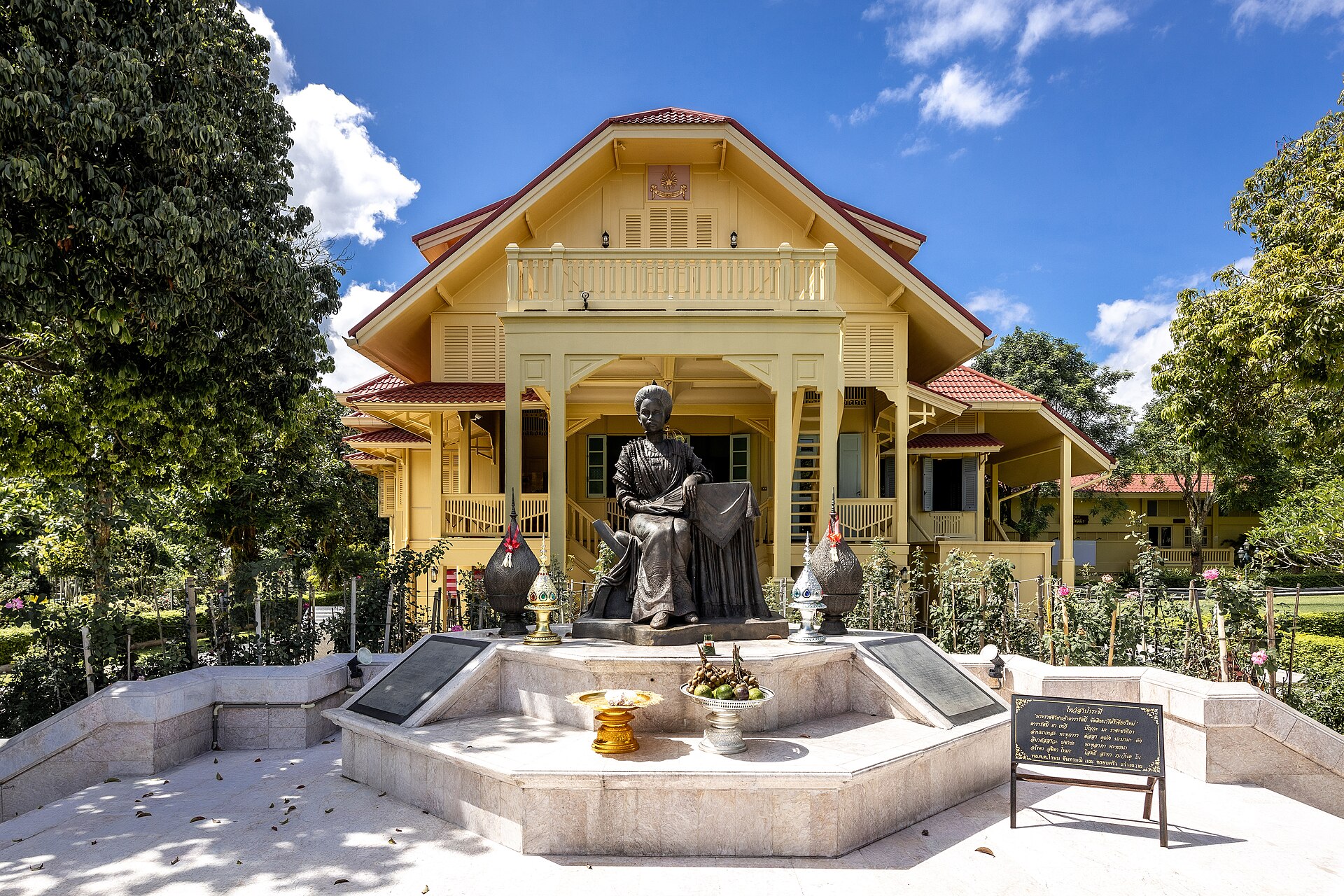
Dara Phirom Palace Museum—also written Daraphirom Palace Museum on Chulalongkorn University's Office of Art & Culture site—is not a general Chiang Mai museum. It is the preserved final residence of Princess Dara Rasmi, a Lanna royal and consort of King Chulalongkorn. That narrow focus is exactly why the museum can be unusually rewarding for the right traveller and underwhelming for the wrong one.
The 20-baht trap: the ticket is cheap, but the visit is not free in itinerary terms
Chulalongkorn University's current service page lists a 20-baht adult admission fee. That can make the museum look like an automatic add-on. It is not. The palace is in Rim Tai, Mae Rim—not inside the Old City museum cluster—so your real decision is whether this particular story deserves the transport time.
If you only want one broad introduction to Chiang Mai history, the more efficient city choice is still the City Arts & Cultural Centre vs Lanna Folklife Museum decision. If you want archaeology rather than a royal residence, Wiang Kum Kam vs Chiang Mai Old City answers a different history question.
What makes Dara Phirom different enough to justify the trip?
The museum lets one person's life connect several themes that are usually scattered across separate Chiang Mai attractions: the relationship between Lanna royalty and the Bangkok court, early-20th-century domestic life, clothing that blended Bangkok and Northern styles, Lanna arts and music, Buddhism, agriculture and experimental gardening.
That makes it stronger than a generic “pretty old house” stop. If those subjects interest you, the palace gives them a physical setting rather than leaving them as labels in a timeline.
The museum is about Princess Dara Rasmi—but the value is bigger than biography
Chulalongkorn University's current museum material says Dara Phirom was Princess Dara Rasmi's final and best-loved residence. The university restored the palace and opened it as a museum in 1999, preserving a Western-influenced early-20th-century building and arranging rooms with objects connected to her life.
Royal and political history
The corridor exhibition introduces the Chiang Mai dynasty, Princess Dara Rasmi and the palace itself. The story gives useful context for how northern royal history intersects with the Bangkok court.
Domestic life
The living room, bedroom and lounge contain household objects, dishes, personal effects and musical instruments. This is the museum's strongest advantage over a broad civic-history centre: you are reading history through a residence.
Arts, dress and agriculture
Other rooms cover the princess's involvement in religion, agriculture and the arts, including Bangkok-Northern clothing and textiles. Downstairs, the museum records farm equipment from her experimental garden and weaving tools used for clothing.
If the textile-and-maker side is what catches your attention, you may prefer a contemporary craft day instead; Bo Sang Umbrella Village vs Baan Kang Wat separates traditional handicraft production from today's maker-community culture.
Mae Rim changes the answer
The museum becomes much easier to justify when Mae Rim is already part of your itinerary. It does not need to carry the entire half-day by itself; it can be the cultural anchor inside a day whose other stop is nature, gardens or the higher Mae Rim corridor.
If your Mae Rim priority is mountain scenery
Use Mon Cham vs Queen Sirikit Botanic Garden first. If you are already committing to that corridor, Dara Phirom can add a historical layer without creating a second north-of-city day.
If you want a forest or botany half-day
The Mae Sa Waterfall vs Queen Sirikit Botanic Garden guide helps decide whether nature should be a walk or a structured botanical visit. Dara Phirom is a useful add-on only if your day still has enough energy for an indoor heritage stop.
If you are deciding where to sleep
Mae Rim resort vs Chiang Mai city hotel matters more than the museum ticket. Repeated city-to-Mae-Rim transfers can erase the convenience of a cheap attraction.
For a compact first trip, protect the overall balance with the Chiang Mai 4-day itinerary decision guide. A palace museum is not automatically more valuable than city time just because it is historically important. If the trip is already heavy on gardens and formal attractions, a short local reset such as Huay Tung Tao vs Ang Kaew Reservoir may create more contrast.
Check the opening day before you leave Chiang Mai
Two current Chulalongkorn University pages do not agree perfectly. The university's main service page says the museum opens Wednesday to Sunday and public holidays from 09:00 to 17:00, closes Monday and Tuesday, and charges 20 baht admission. The Office of Art & Culture department page currently says Monday to Sunday, 09:00 to 17:00.
Do not plan a Mae Rim transfer around the more convenient version. Use the more restrictive Wednesday-to-Sunday schedule as your planning assumption, then verify directly with the museum on the day you travel. The current Chulalongkorn University service page lists the museum phone number as +66 53 299 175.
Who should skip it?
Skip a standalone Dara Phirom detour if your real question is simply “what museum should I see in Chiang Mai?” The Old City gives you denser history with less transport. The same is true if your four-day trip already includes several temples, a formal museum, a Mae Rim nature day and a mountain day: the palace may be meaningful, but it may not add enough new texture to justify another scheduled stop.
Also skip if you are mainly chasing a photogenic yellow house. The architecture is attractive, but the museum's value comes from reading the rooms, personal objects, clothing, music, agriculture and Dara Rasmi's role in preserving Lanna culture. If you do not care about that story, the detour is harder to defend.
If your first-trip cultural interest is broader rather than biographical, Three Kings Monument vs Tha Phae Gate gives a quicker orientation choice, while Jing Jai vs Warorot Market moves the day away from formal heritage and toward living city culture.
For women travelling solo: treat transport as part of the museum decision
The palace is in Mae Rim, so the useful question is not “can I get there?” but “what is my confirmed way back?” If you are using a ride-hail or hired driver, save the exact museum name and Mae Rim address before leaving the city and decide whether the driver is waiting, returning at a set time or leaving you to arrange a new ride.
The residence is a two-storey historic building with stairs visible in the museum's own current imagery. If stair access or mobility is a concern, contact the museum before making the trip rather than assuming a restored heritage house has step-free access to every room.
Keep your phone charged and your accommodation address saved in Thai and English. Thailand Tourist Police currently lists 1155 as the traveller-assistance hotline if you need help.
A simple decision rule
Choose the museum for its story or as part of a Mae Rim route
Choose Dara Phirom Palace Museum when Princess Dara Rasmi, royal-Lanna history, period domestic life or Mae Rim culture is a genuine interest—or when Mae Rim is already in your route and the palace adds a compact historical layer.
Skip the standalone detour when you only want one general history stop. In that case, stay in the city and use the Old City museum comparison instead.
If you are still building the broader Chiang Mai mix, the Rajapruek vs Queen Sirikit Botanic Garden guide helps decide how much curated garden time you need, and the Chiang Mai Experiences hub keeps the culture, market, temple and nature decisions together. For the full destination layer, return to the Chiang Mai destination hub.