
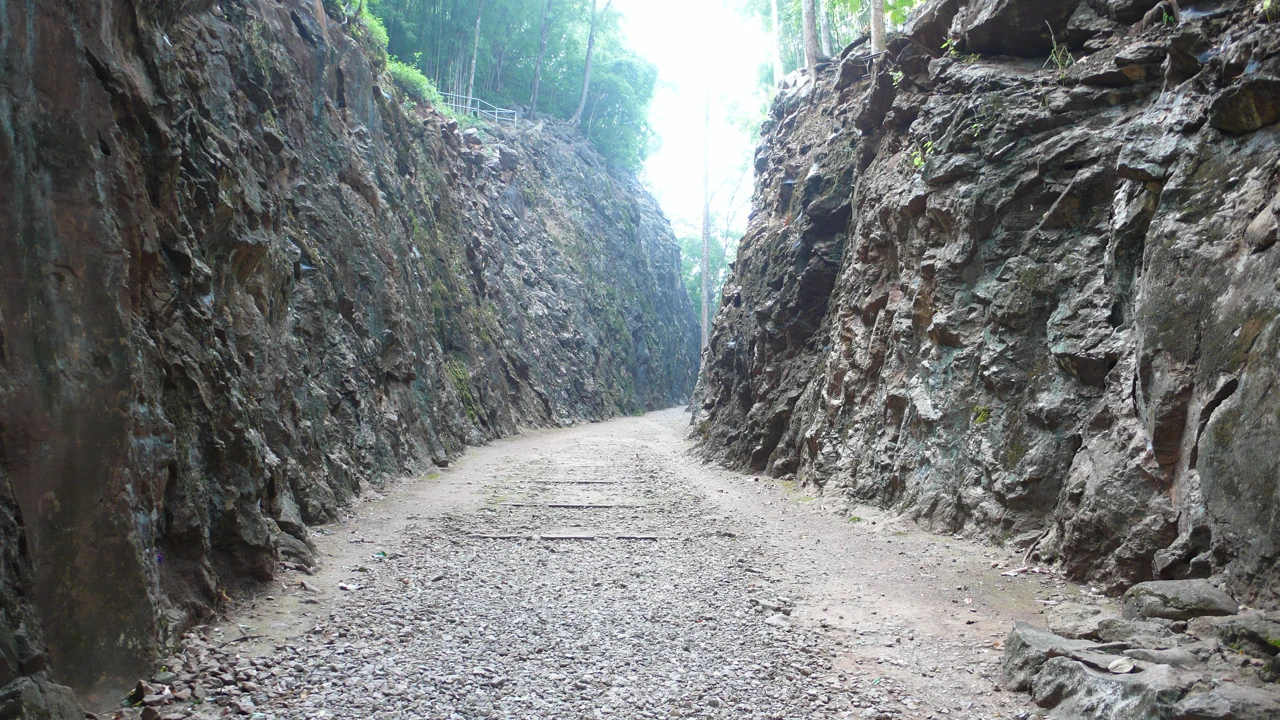
Hellfire Pass is about 80 kilometres west of Kanchanaburi town, and the drive itself shapes the visit. This is not a quick stop between two nearby attractions. You are going to a memorial landscape where the path follows a section of the Burma–Thailand Railway, and a useful visit needs enough time for both the centre and the walk. I would plan this as the day’s anchor, not something to squeeze into the final hour after a waterfall or a string of town museums.
The place is known as Hellfire Pass because of the cutting through rock on the railway alignment. The interpretive centre and trail commemorate Allied prisoners of war and Asian forced labourers who suffered and died building and maintaining the railway during the Second World War. The setting gives the history a physical geography: cuttings, slopes and remnants of the route make it possible to understand the work as more than a line on a map. That is why the centre matters as much as the photograph at the memorial.
Start with the centre, not the trailhead photo
Begin inside the interpretive centre. Its exhibits introduce the railway and the people compelled to build it; the audio experience carries individual accounts into the walk. The centre’s audio devices are free, available on a first-come basis, and require an ID card as a deposit. Audio devices are issued until 3 p.m., while the centre’s regular visitor hours are 9 a.m. to 4 p.m. The Australian Department of Veterans’ Affairs has also posted a 3–23 May 2027 maintenance closure. Check current access and holiday closures before travelling, because the grounds close together when maintenance or safety conditions require it.
That order changes what you notice outside. The cutting is not simply a dramatic rock corridor: it is a section of railway construction, and the interpretation gives the landscape human context. Take a little time with the displays, then choose the walk that fits the group. Someone who wants to read and listen may already have had a full visit before the longer trail even begins.
The current closure is material to any near-term plan. The centre’s own notice says the interpretive centre and walking trail have been closed since September 27, 2026, following persistent heavy rain and concerns about flooding, landslides and rockfalls. The reopening date is to be announced after a safety assessment. Do not travel there on the assumption that a regular 9–4 schedule means the gates are open; check the live closure notice or contact the centre before leaving Kanchanaburi.
Give the westbound day an easier start
A night in Kanchanaburi avoids turning the long road journey into an even longer Bangkok out-and-back. Compare town stays if you want the easiest dinner and onward transport; check the exact address and your pickup plan before choosing a riverside property.
The short walk reaches the memorial without making the trail the whole day
The Blue Walk from the centre to the Hellfire Pass memorial is about 485 metres and usually takes around 45 minutes to an hour, including the return. It is the clearest choice for a first visit if the group wants to see Konyu Cutting, listen to the audio and still have energy for the centre. There are steps and uneven surfaces, so it is not a smooth, level stroll; sturdy covered shoes are more useful than sandals chosen for a photo.
Move at the pace the site asks for. The route has interpretive stops, and a pause to hear one account can matter more than covering the ground quickly. Carry water even for this shorter option, especially in hot weather. The centre advises visitors to use sun protection and insect repellent, and the original rail alignment is not a climate-controlled walkway. If rain has left surfaces wet, take particular care on stone and sloped sections.
For a mixed-age group, make the short walk the shared plan and let each person decide how much time to spend at the exhibits. The centre offers a free buggy service for older visitors, people with mobility limitations and those with health issues; staff can explain how it reaches the cutting. That makes the memorial more accessible without pretending the longer uneven trail is suitable for everyone.
The longer Hintok trail is a different kind of outing
The Green Walk continues about 2.6 kilometres from the centre to Hintok Road. The return on foot is roughly 5.2 kilometres, with steep climbs and descents, uneven ground and little shelter. The centre estimates about three hours for the full return walk; that is separate from time in the museum, travel to the site and any rest breaks. People often think of it as “the longer version” of the short walk, but the terrain and logistics make it a much bigger decision.
There is a useful payoff for walkers who want to follow more of the railway’s engineering footprint. Beyond the memorial, the route passes smaller cuttings, a large embankment and places where trestle bridges once stood. The walk offers a more extended sense of how the line crossed this landscape. It also asks for more stamina and concentration, especially when the ground is wet.
Anyone taking the long route must collect and carry the centre’s two-way safety radio. Mobile reception may be limited, and the radio lets staff check in or respond if a walker needs help. Bring enough water for the return, wear shoes with grip, and do not start late simply because the main centre is open until 4. The route has no quick shortcut back to the building once you have continued beyond the memorial.
There is no centre shuttle waiting at the far end. If you walk one way to Hintok Road, you need a driver or taxi to meet you there, and the centre says that pickup must be arranged in advance because reaching the road involves a separate local drive. If nobody in your party can make that arrangement, treat the route as a return walk rather than assuming a ride will appear when you finish.
Choose the return plan before choosing the long walk
The centre is roughly an hour by car from Kanchanaburi town in ordinary conditions, with winding road sections and steep climbs. A private driver waiting through the visit is the lowest-friction choice for a group, particularly if the plan includes the Green Walk. Agree on the wait, the exact pickup point and what happens if the visit runs longer than expected before you leave town.
Public buses and minivans also run west from Kanchanaburi, but the two modes do not solve the return equally. The large red buses on the routes toward Thong Pha Phum or Sangkhlaburi can drop passengers at the centre gate and run back toward town from the stop across Highway 323. Published information describes them as roughly hourly, with the trip commonly taking 1.5 to 2 hours; the timetable may not be exact, so arrive at the roadside stop early and keep a time margin.
Minivans from the Kanchanaburi terminal can drop you at the gate when requested, but they do not pick up passengers midway for the return. That distinction is easy to miss if you plan only the outbound leg. If you want a minivan west, arrange a different way back before you board it. For a short walk and centre visit, a bus may fit if the departure time works. For the long walk, a prearranged driver has a clear advantage because it removes the end-of-trail pickup puzzle.
Match your base to the day after the visit
If you are continuing west into Sai Yok, a local riverside stay can make sense. If Hellfire Pass is the only major excursion and you need a straightforward onward departure, Kanchanaburi town keeps more options close by.
Keep the history in view without turning the visit into a checklist
The Burma–Thailand Railway was built under Japanese military direction during the Second World War using Allied prisoners of war and Asian forced labourers. The people who built and maintained it faced brutal conditions, disease, malnutrition and violence. Records of Asian labourers were incomplete, and their suffering has often been less visible in the way the story is told. The centre’s dedication includes both groups, and that wider frame belongs in the visit.
The physical setting can make the scale of the work easier to picture, but it cannot stand in for the lives behind it. Use the interpretation to follow those accounts and avoid treating the cutting as a scenic prop. Photography is a normal part of travel, but the memorial is also a place of remembrance; give other visitors room, keep noise low and let the path remain a reflective space.
If you have only a few hours, a considered visit to the centre and short memorial walk is enough. The longer trail is not a test of seriousness. Choosing the shorter route can leave you more present for the interpretation, while the Green Walk suits visitors whose interest includes the route’s remaining earthworks and who have the time and stamina to take it on.
How Hellfire Pass fits a Kanchanaburi stay
Hellfire Pass lies far enough west that pairing it with several town sights makes the schedule fragile. The River Kwai Bridge, Don Rak War Cemetery and the Thailand–Burma Railway Centre can form their own compact town visit; they do not need to be inserted before or after an afternoon drive to Sai Yok. If those places are also important to you, split them across days or choose the town visit as a separate half-day.
For a Bangkok-based trip, an overnight in Kanchanaburi makes the most sense when it protects the time you want at the site or lets you continue into the western part of the province. A same-day out-and-back can work with a private car, but the road time takes a real share of the day. Public transport costs less and requires more attention to departure points and return timing. Our Bangkok-to-Kanchanaburi train versus minibus guide covers the journey into town; the separate day trip versus overnight comparison helps decide whether the local night solves a problem on your itinerary.
If your main interest is choosing between a nature day and a memorial day, see our Erawan Falls versus Hellfire Pass guide. That comparison is about the kind of day each place creates. This page focuses on how to visit Hellfire Pass itself and why the two walking options lead to different plans.
My plan after the site reopens
I would check the centre’s latest notice first, then leave Kanchanaburi early with a driver or a bus plan that has a confirmed return. At the centre, I would take the audio device before it becomes unavailable for the day, spend time with the exhibits and then walk the short route to Konyu Cutting. I would only extend to Hintok if I had chosen that terrain in advance, collected the safety radio and arranged pickup at the road.
That is the version that gives the site room to matter without letting the day become a logistics exercise. Hellfire Pass earns its place through the combination of interpretation and landscape; a rushed arrival or an improvised ride home weakens both. The long walk adds something specific, but it is not required for a meaningful first visit.
Sources checked · 11 October 2026
- Hellfire Pass Interpretive Centre: temporary closure notice, effective 27 September 2026
- Hellfire Pass Interpretive Centre: walk lengths, safety radio, access and transport FAQs
- Hellfire Pass Interpretive Centre: trail descriptions and travel planning
- Australian Department of Veterans’ Affairs: centre purpose, visitor hours and annual closures
- Hellfire Pass image: Niels Mickers, CC BY 3.0 Netherlands
- River Kwai bridge train image: Jpatokal, CC BY-SA 3.0
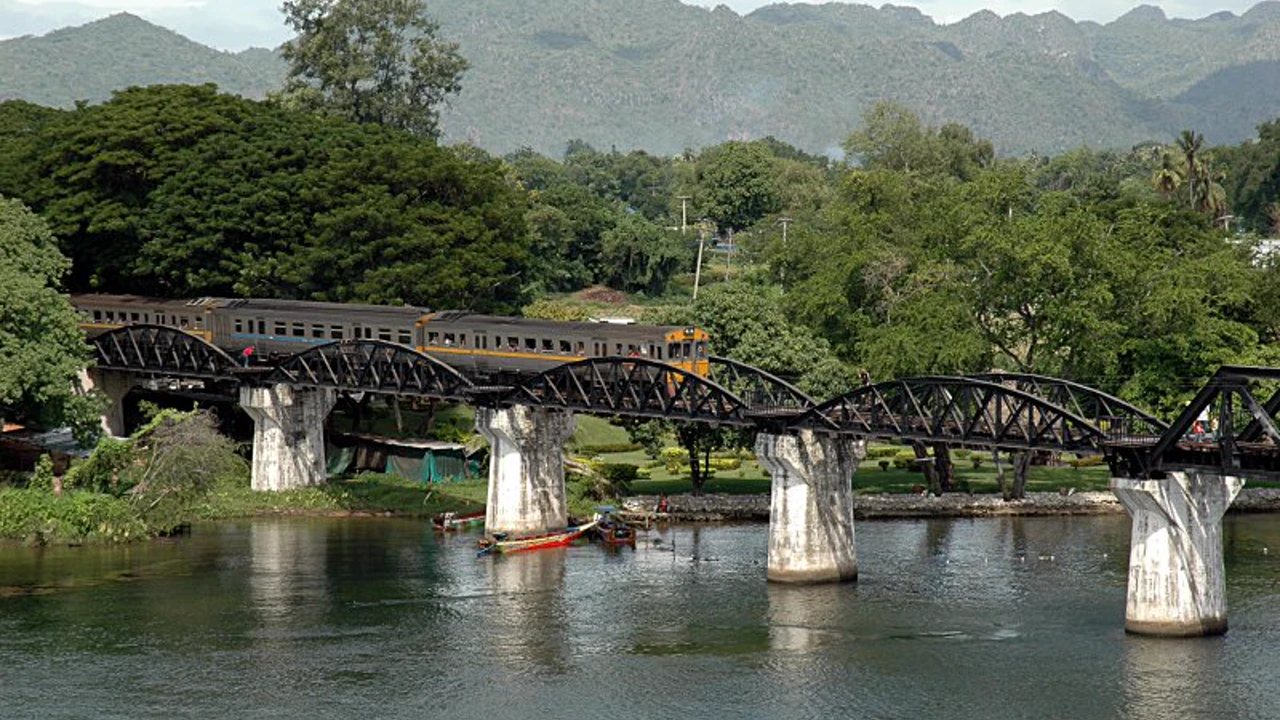
Current closure and transport details can change. The page distinguishes the current closure from the centre’s usual walking arrangements. The two photographs show separate parts of the railway landscape; the River Kwai bridge image is not a photograph of Hellfire Pass.