
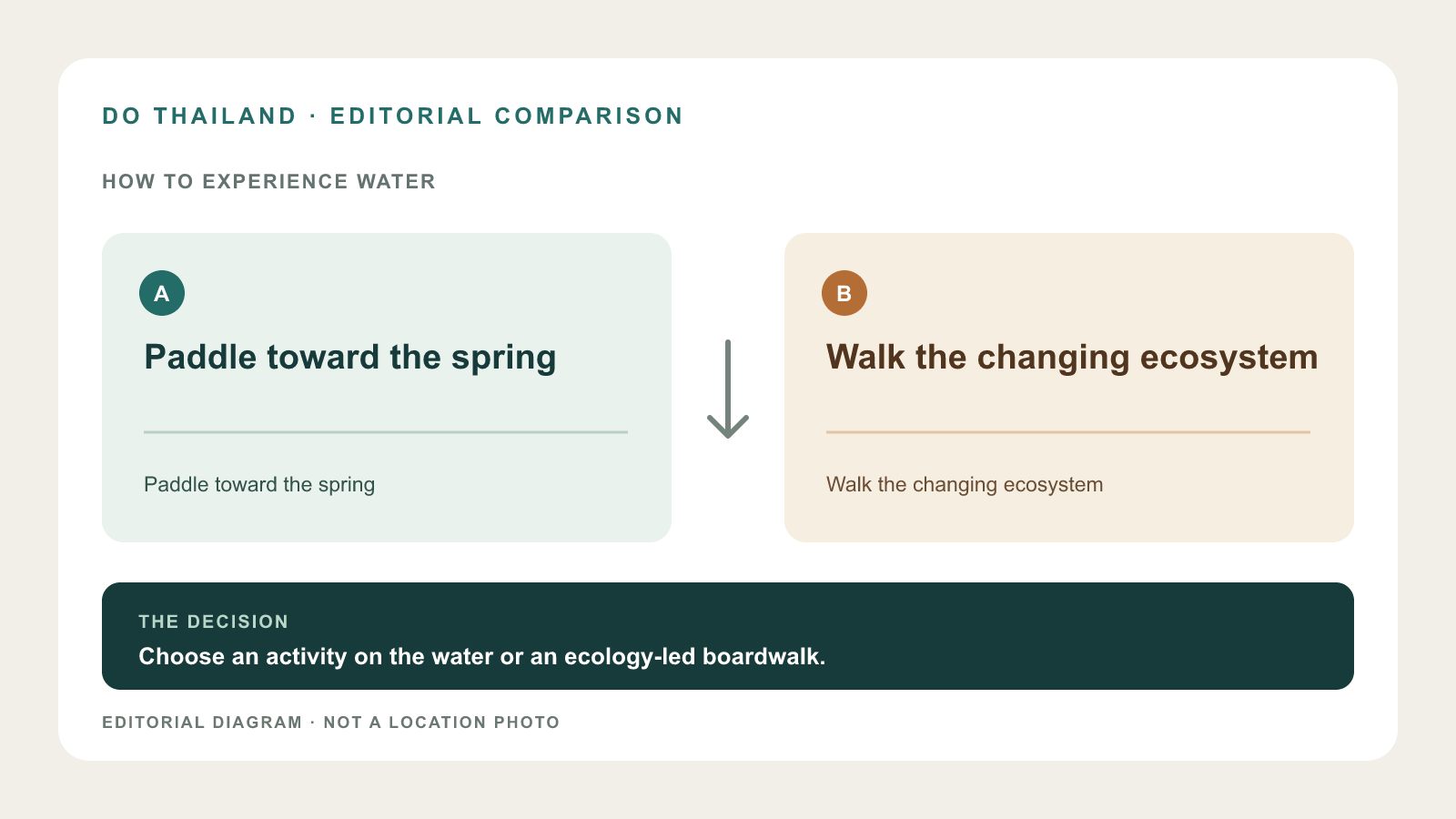
Pick Klong Root if you would still go even if the water were only “very clear” rather than Instagram-perfect. The kayak is part of the reason to be there.
Pick Tha Pom if the water, roots and two-water ecosystem are the reason to be there. The walk and observation matter more than collecting another activity.
These are not two versions of the same clear-water attraction
Klong Root—also described by Tourism Authority of Thailand as Khlong Nam Sai—is a small spring-fed freshwater canal in Ban Laem Som, Nong Thale. TAT says the source comes from natural underground springs and that the easiest way to reach the upstream spring area is by kayak. Its current 2026 tourism messaging still specifically highlights kayaking at Klong Root as part of Krabi's low-impact nature offering.
Tha Pom Klong Song Nam is a different kind of place. Its defining feature is the meeting of inland freshwater and tidal seawater. That changing mix supports mangrove, swamp and evergreen vegetation, and the visit is structured around observing the canal and root systems from a boardwalk. If you want a broader comparison with a larger national-park landscape, our Than Bok Khorani vs Tha Pom guide handles that decision.
In short: Klong Root is the stronger activity; Tha Pom is the stronger ecology stop.
- Do you want to paddle?If yes, Klong Root has the cleaner reason to exist in your itinerary. If kayaking sounds like work you are trying to talk yourself into, choose Tha Pom.
- Do you want to stay mostly dry?Tha Pom is easier. Klong Root makes more sense when swimwear, a dry bag and wet-clothes management do not annoy you.
- Is this your only inland nature block?Choose the stop that adds the missing texture. If your trip is already full of active days, Tha Pom can be the smarter contrast. If your inland time is otherwise passive, Klong Root gives you more movement.
Why Klong Root wins when the paddle is the point
The classic TAT route is simple to understand: paddle from the lower canal toward the spring source, stop where local conditions allow swimming, then return. TAT's destination article describes the traditional outing as roughly 1–1.5 kilometres round trip and around two to three hours when swimming is included. That article is older than the current programme, use those numbers as a rough outline; ask a current local operator for the available 2026 package. Current local operators can structure their routes differently.
The important part is that Klong Root asks you to participate. You paddle through the clear water instead of watching from the bank. That changes the value for a beach-heavy trip. If your first Krabi day is already committed to Railay or an island boat, use our first-full-day Railay vs island-tour guide first. Klong Root works better as the active freshwater counterpoint after you know where the marine days sit.
It also solves a different problem from a long ridge hike. If you want movement but not a full mountain challenge, compare the active-day logic in our Dragon Crest vs Ao Thalane kayaking guide. Klong Root belongs closer to the paddling side of that spectrum than to the viewpoint-hike side.
Why Tha Pom wins when you want nature without an equipment tail
Tha Pom is easier to keep proportionate. Tourism Authority of Thailand's current Japan office page lists an 08:00–17:00 window and describes the boardwalk through the mangrove/swamp setting. CBT Thailand currently publishes 08:30–16:30. Because those two official sources do not fully agree, do not plan the day around the final half-hour—recheck the operating window close to your visit.
The attraction is the water system itself. TAT explains that low tide can make the canal read as exceptionally clear freshwater, while rising seawater changes the salinity and character of the canal. That is why the roots, fish and mixed forest matter. You can enjoy the place without needing the whole visit to become a swim session.
That lighter shape is useful if the rest of your inland plan is already busy. If you are considering the Khlong Thom side instead, our Salt Hot Spring vs Hot Spring Waterfall guide shows how quickly a supposedly simple inland day can become a full thermal-water programme. If you want a community day rather than another water landscape, Ko Klang vs Laem Sak is the cleaner change of category.
Klong Root day shape
Arrive ready to paddle. Protect your phone, wear something you are happy to get wet, confirm the current kayak arrangement, paddle toward the spring area, swim only where local guidance allows it, then plan for wet clothes on the ride back.
Tha Pom day shape
Arrive in walking clothes, use the boardwalk, read the water and root landscape, take the slower photography/ecology approach, and leave enough flexibility to pair the stop with another road-based activity without feeling rushed.
The hidden difference is what sits in your bag afterwards
Klong Root has a wet-clothes tax. A dry pouch for your phone, a small dry bag, sun protection that survives water, sandals or water-friendly footwear, and a separate bag for wet swimwear all make the return less irritating. If you dislike carrying damp gear into dinner or a long transfer, that is a real reason to choose Tha Pom instead.
Tha Pom still deserves sensible footwear because boardwalks and waterside surfaces can be damp, but you can usually keep the stop much cleaner operationally. For travellers who have already spent the previous day in swimwear, that difference can be worth more than another hour of crystal-water photos.
Do not choose either one by “which water is clearer?”
Klong Root's spring-fed water and Tha Pom's two-water system can both look startlingly clear. Neither should be treated as a permanently identical swimming pool. Light, recent rain, flow, tide and visitor conditions all change what you see.
Tha Pom is particularly sensitive to the freshwater–seawater cycle; that changing ecology is literally the point. Klong Root's spring source is less about a tidal transformation and more about paddling through a freshwater canal toward the source area. If your goal is guaranteed swimming rather than a nature system, neither comparison should be made from a single social-media image.
For broader weather logic, use our Krabi rainy-day island-vs-inland guide. A rough sea can make an inland swap sensible, but heavy rain can also affect roads, current, visibility and local operating decisions.
A 2026 check that matters more than an old price list
TAT's June 2026 tourism update still highlights kayaking at Klong Root as part of Krabi's current low-impact nature offering. That is a much better signal of present relevance than copying an old kayak-rental price from a 2021 attraction article. Current rental price, opening arrangement, guide format and launch point should be confirmed with the operator you actually use.
For Tha Pom, current official pages still publish different closing times. Treat that discrepancy as a reminder to verify the day-of visit rather than turning one website timestamp into a promise.
Where each one fits in a four-day Krabi trip
Women and solo travellers: the practical decision is more about control than danger
Klong Root asks you to manage valuables and wet gear while paddling. If you are travelling alone, confirm the current rental format before leaving your hotel: whether solo paddlers are accepted, whether a guide is included or available, where belongings can be kept, and where the actual launch point is. TAT's older article lists several local kayak providers, which tells you there is no single universal booking setup to assume.
At Tha Pom, the day is easier to keep self-contained, but the same basic rule applies: use the areas staff and signs open for water entry rather than interpreting clear water as an invitation to swim anywhere. For either stop, arrange the return before your phone battery is low, especially if the rest of your evening is back in Ao Nang.
Choose by the memory you want, not by the prettier thumbnail
Choose Klong Root if you want to remember paddling through transparent spring water. It earns its place by being an active freshwater experience rather than another viewpoint or boardwalk.
Choose Tha Pom if you want to remember the strange, delicate meeting of roots, freshwater and tidal seawater. It earns its place by being ecologically distinctive without taking over the day.
If you still have not fixed the broader geography of the trip, return to the Krabi destination hub or browse the Krabi experience decisions before stacking another inland stop into the schedule.
Final rule
Klong Root = activity-first clear water. Tha Pom = ecology-first clear water.
If “kayak” sounds like the best part of the sentence, choose Klong Root. If “clear-water forest” sounds like the best part, choose Tha Pom.
Sources checked
Sources checked 15 August 2026: Tourism Authority of Thailand, Khlong Nam Sai / Klong Root destination article; TAT Newsroom, Thailand Tourism Update at TTM+ 2026; Tourism Authority of Thailand Japan, Tha Pom Klong Song Nam; CBT Thailand / DASTA, Tha Pom Klong Song Nam. Current prices, rental formats and operating arrangements should be rechecked for the date you visit.