
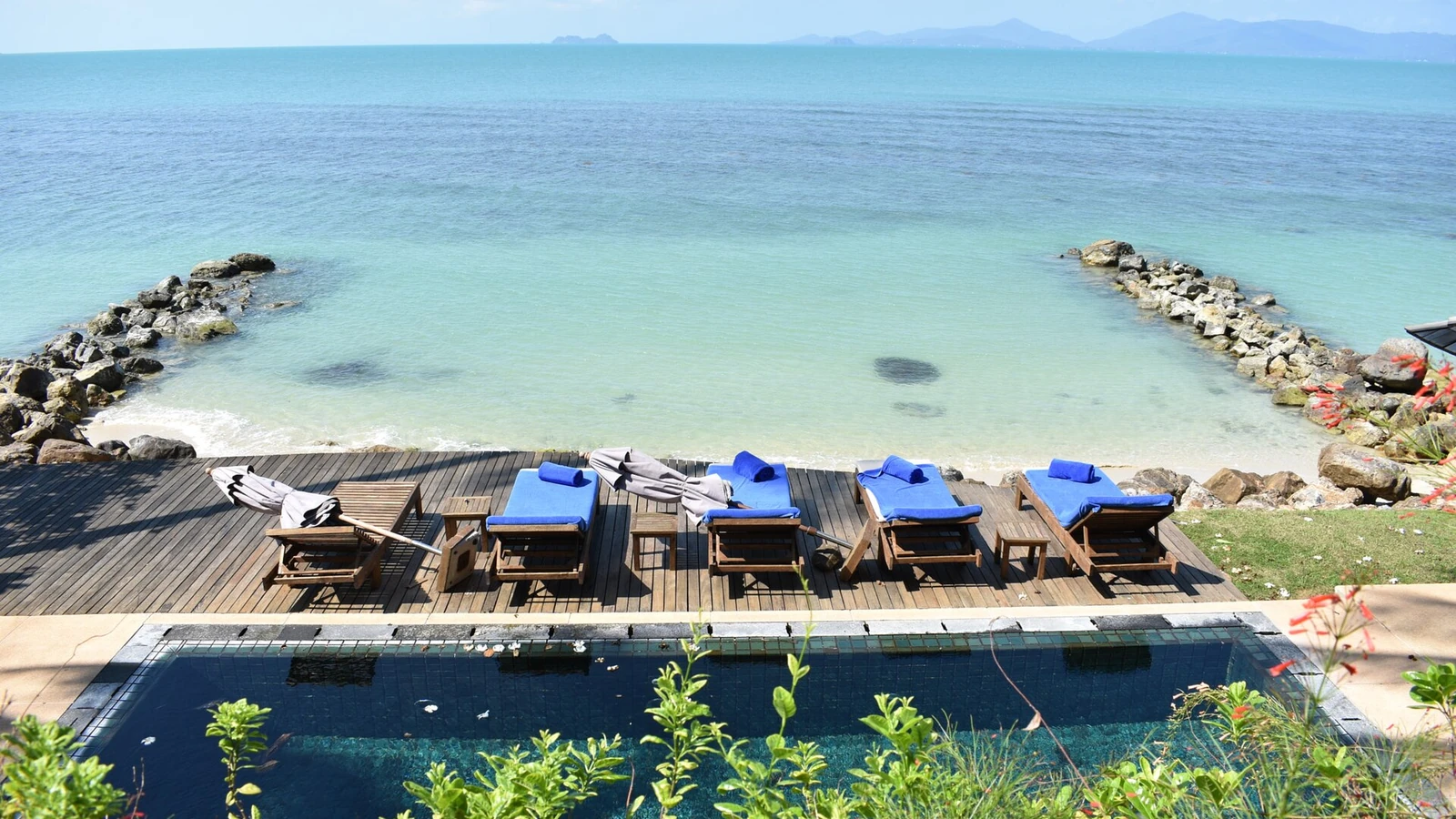
Both stops can sit inside a south-Samui sightseeing day, but they do not give you the same memory. Guan Yu Shrine is tied to the island's Hainanese-Chinese community and migration history. Laem Sor is a golden-tiled Buddhist chedi by the sea, associated with Luang Pho Daeng and containing Buddha relics. If you only have one meaningful cultural stop left, that difference is more useful than counting photo angles.
If you are still deciding whether your one land-sightseeing day should be cultural at all, start with temples or south-island nature for one Samui sightseeing day. This guide assumes the cultural side has already won and you are now choosing one stop rather than building another all-island checklist.
The five-minute answer
Choose Guan Yu Shrine. Koh Samui Municipality places the shrine on the Lamai-side south-east route, and its one-day island guide treats it as a prominent Hua Thanon cultural landmark. You get a stronger cultural contrast without creating a dedicated far-south detour.
Choose Laem Sor Pagoda. The municipality places the chedi on Samui's southern coast, near the Taling Ngam–Na Mueang boundary. In that geography, the sea-edge setting becomes part of a coherent south-coast day rather than an isolated extra trip.
Lean Guan Yu Shrine if you want the next cultural stop to feel genuinely different. It adds Hainanese-Chinese community history instead of another Buddhist landmark. If you have not chosen the north-east temple at all yet, use Big Buddha vs Wat Plai Laem first.
Choose Laem Sor. The official municipal description emphasises the golden chedi beside the sea and the calmer southern setting. Go because that atmosphere matters to you.
Choose Guan Yu Shrine. The 16-metre bronze figure and Chinese architectural language make the stop immediately legible even to travellers who do not want a long temple circuit.
Laem Sor Pagoda: the sea-edge Buddhist stop
Koh Samui Municipality describes Laem Sor Chedi as a golden-tiled chedi built by the revered monk Luang Pho Daeng, containing Buddha relics and standing by the sea on the island's south side. The same municipal visitor information places it between the Taling Ngam and Na Mueang areas.
The appeal is therefore unusually specific: Buddhist place + southern coast + quiet visual setting. If you are hoping for a large complex with a long list of things to “do”, this is the wrong reason to go. Laem Sor works best when a slower stop is the feature rather than a weakness.
If your south-island day is already getting crowded with waterfalls and other landmarks, compare Wat Khunaram vs Secret Buddha Garden before adding a third cultural stop just because it is on the same side of the island.
Guan Yu Shrine: the Hainanese-Samui stop
Koh Samui Municipality identifies the Guan Yu Shrine at Na Khai–Hua Thanon as a shrine to Guan Yu, revered for loyalty, justice, humanity and courage. The municipality's one-day visitor route calls the shrine an old Samui Chinese landmark and highlights the 16-metre bronze Guan Yu figure.
Tourism Authority of Thailand material adds the context that the shrine grew from the faith of Hainanese Chinese migrants to Surat Thani and Samui. That makes the stop useful for a first trip because it shows a cultural layer that can disappear when the island is reduced to beaches, boats and Buddhist temples.
If Hua Thanon is also entering your hotel search, keep the stay decision separate. Lamai centre vs Hua Thanon edge is about repeated daily convenience, not whether one shrine deserves an hour of your itinerary.
Route friction should break a tie—not invent the preference
Municipal visitor material places Guan Yu on the Hua Thanon/Lamai-side corridor and Laem Sor farther south near the Taling Ngam–Na Mueang boundary. That is enough to make geography useful without pretending there is one universal drive time. Your exact hotel, traffic, weather and the stops before and after will change the real journey.
If you are based around Lamai and genuinely like both, Guan Yu is usually the cleaner single-stop decision. If you are already planning a south-side day around Na Muang, Thong Krut or Taling Ngam, Laem Sor becomes easier to justify. The private driver vs separate taxis guide should come after you have cut the stop list down—not before.
Which stop adds more contrast to a beach-heavy trip?
For a first trip dominated by Chaweng, Bophut, Lamai, a resort day and one boat trip, Guan Yu Shrine usually adds the sharper cultural contrast. The reason is not that a Chinese shrine is inherently more important than a Buddhist chedi. It is that many short Samui itineraries already include Big Buddha, Wat Plai Laem or another Buddhist landmark. Guan Yu changes the visual language and the historical story.
Laem Sor wins when the coast itself is part of what you are seeking. It is less about maximising cultural categories and more about giving one southern stop room to breathe. That makes it particularly good for travellers who keep over-scheduling island days and then wonder why every place feels like a ten-minute photo stop.
If your trip is already carrying too many land attractions, the broader four-day Samui resort-day decision is more important than squeezing in either one.
Do not turn this comparison into “Buddhist vs Chinese” tourism
Both are living religious places, not themed attractions. The useful editorial contrast is the history and setting each site reveals—not a ranking of faiths. At Guan Yu Shrine, allow worshippers space and avoid treating the large statue as a prop. At Laem Sor, remember that the chedi is a place of Buddhist devotion as well as a coastal landmark.
TAT's current visitor guidance continues to ask travellers to dress modestly at temples. Its temple-etiquette guidance also notes that women should not touch monks or their robes, and that photography should not obstruct worshippers. A light layer in your day bag is an easy way to keep a beach outfit from becoming an awkward temple problem.
Four questions that usually settle the choice
Have you already done the north-east temples?
Yes: Guan Yu gains value because it broadens the cultural mix. No: decide whether south-side culture deserves time at all before collecting more religious sites.
Is your day already going south?
Yes, genuinely far south: Laem Sor becomes more efficient. Only as far as Lamai/Hua Thanon: Guan Yu usually fits with less itinerary sprawl.
Do you want a landmark or a mood?
Landmark: Guan Yu. Mood: Laem Sor. This is the cleanest non-technical way to choose when both histories interest you.
Would you still enjoy the stop without a perfect photo?
If the answer is no, skip it. Weather, worship, other visitors and light are not under your control. Pick the site whose cultural reason still survives an ordinary-looking day.
For women travelling solo: solve the return leg before the last stop
The main practical difference is logistics, not a blanket claim that one site is “safer”. Guan Yu sits on a more obvious Lamai/Hua Thanon sightseeing corridor, while Laem Sor is a more deliberate south-coast commitment. If you are travelling alone and not driving, know how you are leaving before you settle into the visit—especially if Laem Sor is the final stop of a long south-island loop.
Keep enough phone battery and data for the return, use a pickup point you can identify clearly, and avoid creating a chain of extra stops after dark simply because the driver is already with you. Thailand Tourist Police currently lists 1155 and its Tourist Police application for visitor assistance; save them before you need them rather than treating them as part of normal transport planning.
When I would skip both
If you already have Big Buddha, Wat Plai Laem, a full south-island nature route and only three or four usable days, neither stop automatically deserves the remaining free block. The three-day offshore-vs-on-island guide is a better place to check whether your trip is simply carrying too many “worthy” stops.
Likewise, if what you actually want is a low-friction food-and-walk half-day, do not disguise that desire as cultural sightseeing. Fisherman's Village vs Na Muang for one half-day makes the town-versus-nature decision directly, while Lamai Sunday Market vs Nathon Night Market handles a market evening.
My recommendation by base
Lamai / Hua Thanon: Guan Yu Shrine is the default unless Laem Sor itself is a top-priority place. If you are still choosing the accommodation area, use Lamai vs Bophut for the larger stay decision.
Chaweng / Bophut / north-east: do not drive south simply to “complete” a culture list. If you want one additional south-side cultural stop, Guan Yu gives the clearer contrast. Otherwise keep the day lighter.
Taling Ngam / Thong Krut / far-south route: Laem Sor becomes the stronger fit because the setting and your geography point in the same direction.
The one-line rule
Choose Guan Yu Shrine when you want the more distinctive first-trip cultural story; choose Laem Sor Pagoda when you want the quieter south-coast Buddhist setting. Let route fit break a tie, but do not let a driver, a map or a “top 10” list talk you into wanting the wrong stop.
Keep building the rest of the island around decisions that actually matter through the Koh Samui destination hub and the wider Thailand experiences guides.