
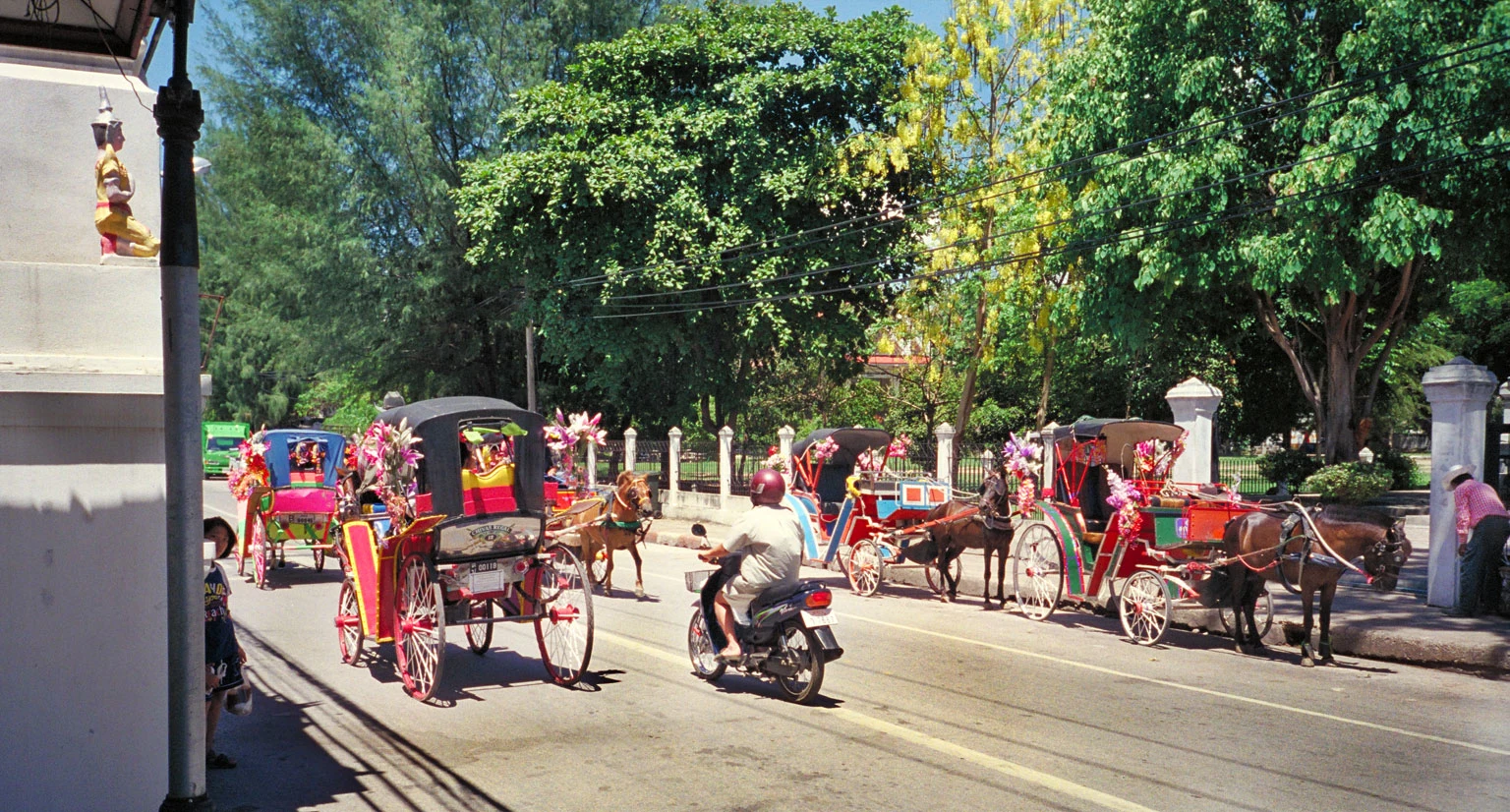
Lampang is one of those northern towns where the signature image can distort the planning. A horse carriage feels like the obvious activity, so visitors may assume the ride is the whole reason to stop. It is not. The town’s appeal is the way a short route connects the Wang River, the old commercial streets, timber buildings, bridges, and temples. A carriage gives that geography a frame; walking lets you interrupt it whenever a street or doorway catches your attention.
The choice matters because the old-town stops are spread across a small city rather than gathered in one pedestrian plaza. The Tourism Authority of Thailand describes both carriage sightseeing and cycling or a local tram as ways to connect central attractions. That is a useful clue: there is no single correct vehicle. You are choosing how much structure you want, how often you want to pause, and how much heat you are willing to absorb between stops.
What a carriage adds to a short Lampang stop
A carriage is most useful when you want orientation. The open vehicle moves through the streets at a pace that makes the town visible, and the ride can turn a list of separate landmarks into one continuous outing. Official tourism information describes routes that can include the Wang River crossing at Ratsadaphisek Bridge, Ban Sao Nak, temples, and other central sites; the route is not a fixed sightseeing bus itinerary, so ask the driver what your chosen loop includes before you set off.
That flexibility makes the ride a good fit after a long train or bus leg. You do not have to arrive with a map route already optimized, and the open-air view keeps the journey itself from feeling like dead time between pins. For a first visit, it can be the social anchor too: friends or family share the same circuit, notice the same streets, and can decide together where they want to stop next.
The carriage is not a substitute for entering every building. A moving view of Ban Sao Nak, a temple compound, or the station is not the same as spending time inside. If the driver is making a loop rather than waiting at each stop, treat the ride as an introduction, then choose one place for a longer visit. Confirm the expected duration, fare, waiting arrangement, and exact route before boarding because those details depend on the service and the agreement you make.
It also has a sensory tradeoff. You are outside, low to the street, and exposed to sun, passing traffic, and the ordinary sounds of the town. Some travelers will love that close-up pace; others will prefer air-conditioning between stops or a walk that lets them choose shaded streets. The carriage is a distinctive way to see Lampang, but “distinctive” does not automatically mean comfortable for every traveler.
Make Lampang an overnight, not a transfer gap
A central base gives you room for an evening by the Wang River and a fresh start for the next day. Compare addresses around the old town and station with your arrival and departure points.
Walking makes more sense when the side streets are your itinerary
Choose a self-guided walk if you like to set your own pace and do not mind a less polished route. You can linger at the river, detour toward a timber house, stop for a drink, or skip a site that does not hold your attention. Lampang’s central sights are connected by ordinary streets, not a single landscaped heritage trail, so the reward is partly in moving between the formal stops.
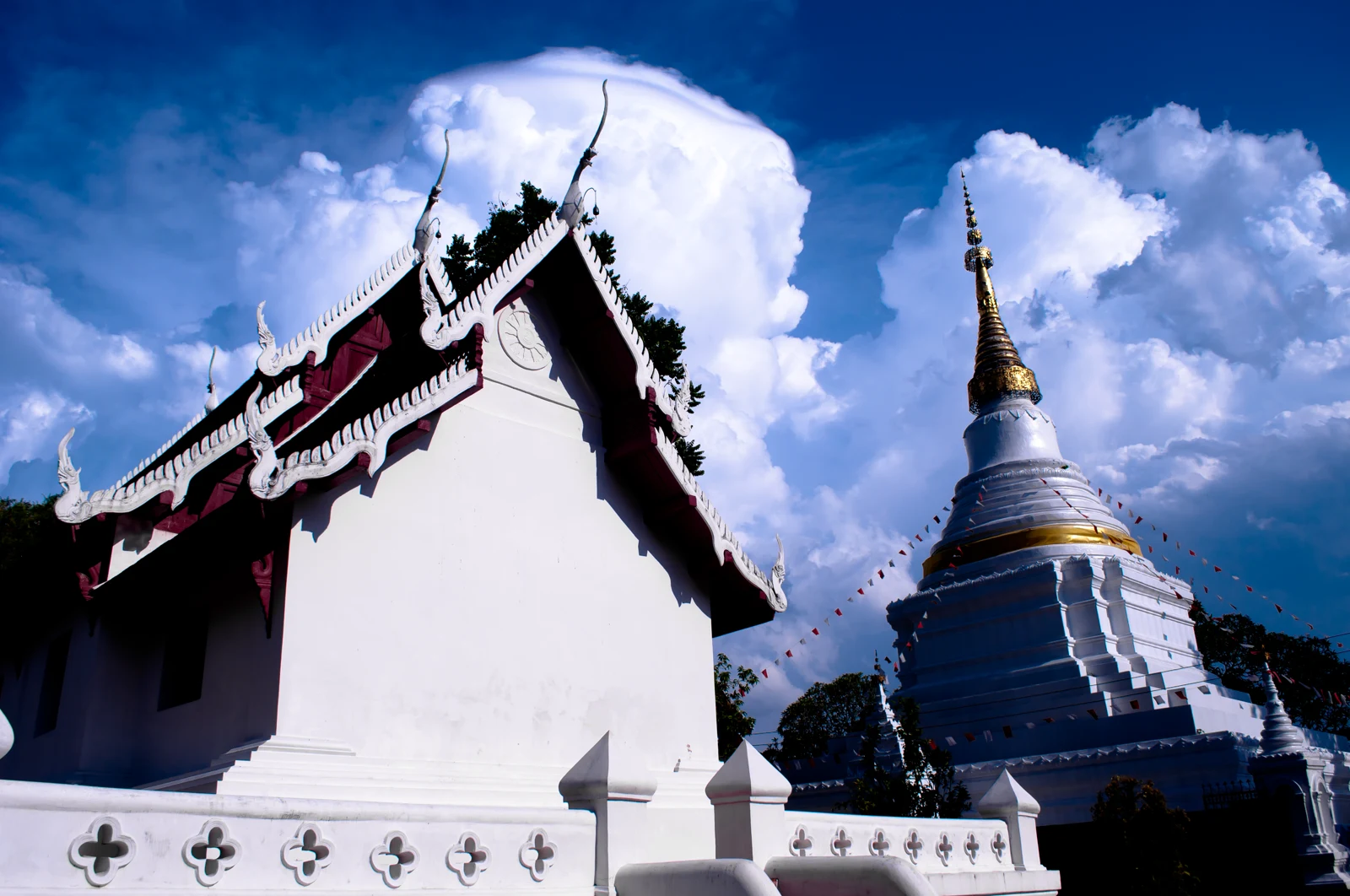
The walk works especially well if you have already picked a small cluster rather than trying to cover the whole town. Start around Ratsadaphisek Bridge and the Wang River, then choose a nearby heritage or temple stop before you drift toward a meal. The Tourism Authority lists central sites such as Wat Phra Kaeo Don Tao Suchadaram and Ban Sao Nak among points that can be connected around town. Use a map to check the actual distance between your picks and leave room for a break; a list that looks compact on a screen can feel longer in midday heat.
Walking also gives you more control over what “a stop” means. You can spend ten minutes looking at a façade or an hour exploring a place that is open and welcoming. That freedom is the value, not a promise that every lane is pedestrianized or shaded. Some stretches are shared with local traffic, and the most comfortable route may involve a short ride between separated areas rather than a heroic all-day walk.
For travelers who enjoy photography, independent walking has another advantage: you can wait for a quieter moment, look back at a bridge from another angle, or frame the older shopfronts without the carriage schedule deciding when you move. If your group gets impatient when one person takes extra time, the carriage may actually make the day easier by giving the outing a shared rhythm.
Keep the city loop separate from Lampang Luang
Wat Phra That Lampang Luang is the reason many visitors stretch a town stop into a temple day, but it sits outside the central circuit. Tourism Authority of Thailand’s provincial guide lists it among sites beyond the city, and the TAT Newsroom places it roughly 18 kilometers southwest of town. That changes the transport decision: a carriage ride or walk around the old quarter will not simply carry you there as the next nearby stop.
If the temple is your main reason for visiting, arrange a separate car or transfer and give the grounds their own time. The layered timber architecture, open-sided worship hall, and murals reward a slower visit. Combining it with a short city loop can work when you have a full day and a driver waiting, but it is the wrong add-on when your train or onward bus is already booked for the afternoon.
This is where a lot of half-day plans get needlessly stressful: travelers count the number of places rather than the distance and transition between them. Keep the town route for the city’s buildings and riverfront. Add Lampang Luang only when the longer ride is part of the plan, not a hopeful extra squeezed in after lunch.
A practical half-day that leaves breathing room
For a short visit, anchor the morning or afternoon around one mode. If you choose the carriage, use the first part of the outing to see the central layout, then ask to pause at one site that genuinely interests you. Leave time for a meal or coffee near the river rather than booking the ride so tightly that every minute becomes a handoff.
If walking is the plan, begin near the river and bridge while the group is fresh. Choose one temple or heritage house that is open that day, then allow the route to change around shade, weather, and how everyone feels. A short ride between distant points is not a failure of the walking plan; it is a sensible way to preserve the part of the day you wanted to spend on foot.
Arriving by rail? Check how far your lodging and first stop are from Nakhon Lampang station before deciding that the walk begins at the platform. The station is a worthwhile architectural stop in its own right, but carrying luggage through a sightseeing route is a different proposition from strolling without bags. Drop luggage first, or have your first transfer end at the hotel and begin the old-town loop afterward. If Lampang is one stop on a longer northern itinerary, the four-day Chiang Mai plan helps you decide whether to keep the regional leg compact or give it an overnight.
Coming north from Bangkok by train? Compare the overnight ride with flying in the Bangkok-to-Chiang Mai transport guide, then plan Lampang around the arrival time you actually choose. A carriage ride feels very different after a full night on the rails than it does after a relaxed morning in town.
How to choose when the group has mixed preferences
With two people, the carriage can be an easy compromise if one person wants a guided-feeling overview and the other wants to see the town without planning every turn. Agree in advance that the ride is the orientation segment, then pick one stop to explore on foot. That keeps the carriage from becoming a ride that one traveler sees as the whole attraction and the other sees as too brief.
For families with young children or older relatives, comfort depends less on the label “carriage” or “walk” than on the specific distance, heat, seating, and how easy it is to pause. Ask about the boarding step and ride length, and keep the walking portion short enough that the least-mobile person can enjoy it. A local tram is another option mentioned in official destination information; confirm where it runs and whether it operates on your day rather than assuming a daily timetable.
Solo travelers may prefer walking if they enjoy choosing stops independently, but a carriage can make the town’s spread easier to understand quickly. Ask whether the ride is priced per carriage or per person and whether there is a minimum; never assume a single-seat price from a group quote. If the answer makes the ride poor value for one traveler, walk a compact route and use local transport for the longer connection.
The simple verdict
Pick the horse carriage when Lampang is a short stop, you want an easy overview, and the idea of seeing the town from the street sounds like fun. Walk when you have time to follow your curiosity and can handle the weather and street-level gaps between attractions. For a first visit, combine the two only if you have a clear reason: a short carriage orientation followed by one deliberate walk is more satisfying than repeating the same circuit twice.
Most important, keep the map honest. Lampang’s central heritage cluster and Wat Phra That Lampang Luang are different outings. Choose one for a half-day; give both a full day and a dependable ride. That single decision does more for the experience than trying to fit every landmark into the same block.
Choose a base that fits the route
For a short city visit, a central Lampang address keeps the bridge, riverfront, meals, and onward transport easier to connect. Check the exact location before trading that convenience for a quieter edge-of-town stay.
One decision to make before you arrive
Decide whether the outing is a city introduction or a temple visit beyond town. That tells you whether to book a carriage loop, plan a short walk, or arrange a separate ride before the day starts.
Sources checked · 11 October 2026
- Tourism Authority of Thailand: Lampang central sights, carriage, cycling and local tram context
- Tourism Authority of Thailand Newsroom: town walking/carriage stops and Wat Phra That Lampang Luang’s distance from town
- Thailand Tourism Directory: carriage route options and local association
- Carriage photograph: Heinrich Damm, CC BY-SA 3.0
- Wat Phra Kaeo Don Tao photograph: Arts of Chet, CC BY-SA 4.0
Carriage routes, prices, and operating arrangements vary. Confirm the route and terms directly before the ride; this page is a planning guide and is not a live timetable.