These two places often appear in the same Mae Rim planning session because they sit in the same broader mountain corridor north-west of Chiang Mai. That does not make them substitutes in the simple sense. Queen Sirikit Botanic Garden is a managed botanical institution with named attractions and a defined visitor route. Mon Cham is a wider hill destination where viewpoints, agricultural landscapes, community businesses and seasonal scenery matter more than a single gate or exhibition.
The real difference is not flowers versus flowers
Tourism Authority of Thailand still lists Mon Cham among Chiang Mai's major mountain attractions and describes the wider Mae Rim landscape through terraced agriculture, Hmong communities and hill viewpoints. A 2025 TAT event at Mon Cham also shows that the area remains an active cultural and visitor destination rather than a retired Royal Project stop.
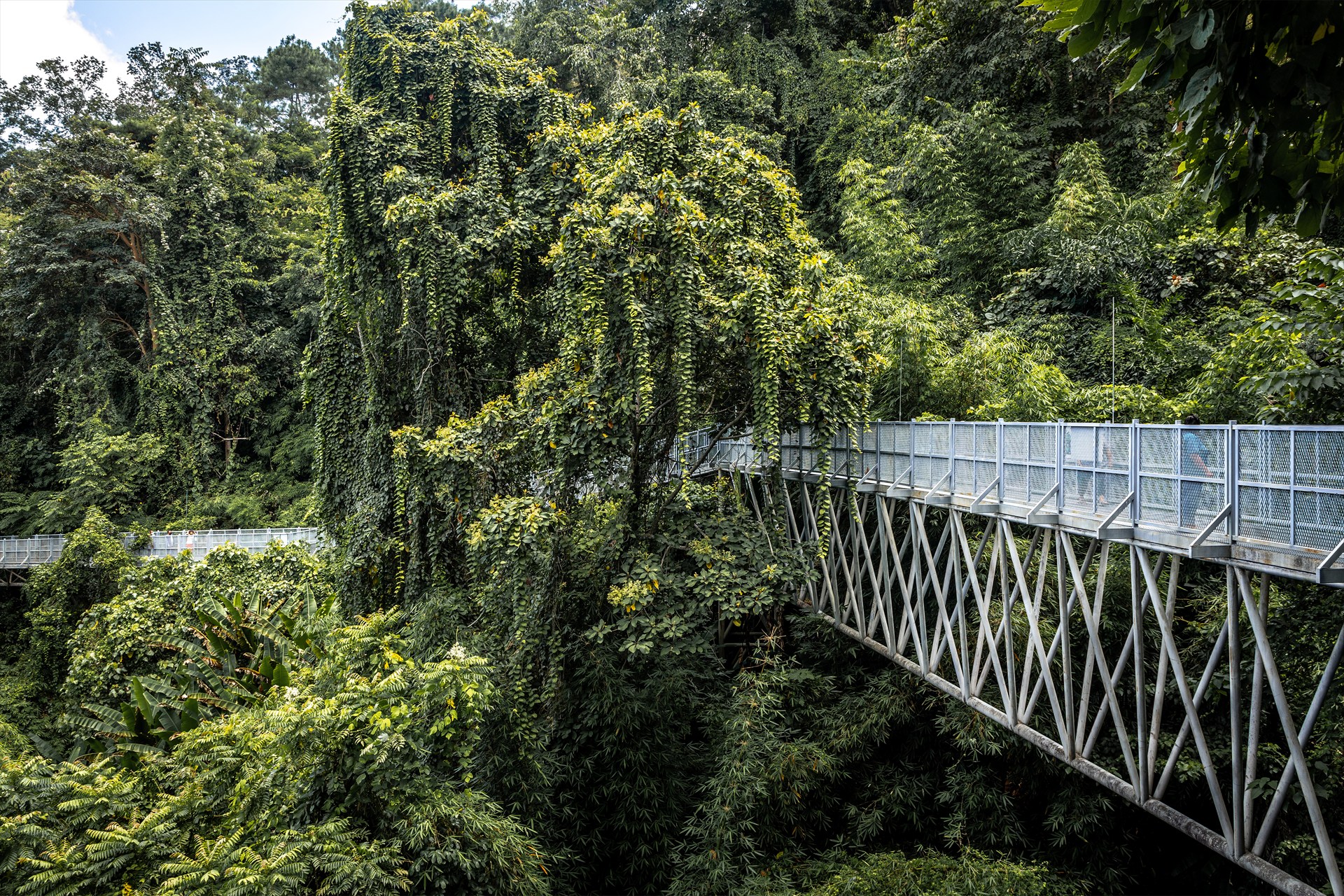
Queen Sirikit Botanic Garden solves a different problem. Its current official site lists a 500-metre canopy walk, a major glasshouse complex, orchid nursery, rose garden, Natural Science Museum, arboretum trail and other defined areas. You are not relying on one viewpoint or one flower field to justify the trip; the institution itself is the activity.
If your Chiang Mai itinerary already has a serious garden day, use the Royal Park Rajapruek vs Queen Sirikit Botanic Garden guide before adding QSBG again. If you are comparing a forest-and-waterfall walk with botany rather than a mountain viewpoint, the more precise article is Mae Sa Waterfall vs Queen Sirikit Botanic Garden.
Choose Mon Cham when the mountain journey is part of the reward
Mon Cham makes sense when you want the trip to feel like leaving Chiang Mai behind. TAT's current Chiang Mai destination page continues to highlight Mon Cham's terraced fields and mountain scenery, and TAT's Mae Rim route material places the area higher along the same Mae Rim–Samoeng corridor used for other mountain attractions.
That means the payoff is broader than a single attraction: changing elevation, cultivated hillsides, viewpoints, local produce, cafés and Hmong-area cultural context can all form part of the outing. The trade-off is that the experience is less standardized. Individual farms, flower gardens, cafés, viewpoints and activity operators can have their own opening days, admission rules and seasonal conditions. Do not treat “Mon Cham” like one attraction with one ticket and one guaranteed photo.
This is also why Mon Cham is easy to over-plan. If you already have Doi Suthep, Doi Inthanon or another highland day, ask whether another mountain outing is adding a genuinely different layer. The Doi Suthep and Doi Inthanon decision guide is useful before committing more road time to the hills. For a four-day first trip, the Chiang Mai 4-day guide helps protect enough city time instead of turning every usable day into an out-of-centre excursion.
Choose Queen Sirikit Botanic Garden when you want depth without uncertainty
QSBG’s current official directory includes the Canopy Walks, Glasshouse Complex, Rose Garden, Natural Science Museum, Orchids Nursery, Arboretum Trail and Mae Sa Noi Waterfall. The glasshouse area itself separates rainforest, arid, orchid-and-fern, aquatic, medicinal and carnivorous-plant collections.
That structure matters on a first trip. You can arrive with one destination in mind and still choose how much energy to spend once you are there. If it is hot, wet or visibility is poor, the glasshouses and museum layers give the half-day more resilience than a viewpoint-led outing. If the weather is pleasant, the canopy walk and outdoor trails expand the visit.
QSBG also pairs cleanly with a Mae Rim-focused trip. If you are deciding whether to sleep outside the city to reduce repeated transfers, use the Mae Rim resort vs Chiang Mai city hotel guide. If you only want a short green reset and not a major Mae Rim trip, Huay Tung Tao vs Ang Kaew Reservoir is a better comparison because it deals with lower-commitment lake time.
Use this route test before deciding
Stay in Old City or Nimman and return for dinner: QSBG usually creates the cleaner half-day because the attraction itself has a defined beginning and end.
Already building a Mae Rim / Samoeng-road day: either can work. Choose QSBG for botany and a structured visit; choose Mon Cham when the higher hill area is the reason you are leaving town.
Already booked multiple mountain days: skip Mon Cham unless it adds a specific interest. A creative or cultural half-day may create more contrast; Bo Sang vs Baan Kang Wat is useful when craft is the missing layer.
Weather changes the winner more than people expect
Do not choose Mon Cham only for a guaranteed view
Mountain visibility can change with cloud, haze and rain, and flower displays are seasonal. Mon Cham can still be worthwhile when the community, produce and hill setting matter to you, but it is a weaker choice if your entire reason for going is one perfect panoramic photograph.
QSBG is less dependent on a single view. The current official attraction list gives you indoor and semi-sheltered content alongside the outdoor canopy walk and trails. That does not make it a fully indoor rainy-day attraction, but it gives you more ways to salvage the half-day when conditions are mixed.
If the forecast is making you reconsider the whole day rather than just one stop, do not force a mountain plan because it was in the spreadsheet. The Mae Kha Canal vs Ping River evening guide and Baan Kang Wat vs One Nimman both offer lower-commitment city-side alternatives for the second half of a day.
For women travelling solo: solve the return trip before the viewpoint
The practical difference is the exit plan
QSBG is a single institution, so the return question is simpler: arrange your driver, ride-hail or agreed pickup around one known destination. Mon Cham is more dispersed. If you are travelling solo, decide which exact farm, viewpoint or café is your final stop and confirm how you are getting back before you drift farther uphill.
Avoid assuming that a ride will be as easy to find at dusk as it was in the city. Keep your phone charged, save the accommodation address in Thai and English, and agree the return pickup point if you are using a private driver. Thailand Tourist Police's 1155 hotline is the current traveller-assistance channel if you need help.
If you are still deciding where your Chiang Mai base should be, Old City vs Nimman helps separate walkable-city convenience from a more contemporary west-side base. And if your real question is whether the trip needs another designed attraction at all, Doi Kham vs Royal Park Rajapruek is a useful south-west comparison.
Who should choose which?
Choose Mon Cham if: mountain scenery is a top-three Chiang Mai priority; you enjoy agricultural landscapes and community stops; you are comfortable with a less standardized itinerary; and you can protect enough time for the uphill journey without squeezing the return.
Choose Queen Sirikit Botanic Garden if: plants, glasshouses and conservation interest you; you want a half-day with clearer boundaries; mixed weather makes a viewpoint-only outing feel risky; or this is your first trip and you want a Mae Rim nature experience without turning the entire day into a road mission.
Skip both if: your itinerary already includes multiple mountain and garden days, and what you actually lack is Chiang Mai city texture. In that case, the Jing Jai vs Warorot Market guide or City Arts & Cultural Centre vs Lanna Folklife Museum may produce more contrast.
Final call
For most first-time Chiang Mai trips, choose Queen Sirikit Botanic Garden when you want one Mae Rim half-day. It is a more self-contained destination and gives you several distinct experiences inside one visit. Choose Mon Cham when the mountain journey, terraced landscape and Hmong-area setting are themselves the point — not when you are simply trying to add “one more pretty place.”
Continue with the Chiang Mai Experiences hub or return to the Chiang Mai destination guide to place the half-day inside the rest of your trip.