
The useful answer is about route fit, not fame
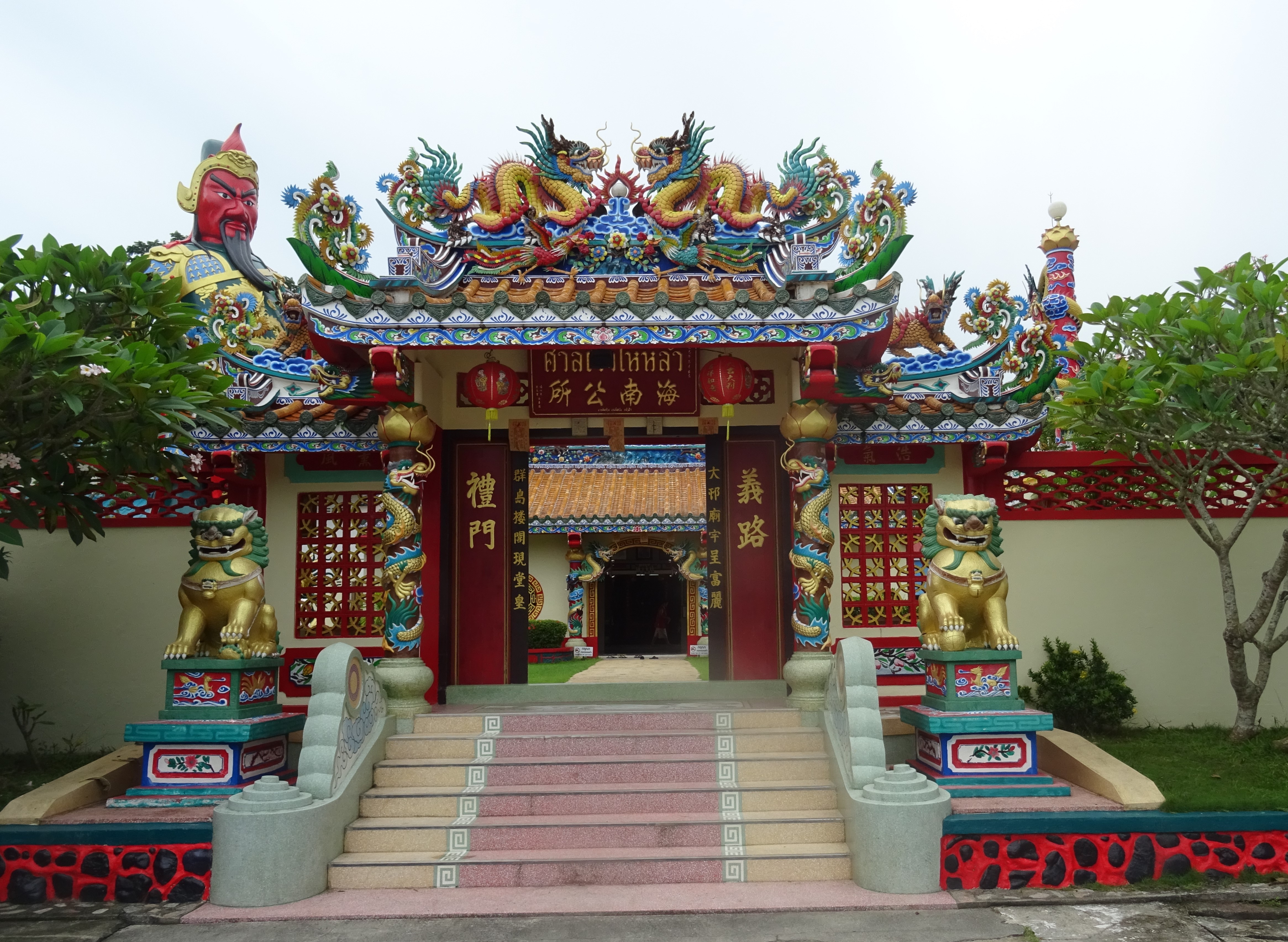
Nathon Hainan Shrine is a small religious site with a disproportionately interesting local story. Koh Samui City Municipality still listed the shrine in its 2025 Chinese New Year round-up of active worship sites on the island, which matters more than an old “hidden gem” label: this is part of living local religious culture, not an abandoned heritage prop.
For a first trip, however, cultural importance does not automatically justify road time. If Nathon is already in your day, the shrine can deepen the stop. If you are staying in Chaweng, Lamai or the north-east and would cross the island only for this one site, the detour is difficult to justify unless Hainanese migration history is specifically your interest.
What makes the shrine more interesting than a quick photo stop
Samui's Chinese cultural history is easy to flatten into one famous Guan Yu statue. Nathon tells a different story. A 2022 Thai news report, quoting the shrine's caretaker, dates the Hainan shrine to 1862 and links its foundation to overseas Chinese who arrived by sea, traded and settled on the island. The exact visitor interpretation on site may be limited, but that historical frame explains why the shrine belongs inside a Nathon neighbourhood walk rather than a generic temple checklist.
The municipality's 2025 Chinese New Year information still names Nathon Hainan Shrine among Koh Samui's worship sites. That recent official signal is important: whatever its modest tourist profile, it continues to function in the island's Chinese-Thai religious life.
Worth it when Nathon is already in the day
You are taking a ferry, exploring the old town, planning a west-coast evening or deliberately looking for local history beyond Samui's beach-resort layer. In that situation the shrine adds context without creating a new logistics problem.
Usually skip as a standalone detour
You have only three or four full days, your base is on the east or north-east coast, and the shrine would replace beach, marine or nature time that matters more to you. A site can be culturally worthwhile without deserving a cross-island mission.
The best way to use it: make Nathon the experience
Koh Samui City Municipality describes Nathon as one of the island's oldest communities and a transport, administrative, market and food centre. That is the frame that makes the shrine useful. You are not travelling west simply to spend ten minutes in a colourful compound; you are seeing one piece of a working town with a long trading history.
If you are deciding whether the west-coast town itself is worth your limited time, start with Nathon vs Fisherman's Village. Nathon is the stronger choice when you want working-town texture rather than Bophut's more polished visitor experience. If the day is really about sunset, Nathon vs Lipa Noi sunset solves a different question.
A three-question route test
- Are you already west? If Nathon, Lipa Noi or Taling Ngam is already in the day's geography, the shrine becomes a low-friction cultural add-on.
- Do you care about the story? If Hainanese migration, Chinese-Samui trade history and active shrine culture sound meaningful, the stop has a clear purpose. If your only reason is “something colourful nearby”, the value drops quickly.
- What happens after? Build a second act: old Nathon streets, food, the waterfront or sunset. A short shrine visit followed by another cross-island transfer is the weakest version of the plan.
Hainan Shrine or Guan Yu Shrine?
These are not interchangeable Chinese-culture photo stops. Hua Thanon's Guan Yu Shrine is visually larger and much more immediately legible to a first-time visitor. If you are already on the south-east side, compare Red Temple vs Guan Yu Shrine, or decide whether the area's working-food context matters more with Guan Yu Shrine vs Hua Thanon Fish Market.
Nathon Hainan Shrine is the subtler choice. Its value rises when you are already exploring Nathon and want to understand how Chinese migration sits inside the west-coast town's history. If you only have room for one headline Chinese-cultural stop and have no west-coast route reason, Guan Yu is usually easier to justify.
What about opening hours?
There is currently no single robust first-party visitor timetable that I would treat as permanent for this shrine. Third-party listings publish hours, but they are not consistent enough to make the time window the reason you cross the island. Because this is a functioning religious site rather than a ticketed attraction, access can also interact with worship, festivals and local activity.
The practical move is to visit in daylight when you are already in Nathon and verify access locally that day. If the shrine is closed or a ceremony makes tourist entry inappropriate, you have not wasted the trip because Nathon itself was already the plan.
Turn it into a balanced west-coast block
A good Nathon half-day has contrast. Shrine first, then town or food, then coast. The night-market side of the area is useful if eating is your real priority; Hua Thanon Fish Market vs Nathon Night Market helps separate an ingredient-stage fishing-market experience from a prepared-food evening.
If you are deciding whether to keep the whole evening easy, Central Samui vs Fisherman's Village is the opposite kind of low-friction decision. And if your south-side culture quota is already full, Thong Krut vs Hua Thanon gives you community texture without adding another shrine.
Women travelling solo: keep the shrine visit simple
This is an active place of worship. Dress in a way that lets you enter respectfully, keep voices low, do not block people praying or offering incense, and do not treat altars or religious objects as portrait props. If a section looks private or a local ceremony is underway, let worship take priority.
The bigger practical issue is the return route. If you are not already staying on the west side, decide how you are leaving Nathon before the evening gets late. For multi-stop days, compare a private driver vs individual taxis rather than improvising every leg. Thailand Tourist Police currently lists 1155 as its traveller-assistance hotline.
Where this fits in a short first trip
On a four-day Samui itinerary, I would not sacrifice a headline marine or nature day just to reach the shrine. Protect the big structure first with the Koh Samui 4-day resort-day decision. The Hainan shrine works best in the margins of a day you already wanted: Nathon, west-coast sunset, ferry logistics or a local-history afternoon.
If you want a quieter Buddhist stop instead, Wat Kiri Wongkaram vs Wat Samret compares two very different local temple histories. That is a better branch if Chinese-Samui heritage is not the reason you are considering Nathon.
Final decision
Nathon Hainan Shrine is worth it when it deepens a Nathon day you already wanted. It is especially useful for travellers interested in Hainanese migration and Chinese-Samui community history. It is usually not worth crossing the island solely to collect one more religious site.
Keep planning through the Koh Samui Experiences hub or return to the Koh Samui destination guide.