
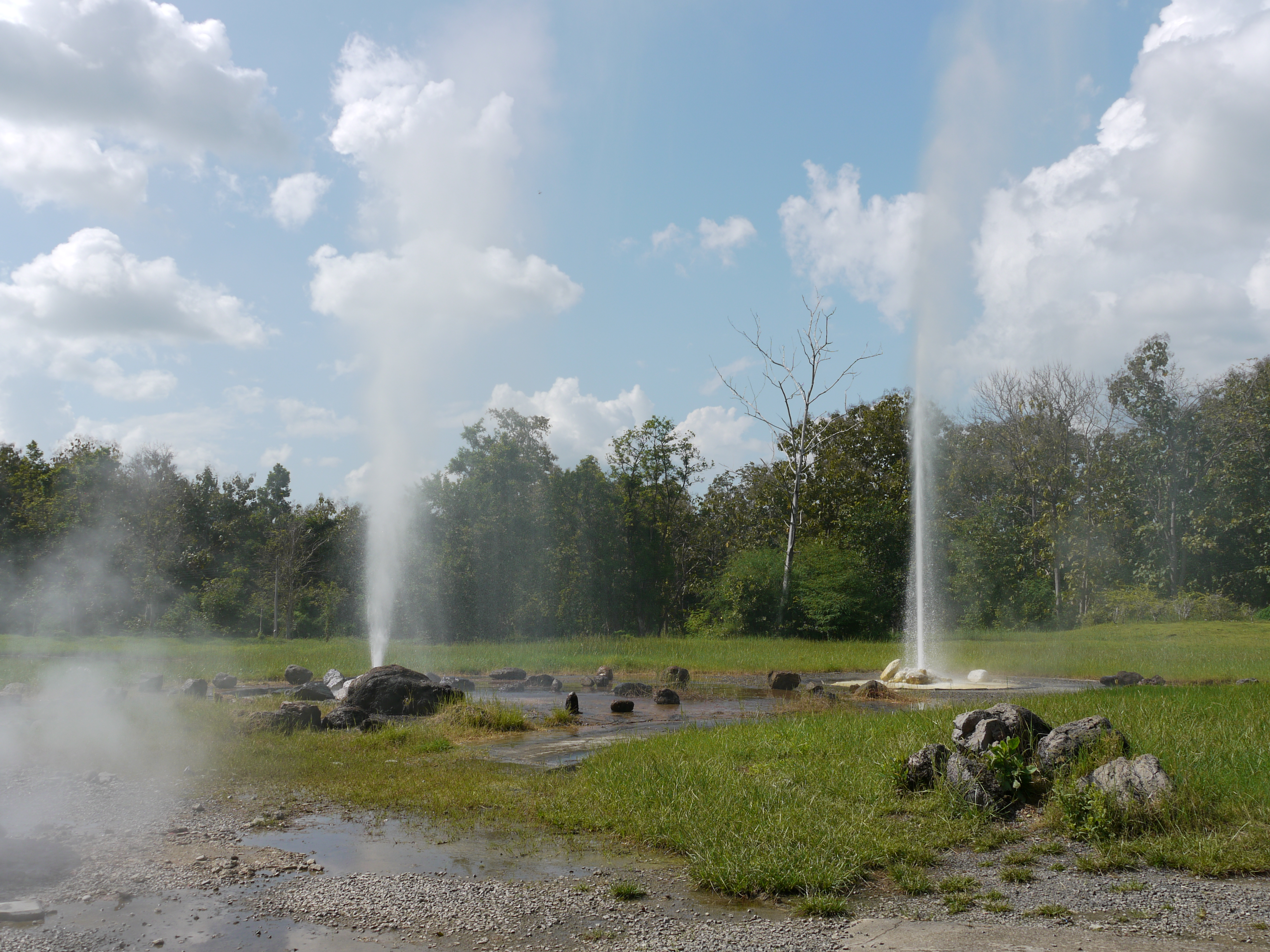
The name is slightly misleading for modern trip planning. San Kamphaeng Hot Springs is now in Mae On District, east of Chiang Mai, even though the attraction kept the San Kamphaeng name. The operator's current site says it is about 36 km from the city, and the Tourism Authority of Thailand describes the journey as roughly an hour by road.
That geography is the whole decision. The springs are not an attraction you casually add between Wat Chedi Luang and dinner. They work best when you deliberately want a slow wellness half-day or when the east side of Chiang Mai is already part of your route.
The springs are more substantial than a roadside foot bath
The current official operator site lists multiple ways to use the geothermal water: foot soaking, private mineral soaking, a mineral swimming pool and group soaking, alongside the famous egg-boiling area and geysers. The source temperature is extremely hot—official material describes the underground spring at around 105°C—so the attraction is designed around managed bathing areas rather than treating the natural vent itself as somewhere to enter.
That matters because the trip can be tailored. If you only want to see the geysers, soak your feet and boil eggs, you can keep the visit relatively light. If you want a private mineral soak or pool time, the springs become a more deliberate wellness block and the drive begins to make more sense.
If your first-trip priority is still broad city context rather than a wellness detour, compare the trade-off against the City Arts & Cultural Centre vs Lanna Folklife Museum decision. If what you really want is a low-friction green reset, Huay Tung Tao vs Ang Kaew may solve that need with a different geography.
The journey is the real price
From the city
The operator places the springs about 36 km east of Chiang Mai. TAT's current visitor page describes the road journey as about one hour, so even a short on-site visit can consume a meaningful part of a day once you include both directions.
At the springs
A quick visit can focus on the geysers, foot soak and egg-boiling area. A private soak or pool session makes the attraction more worthwhile—but also turns it into a proper half-day commitment rather than a quick photo stop.
Getting back
TAT currently publishes a shared-van option from Chang Phuak Gate and Warorot Market, but transport schedules can change. If your day depends on that service, verify the departure and return arrangement before leaving the city rather than assuming a vehicle will be waiting later.
This is why the springs are not an automatic first-trip essential. A four-day Chiang Mai trip already has difficult trade-offs between Old City time, Doi Suthep, markets and a larger out-of-centre day. The Chiang Mai in 4 Days guide is useful if you are still trying to protect those larger blocks.
When the detour becomes much easier to justify
Pair the east side instead of making two separate detours
If craft culture is also on your list, the useful comparison is not “hot springs or nothing”. Bo Sang Umbrella Village vs Baan Kang Wat helps you decide whether traditional umbrella-making belongs in the trip at all. Bo Sang sits on the same broad east-of-city direction, while the hot springs continue farther into Mae On.
That does not mean you should force both into one exhausting checklist. It means the hot springs make more sense on a day that already points east than on a day built around Nimman, Doi Suthep or the Old City.
If you are choosing among bigger scenic commitments instead, use Mon Cham vs Queen Sirikit Botanic Garden or Mae Sa Waterfall vs Queen Sirikit Botanic Garden. For a garden-led half-day closer to the south-west side, Royal Park Rajapruek vs Queen Sirikit Botanic Garden solves a different nature decision.
Current hours and fees: useful, but not the reason to go
Current published visitor information
The Tourism Authority of Thailand's current San Kamphaeng page lists 07:00–18:00 daily, an adult entry fee of 100 baht and a 65-baht hot-spring-use fee. The official operator site currently lists a private mineral soak at 65 baht per person and a mineral swimming pool at 55 baht per adult, alongside other bathing options.
These are current published figures, not permanent guarantees. Check the operator before travel if a specific pool, private soak or service is essential to your day.
The low admission price can be misleading. If you are deciding only by ticket cost, almost anything looks worth it. The more useful question is whether you would still choose the springs if the transport time were written on the ticket.
For women travelling solo or with friends, plan the wet part before you leave the hotel
Small practical choices make the visit easier
If you plan to do more than a foot soak, carry the swimwear and dry layer you actually want to use rather than assuming every rental option will suit you. TAT currently says towel and swimwear rental are available, but bringing your own removes a small point of uncertainty.
If privacy matters more than pool time, the operator currently lists private mineral soaking. Confirm availability on arrival rather than building a tight itinerary around one specific room.
For a solo return, decide the transport plan before getting into the water. A relaxed soak is less relaxing when you finish near closing time and only then start working out how to get back to Chiang Mai.
If you prefer a culture-led Mae Rim detour instead of a wellness trip, Dara Phirom Palace Museum: Worth It? is a very different use of out-of-city time. If the spiritual side of Chiang Mai matters more, Doi Kham vs Royal Park Rajapruek helps separate pilgrimage interest from a garden half-day.
Who should skip San Kamphaeng Hot Springs?
Skip it on a short first trip if the phrase “hot spring” is doing more work than the actual experience. If you are not excited by soaking, foot baths or geothermal features, the journey is difficult to justify.
Also skip it if your only free window is a rushed late afternoon. The site currently closes at 18:00, and an hour-ish road journey each way leaves too little margin for a genuinely relaxing visit. A rushed hot-spring stop defeats the point.
Finally, do not turn the springs into a recovery treatment after an overstuffed itinerary. If what you need is simply an easier evening, a low-friction city plan such as Sunday Walking Street vs Night Bazaar may fit the trip better without creating another long transfer.
The simple rule
Go to San Kamphaeng Hot Springs when the thermal experience itself deserves half a day, or when the east side is already your route. Skip it when you are only trying to add “one more Chiang Mai attraction”. The springs are pleasant enough to justify a deliberate visit, but not important enough to automatically outrank the first-trip priorities you care about more.
Keep planning with the Chiang Mai Experiences hub or the Chiang Mai destination guide.