
The part of Pai I would protect in the itinerary is the evening after the countryside outing. The town is compact enough for dinner and a walk to happen without another driver, while the canyon, hot springs and other rural stops sit outside that easy routine. A stay works better when those two parts have room to breathe.
For a first visit, my starting point is two nights with one full day for outlying sights. A third night makes sense when Lod Cave is a priority or the group wants a morning without a pickup. The choice is less about collecting another attraction than deciding how much road time belongs in the trip.
Pai Canyon deserves a proper slot in the day
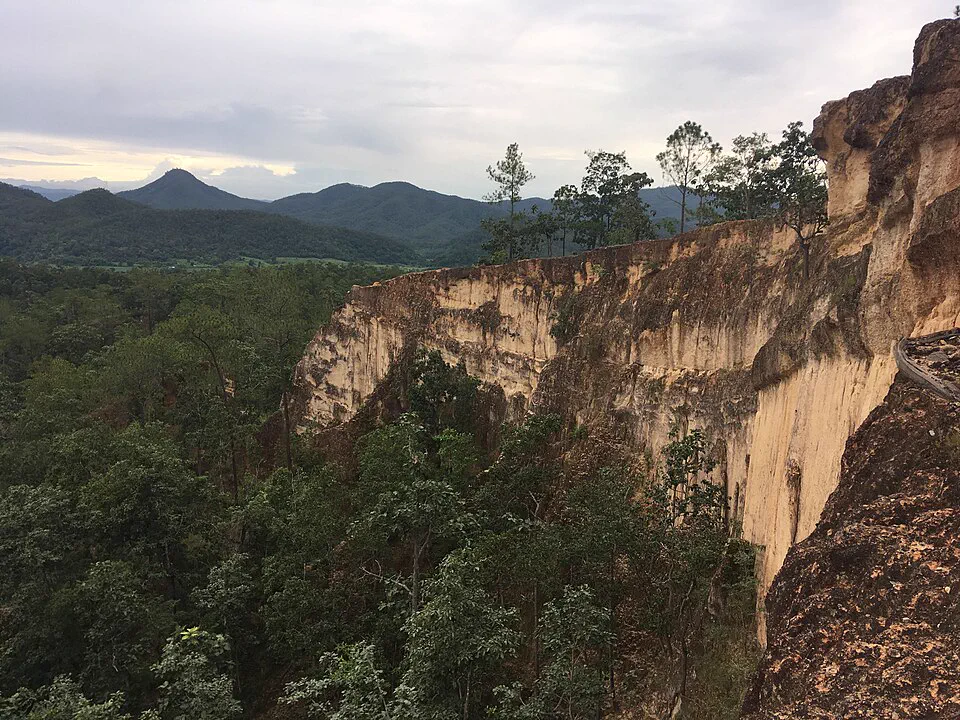
Pai Canyon, also called Kong Lan, is the landscape I would keep if the day had to lose a stop. Erosion has cut steep cliffs and narrow ridges into the ground, with mountains framing the view. The broad area near the top of the approach gives a view without requiring the exposed ridge walks. That makes it a useful stop even for someone who wants scenery rather than a hike.
Late light is the familiar reason to go. It also brings other visitors to the obvious viewing areas, so I would leave enough time to settle into a spot rather than arriving just as the sun drops. Morning is a reasonable alternative when a quieter visit matters more than sunset. The best slot is the one that fits the rest of the day without a rushed final drive.
The canyon needs a little more care than an ordinary roadside viewpoint. Narrow edges have steep drops, and wet ground can be slippery. Staying on the wider ground is a complete visit, not a compromised one. For a family or a group with different comfort levels around heights, that distinction keeps the outing enjoyable without persuading anyone onto a ridge they dislike.
A walkable dinner changes the accommodation choice
Pai Walking Street gives the town evening somewhere to go. Food stalls and shops occupy the central streets, and the surrounding restaurants and bars make it possible to continue the night after dinner. I would keep it loose: eat something that looks appealing, wander the shops, then choose whether the group wants another drink or an early night. It does not need a separately booked evening activity.
For friends traveling together, a town-center stay buys independence. Someone can go back to the room while the others stay out, and breakfast does not have to wait until every person is ready to drive. That is a more useful social feature than a hotel promising a lively atmosphere without explaining what is actually nearby.
A valley bungalow offers a different evening. The attraction is having space and a quieter setting after a day out, but dinner in town then requires a transport plan. I would compare the real walk or ride to the central streets, not just the listing's distance from “Pai.” A short distance on a map can still involve an unlit road or a river crossing that changes the way the stay feels after dark.
Rooms for a friend group deserve the same practical comparison. Two rooms near the center can be easier than one remote shared unit if people have different sleep schedules. A countryside place makes more sense when the group expects to eat and spend the evening together. Neither arrangement needs everyone to agree on every daytime activity.
Pai · Town evenings
Find a base for the evenings you want
Compare central stays with valley accommodation, keeping the dinner route and room split in the same decision.
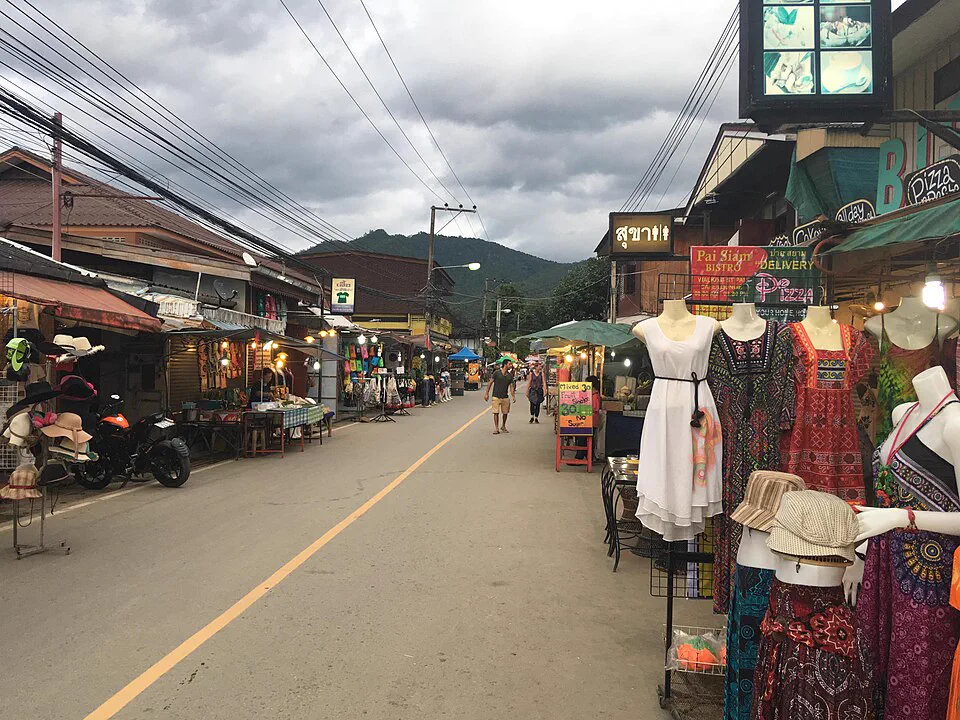
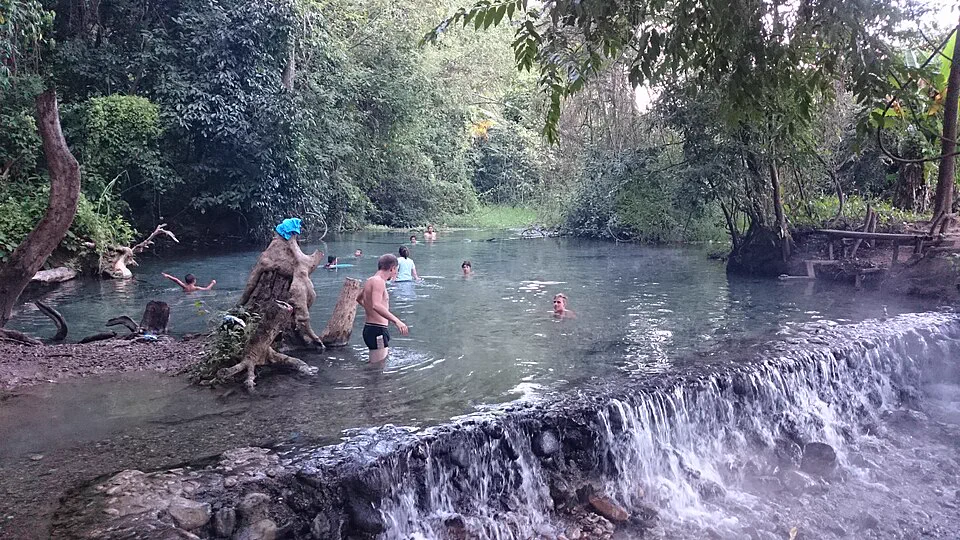
Swipe between the town street and hot-spring setting.
One hot spring is enough for a short stay
Sai Ngam has the appeal of warm pools under trees. It belongs to a farther-out countryside outing rather than the walkable town day. Tha Pai Hot Spring is another option, on the southern side of the trip. With only one full day available, I would choose the one that fits the driving route and the kind of bathing stop the group wants.
A hot-spring visit changes the pace more than another quick viewpoint does. There is time to change, get into the water and stay a while. A tour that allows only a hurried stop can lose the very reason for going. I would compare the time allocated there before comparing the number of attractions in the package.
The full cost may include protected-area entry as well as the bathing facility, depending on the location. I have not used the old low admission figures as a current budget. The useful question for an organized outing is whether the quoted total includes those charges. For a self-arranged day, the driver can establish the current entry arrangement before the route is settled.
Lod Cave is a reason to add a third night
Lod Cave is a limestone cave system in the wider Mae Hong Son region, with a river running through it. Visiting the interior involves local guiding and, for parts of the route, a raft. It is a different commitment from a Pai-town viewpoint, which is why I would give it its own outing rather than squeeze it between several local stops.
Three nights create a cleaner division: one day for the Pai countryside and another for the cave or a slower valley day. With two nights, the cave competes with the canyon and hot spring for the only full day. A traveler who cares most about the cave can choose that deliberately; someone coming for the town-and-countryside mix may get more from leaving it out.
The road portion matters to that decision too. A longer outing is still a longer outing even when the attractions look close together on a small regional map. I would compare pickup, cave time and the return to Pai as one day. That also leaves room for the friends who want to stay in town instead of joining another drive.
The smaller stops work better in a cluster
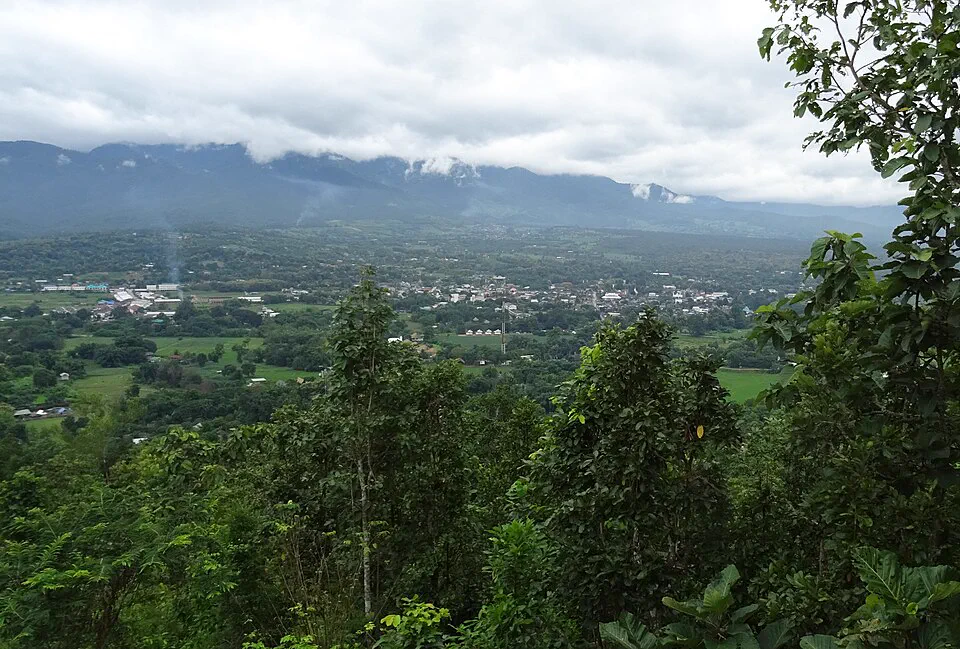
Wat Phra That Mae Yen gives a broad valley view from above town. I would use it for orientation or an easy late-afternoon outing rather than organize another race to sunset. It is an active temple, so covered shoulders and knees belong in the plan. The view is the reason to spend time there; climbing every available step is not a requirement for enjoying Pai.
Tha Pai Memorial Bridge fits a southern route with the canyon or Tha Pai Hot Spring. It is a short historical stop, not a second major sightseeing block. When the driver is already heading that way, stopping is easy to justify. Returning across the countryside solely for another bridge photograph is a weaker use of a short stay.
For other valley stops, I would let the setting decide the priority. A bamboo bridge through fields is more appealing when the landscape is green; an elevated view adds little when haze obscures the valley. A waterfall outing depends on recent conditions rather than the calendar alone. Those are good reasons to leave one part of the route adjustable instead of choosing every pin months ahead.
A driver can solve the scattered geography
Pai town can be used on foot. For the outlying sights, a local driver or organized car outing gives the group a way to travel together without renting scooters. The value is in covering the road connections, especially when the chosen stops lie on different sides of town. One or two destinations may suit a simple private arrangement; a fuller circuit is where a structured outing starts to earn its price.
I would compare actual time at the stops rather than count them. A route with fewer places and a proper soak at the hot spring can be a better day than a larger list with repeated quick departures. Hotel pickup, the return point and what happens to the route in rain also affect how easy the day is to share.
A scooter is not necessary for seeing Pai. For a traveler without experience on winding roads, a group car is the straightforward alternative. The ride from Chiang Mai is already part of the trip's road time; an arrival evening with dinner nearby gives people time to recover before another outing.
Pai · Countryside pickup
Keep the room and pickup location aligned
A central pickup can simplify an outing. A valley stay can work too when the driver includes the final road to the property.
How I would arrange two nights
On arrival, I would keep the first evening in town. A walk and dinner on the central streets are enough after the mountain transfer. An early arrival might allow the temple viewpoint, but I would not make the whole evening depend on reaching the canyon before sunset. The stay already has a full day for that.
The middle day gets the countryside outing: one bathing or nature stop, a nearby cluster, and the canyon when the light suits the route. Lunch belongs somewhere in that sequence rather than being squeezed out by another viewpoint. Back in town, the group can decide over dinner whether to stay out or return to the rooms.
The departure morning is where accommodation location pays off again. A central room allows breakfast and an easy meeting point; a valley property may offer the quieter morning the group wanted. I would finish with one of those, rather than add a distant stop that leaves everyone watching the clock before the onward transfer.
When the weather changes the plan
Cooler evenings make town time and outdoor viewpoints easier to enjoy. In the late dry season, heat and regional haze can reduce the reward of a long viewpoint circuit. Rain can bring greener fields while making exposed paths slippery. I would change the day's priorities with those conditions rather than assume a particular month guarantees every photograph.
That flexibility is easiest when the accommodation itself is somewhere the group wants to spend time. A good room location, an appealing dinner routine and a spare morning keep the stay useful even when one outdoor stop drops out. The transport guides cover the wider connections; the stay collection helps with the next base on a northern trip.
Pai · Two or three nights
Compare the stay with the whole trip in view
Use the same dates and party size, then compare the evening location, room arrangement and countryside pickup before choosing the base.
Sources checked and image credits · October 12, 2026
- Mae Hong Son attraction overview: canyon, Walking Street and cave context. Published in 2020; historical admission figures and named nightlife venues are not treated as current.
- Natural attractions in Mae Hong Son: spring and guided cave context.
- Pai countryside and town overview.
- Pai attraction overview: temple, memorial bridge and town geography.
- Photos by Christophe95: Pai Canyon, Pai Walking Street and Pai valley view. Photo by Sgroey: Sai Ngam Hot Spring. All four use CC BY-SA 4.0.
- Each photograph includes its author, file record and CC BY-SA 4.0 license link. The original images were resized and converted to WebP; 320-pixel listing thumbnails are cropped.