
This guide assumes the mountain decision is already made: you are visiting Wat Phra That Doi Suthep in the morning and will be back in the city with a meaningful second half of the day left. If that timing itself is still unsettled, start with our Doi Suthep morning vs late-afternoon guide. If transport is the unresolved part, use the separate songthaew vs private-car comparison.
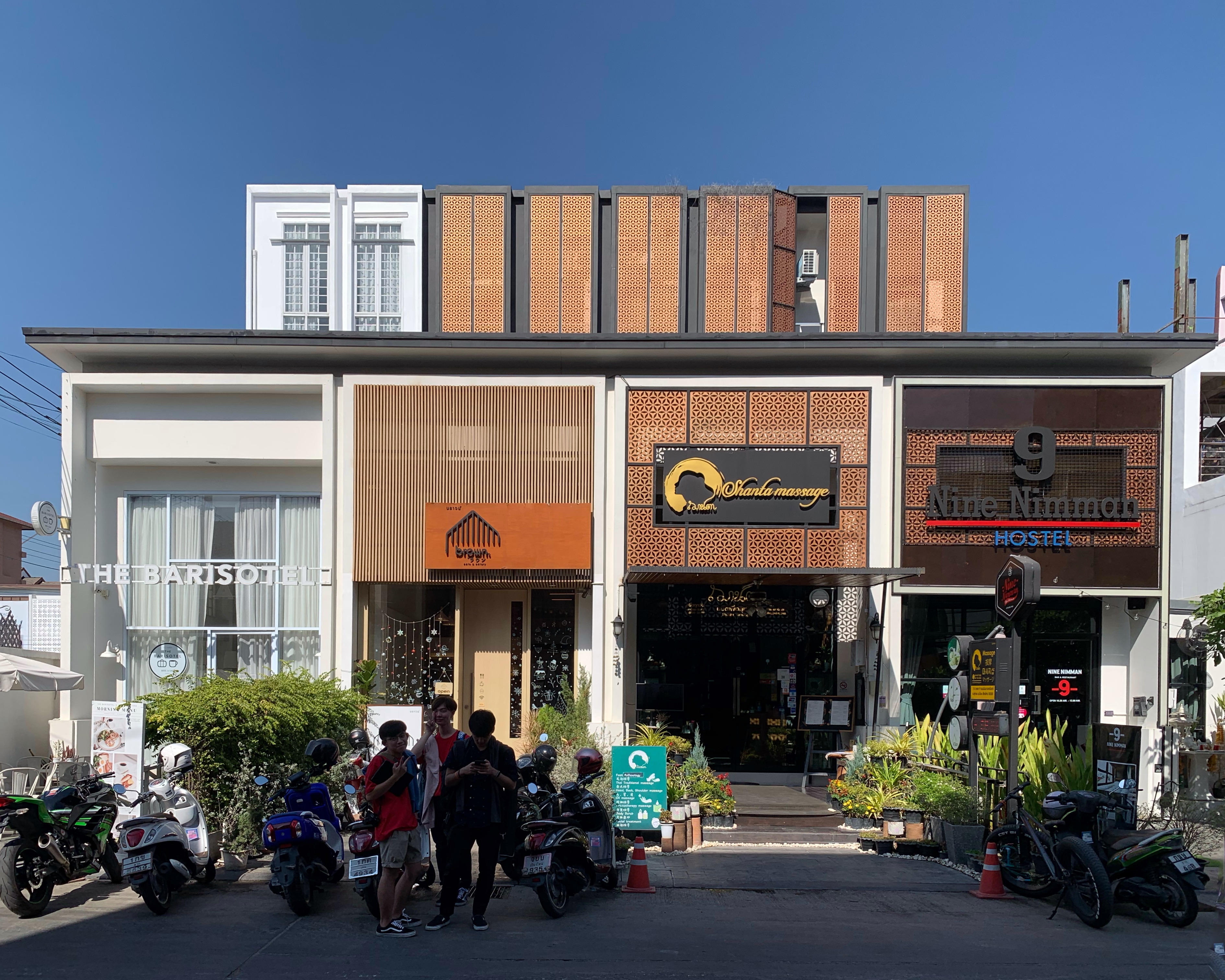
The useful question after the mountain is simpler: what kind of afternoon would make the day feel more complete? Nimman gives you a contemporary Chiang Mai block with food, cafés, shops and a looser rhythm. The Old City gives you heritage streets, temples, gates and—on the right day—a natural bridge into an evening walking-street plan.
The quick rule
Pick Nimman when the morning already delivered your big sight. It is the cleaner second act when you want to eat, cool down, browse and let the day become less scheduled.
Pick the Old City when your historic-core list is still genuinely incomplete. Do not go back merely because it feels more “cultural”; go because there are specific streets, temples or an evening event you still care about.
Do not confuse a one-afternoon choice with a hotel-base choice
Our Old City vs Nimman hotel guide asks where you want your repeated mornings and evenings to be easiest. This article asks something narrower: where should one post-Doi-Suthep afternoon go? You can sleep in the Old City and still choose Nimman for this block. You can sleep in Nimman and still go back to the Old City because a specific temple or Sunday market matters more.
That distinction prevents a common planning trap: making every daytime decision serve the hotel. A good Chiang Mai itinerary is allowed to use different zones for different jobs. The four-day structure in our Chiang Mai 4-day guide works for the same reason—it avoids repeated cross-town bouncing without pretending one neighborhood should absorb the whole trip.
The afternoon has three different jobs
Recover without ending the day
If the temple visit, stairs, heat and road time used more energy than expected, Nimman is often the better reset block: lunch, coffee, air-conditioning and low-stakes wandering can still feel like part of the trip.
Finish the historic core
If you have not yet walked the Old City properly, the afternoon can close that gap. Pick one side of the moat rather than treating “Old City” as an invitation to collect every temple before dinner.
Position the evening
If dinner, a walking street or your hotel reset is already fixed, the best afternoon zone is often the one that leaves you closest to that evening rather than the one with the most attractions.
Why Nimman often works well after a mountain morning
Tourism Authority of Thailand describes Nimmanhaemin Road as a lively Chiang Mai district very close to Chiang Mai University, while Chiang Mai University itself is on Huay Kaew Road. Chiang Mai Province's official Doi Suthep visitor information also routes access toward the mountain via Huay Kaew. Nimman fits naturally on the west-side route; traffic and your exact pickup point determine the travel time.
Nimman is especially persuasive when your afternoon priorities are deliberately ordinary: a proper lunch, a café, some shopping, a massage later, or simply being somewhere you can edit the day without losing much. Chiang Mai Province was still treating the Nimmanhaemin district as a major tourism area in its 2025 Nimman Connex smart-tourism initiative, so this is not a “backup neighborhood” used only when you are tired; it is a distinct urban experience in its own right.
If you are comparing nearby stay areas more broadly, the Santitham vs Nimman guide explains why the west side of central Chiang Mai does not behave like one single neighborhood. And if your evening later shifts toward the river or market side, our Nimman vs Night Bazaar comparison helps you see how much extra movement that creates.
Why the Old City can still be the better second half
The Old City wins when the afternoon is not filler. Tourism Authority of Thailand describes Tha Phae Gate as an eastern entrance to the old walled city, with nearby temples and the Sunday walking-street route extending along Ratchadamnoen Road. If your trip is short and you still have not seen the historic core in a coherent way, returning there can be more valuable than choosing Nimman simply because it feels logistically tidy.
The key is to narrow the target. If you want the east side around Tha Phae and Ratchadamnoen, that is a different afternoon from the west side around Wat Phra Singh. Our Tha Phae vs Wat Phra Singh guide is useful even if you are not choosing a hotel because it explains how those two ends of the Old City create different walking patterns. If you are entering from the south instead, the Chiang Mai Gate vs Tha Phae Gate guide helps you avoid treating the entire moat as one interchangeable drop-off point.
Sunday is the strongest Old City override
TAT currently lists the Sunday Walking Street from Tha Phae Gate along Ratchadamnoen Road, beginning around late afternoon. If that market is one of the experiences you actually came for, going back to the Old City after Doi Suthep can create one continuous afternoon-to-evening block instead of a separate later transfer.
But the market should change the plan only if you want the market. If you would rather eat comfortably, browse shops and keep the evening flexible, do not let a once-a-week event turn the whole afternoon into a compulsory Old City return. Use our Saturday vs Sunday walking-street guide to decide whether that evening deserves priority first.
Use this table instead of asking which area is “better”
| Your real situation after Doi Suthep | Lean | Why |
|---|---|---|
| You have already seen the Old City once and mainly want lunch, coffee and an easy afternoon | Nimman | Add a different side of Chiang Mai rather than repeating another temple-heavy block. |
| You have not yet had a coherent Old City walk | Old City | Use the remaining daylight to finish a first-trip priority instead of postponing it again. |
| Your hotel is in the Old City and you badly want a shower or clothes change | Old City first | A real reset can be worth more than theoretical route efficiency. Decide what happens after the reset. |
| Your hotel is in Nimman and you are already tired | Nimman | Do not cross the city just to prove the day was productive. |
| It is Sunday and Sunday Walking Street is a top-three Chiang Mai priority | Old City | Build one continuous afternoon-to-evening zone and avoid another transfer later. |
| You have a fixed cooking class later | Whichever zone serves the class pickup | The paid or fixed-time commitment should control the afternoon handoff. |
The hotel-reset rule can overturn the geography
Trip-planning advice often treats every return to the hotel as wasted time. That is too simplistic in Chiang Mai. If you have been outside since early morning and are hot, dusty or dressed for temple visiting, a shower and clothes change can materially improve the rest of the day. This matters particularly if dinner, drinks or a market are still ahead.
So if your Old City hotel is the obvious reset point, go back there without feeling you have “failed” the efficient route. Then choose whether you stay in the Old City or make one final move later. The same logic applies to a Nimman hotel. What you should avoid is three moves: mountain → one district for lunch → hotel in another district → third district for the evening.
If hotel walkability is a recurring problem in your trip, the hotel shuttle vs walk-out location guide explains why a property that looks attractive in isolation can create more daily transport than expected.
Two good afternoon shapes—and one bad one
Mountain → Nimman → easy evening
Return from Doi Suthep, eat in Nimman, slow the pace, browse or stop for coffee, then either stay for dinner or return once to your hotel. This is strongest when the morning was the day's main sightseeing event.
Mountain → Old City → walking-street or temple evening
Return to one chosen side of the Old City, complete a specific walking block, eat nearby and stay in the same zone into the evening. This is strongest when heritage or Sunday Walking Street is still a genuine trip priority.
Mountain → Nimman → Old City → Night Bazaar
This is the version to avoid. Three urban zones after a mountain morning usually means the afternoon becomes a chain of pickups, traffic, navigation and “one quick stop” decisions instead of a coherent second half.
If you already booked a class, let the fixed appointment win
A cooking class changes the logic because pickup windows, meeting points and start times matter more than neighborhood theory. First decide whether you want a half-day or full-day cooking class. Then protect the confirmed meeting arrangement and use the hours before it in the nearest sensible zone. Do not force Nimman or the Old City into the plan if the class creates a cleaner answer.
For solo women, plan the last ride before you choose the afternoon
Neither Nimman nor the Old City should be described as universally safe or unsafe. The practical difference is how your specific afternoon ends. A relaxed Nimman block can become annoying if dinner is across town and you are improvising the final return late. An Old City market evening can be easy if your hotel is nearby, but less so if road closures or crowds shift the pickup point away from the entrance you expected.
Before committing to the second zone, check four things
- Where will the final ride start? Save the hotel pin and the actual pickup point you expect to use, because neighborhood names are too broad.
- Are you carrying temple clothes, water and a day bag? If yes, a hotel reset may improve the afternoon more than another attraction.
- Will the evening get busier? Sunday Walking Street can change how vehicles approach the Old City, so verify the pickup plan rather than assuming the same curb works all day.
- Are you arriving in Chiang Mai late the night before? If fatigue is already high, our Chiang Mai late-arrival guide is a better starting point than building an overfull next day.
What if rain changes the afternoon?
Do not keep the neighborhood choice rigid just because it looked neat in a spreadsheet. A wet afternoon makes long Old City walking less attractive; Nimman can become the easier low-commitment block. Conversely, if the rain clears and you still have one historic-core priority left, the Old City may suddenly become the better use of daylight.
That flexibility is the reason to avoid pre-booking a second commercial activity merely to fill the afternoon. After Doi Suthep, the most useful thing may be optionality: lunch, a café, a reset, one walking zone and a dinner plan you can move.
The decision in one sentence
After a morning at Doi Suthep, choose Nimman when you want the afternoon to become easier and more contemporary; choose the Old City when you still have a specific historic or Sunday-evening reason to be there. If neither reason is strong, go where your hotel and dinner already make the rest of the day simpler.
For the wider Chiang Mai planning loop, return to the Chiang Mai destination hub or compare the rest of our Thailand itinerary guides.
Sources checked
Chiang Mai Province Official Site — Wat Phra That Doi Suthep visitor information and current published opening hours: chiangmai.go.th
Tourism Authority of Thailand — Stylish Chiang Mai on Nimman: tourismthailand.org
Tourism Authority of Thailand — Chiang Mai destination information: tourismthailand.org
Tourism Authority of Thailand — Old City / Tha Phae Gate / Sunday Walking Street information: tourismthailand.org
Chiang Mai Province — Nimman Connex smart-tourism district announcement, 26 September 2025: chiangmai.go.th