
The real question is not “which mountain is better?”
Doi Suthep and Doi Inthanon are not interchangeable versions of the same excursion. Tourism Authority of Thailand lists both among Chiang Mai's major highlights, but they fill different jobs in an itinerary. Doi Suthep is the city landmark on the mountain above Chiang Mai; Doi Inthanon is a separate national-park day built around altitude, forest, waterfalls, trails and a much longer road commitment.
The planning mistake is treating both as automatic checkboxes. The better question is whether your trip can afford one mountain-side half-day plus one full highland day without squeezing out the Chiang Mai experiences you came for in the first place.
If you are still deciding the overall shape of the trip, start with the four-day Chiang Mai structure. It deliberately separates Old City, contemporary city time and a mountain/out-of-centre block so you can see what a second major road day would actually displace.
These two outings solve different travel cravings
A landmark half-day
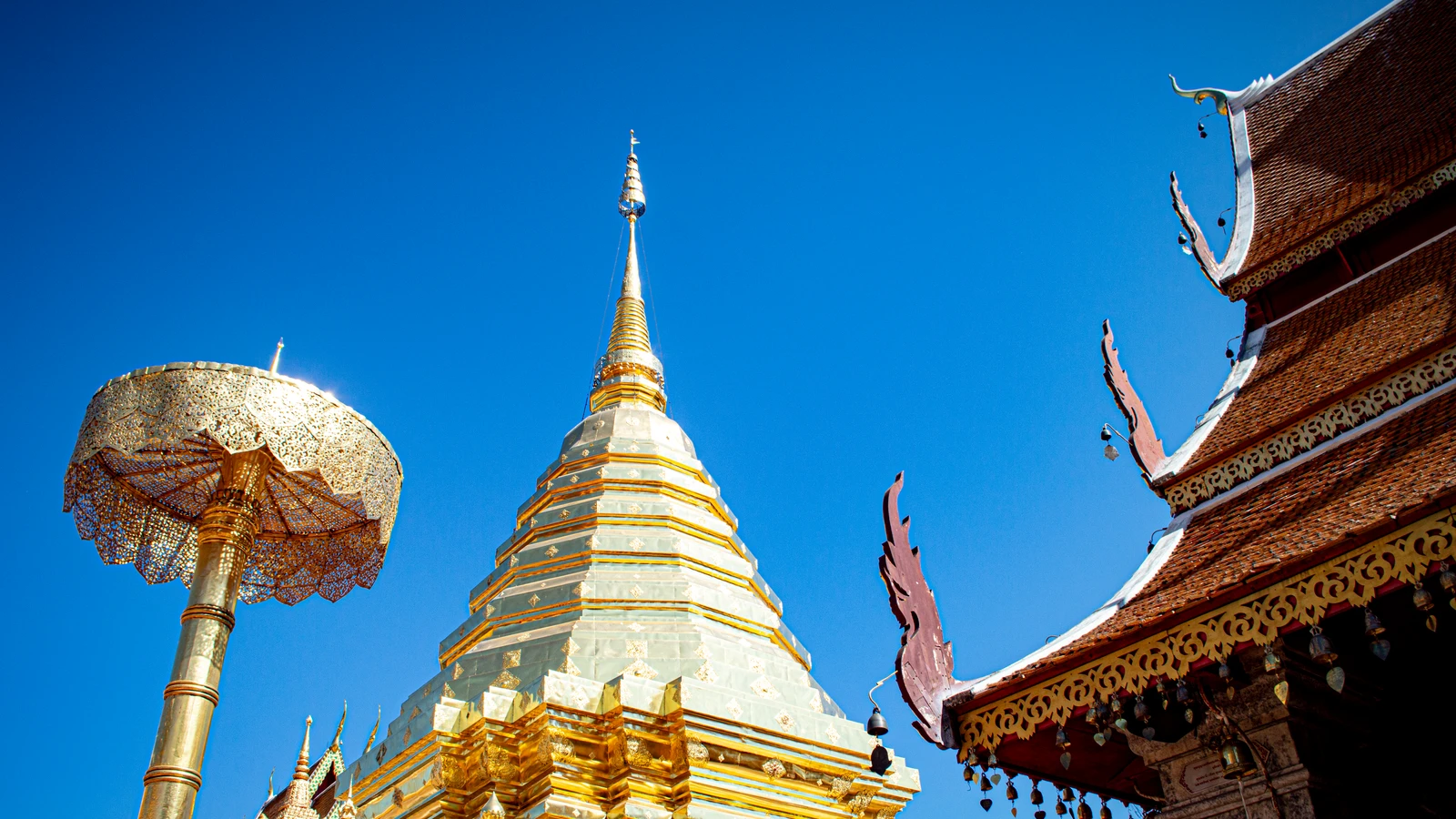
Wat Phra That Doi Suthep is the stronger default if your first trip needs one unmistakably Chiang Mai landmark. Chiang Mai Province currently lists the temple as open from 06:00 to 17:00, although access can change and you should recheck close to your visit. The draw is the temple, the mountain setting and the relationship between the city and its best-known religious landmark.
If the mountain is a priority, the separate Doi Suthep morning-or-afternoon guide explains why an earlier slot usually gives you more margin.
A full nature day
Doi Inthanon is a different proposition. Chiang Mai Province identifies it as Thailand's highest mountain and describes road-accessible waterfalls, high-altitude nature trails and summit-area scenery. That is why it deserves a full-day mindset rather than being treated as “another mountain temple.”
Once you decide it deserves a day, the next choice is operational: compare a shared Doi Inthanon tour with a private driver by guide value, group size and control over the clock.
The 1.5-day test
Think of the two outings as a time budget rather than two pins on a map. Doi Suthep can fit inside a focused mountain-side half-day. Doi Inthanon is a separate full-day commitment once transport, stops and the return to Chiang Mai are included. Together, they can consume the equivalent of roughly one and a half usable sightseeing days.
How many full Chiang Mai days do you actually have?
This is also why your hotel base matters more than it appears. An Old City vs Nimman decision changes the easiest urban days around the excursions, while a shuttle-dependent stay versus a walk-out location changes how much friction remains after you return from a long road day.
Do both only if you pass this three-question priority test
- Would you still choose Doi Inthanon if nobody called it a “must-do”? You should want the highland nature, trails, waterfalls or cooler mountain environment itself.
- Are you comfortable spending another full day away from Chiang Mai's urban core? If the answer is no, the city time is probably more valuable.
- Can you name what you would willingly remove to make room? A second mountain commitment is real only when you are prepared to trade away another full-day possibility.
Who should do both
Do Doi Suthep and Doi Inthanon on the same trip if the mountains are part of the point of coming to Chiang Mai. This fits travellers who actively want a mix of religious landmark, highland forest and road-trip scenery—not travellers adding both because every sample itinerary seems to contain them.
Both also make sense when you have already protected city time elsewhere. For example, a compact historic block can still feel complete if your hotel lets you walk easily to the Old City, and a weekend market can provide a different evening texture without needing another full sightseeing day. If your dates include Saturday or Sunday, the Saturday Wua Lai vs Sunday Walking Street guide helps you preserve the market that best fits the rest of the route.
Who should keep Doi Suthep and skip Doi Inthanon
This is the stronger default for a three-day first trip and for many four-day city-led trips. Doi Suthep gives you a major Chiang Mai landmark without requiring a second full day of road time. The saved day can then become Old City, a cooking class, a slower Nimman afternoon, a market evening or simply the breathing room that keeps the trip from feeling like a shuttle between pickup points.
It is especially sensible if you already have another out-of-centre commitment. A Mae Kampong day trip or overnight, for example, competes for the same broad resource: a chunk of the trip spent away from central Chiang Mai. The experiences are different, but your calendar does not care—they still use road time and energy.
When Doi Inthanon can matter more than Doi Suthep
There is no rule saying a first-time visitor must prioritise the famous temple. If you are distinctly nature-first, temple-light and already seeing enough Lanna religious architecture in the Old City, Doi Inthanon can be the mountain day you care about more.
The trade-off is identity. Skipping Doi Suthep means giving up one of Chiang Mai's signature landmarks. Skipping Doi Inthanon means giving up a much larger highland-nature day. Choose the absence you would regret less, not the attraction with the bigger social-media footprint.
Sequence both without letting the road dominate the trip
Day 1: City
Start with an urban block that helps you understand your hotel area. Do not use arrival fatigue as an excuse to “get a mountain out of the way.”
Day 2 or 3: Doi Suthep
Use a focused half-day. If you also want a quieter forest stop, Wat Pha Lat fits naturally on the Doi Suthep side; Wat Umong is a different west-side city decision.
Separate day: Doi Inthanon
Do not place the long highland day immediately after another exhausting excursion if you can avoid it. Give yourself one easier city evening before or after.
Transport choices can change how tiring the first mountain block feels. For Doi Suthep, compare a red songthaew with a private car by return certainty and extra-stop plans. After the mountain, the separate Nimman-or-Old-City afternoon decision helps prevent a simple half-day from turning into unnecessary cross-city zigzagging.
One small decision that makes the Doi Inthanon day easier
A full mountain day often starts earlier than a normal café morning. If your hotel rate includes breakfast, check whether you will realistically be there to eat it. The Chiang Mai breakfast-included vs room-only guide uses early excursion mornings as one of the tests for whether breakfast is actually worth paying for.
Practicalities for women travelling solo or with one friend
The useful safety question is not “is the mountain safe?” in the abstract. It is whether the whole day has a clear start, a clear return and enough margin that you are not improvising tired at the end.
For Doi Suthep, decide how you are getting back before you start adding optional stops. For Doi Inthanon, keep the operator or driver details, pickup point and return plan offline as well as on your phone. Bring a light layer because high-elevation conditions can feel very different from central Chiang Mai, and wear footwear you are comfortable using on damp or uneven paths rather than choosing shoes only for temple photos.
Temple etiquette still applies at Doi Suthep: cover shoulders and knees appropriately in worship areas and follow local instructions. If a long Doi Inthanon day leaves you depleted, do not force a distant nightlife plan just because it was on the original spreadsheet. A meal and an easy return near your base can be the better use of the evening.
Weather and park status can change the order
Check current conditions and park status shortly before the trip; weather and trail access can change. Check current conditions and official park information close to the date. Thailand's national-park authorities can close individual attractions or trails for weather, safety or ecological recovery, and a specific trail being unavailable does not automatically mean the entire Doi Inthanon day has no value.
Keep the mountain day movable if the rest of your itinerary allows it. If Doi Inthanon is the reason you chose to do both, protect the better forecast window for that full-day commitment and let the city absorb the less certain day.
The better first trip is the one with fewer obligatory checkboxes
Chiang Mai already asks you to choose among heritage, food, neighbourhoods, markets, temples, crafts, wellness and mountain landscapes. The destination hub can help you see those choices side by side: open the Chiang Mai guide index, then use the itinerary hub to keep the day-by-day structure realistic.
Final rule: Doi Suthep is the default; Doi Inthanon has to earn the extra day
Three full days: usually do Doi Suthep and keep the rest of Chiang Mai diverse.
Four full days: do both when mountain nature is one of your top three priorities; otherwise keep Doi Suthep and use the extra day for the city.
Five or more full days: both become much easier to justify because you are no longer making the city compete with two mountain commitments for half the trip.