
The decision in one sentence
Use roughly 8:00am to lunch as the default Old City temple window. Chiang Mai Province currently lists both Wat Phra Singh and Wat Chedi Luang as opening at 8:00am, so waking at 6:00am does not automatically buy you two extra hours inside the places most first-time visitors actually want to see.
If you enjoy being outside before the city is fully awake, you can still walk the moat, lanes or Tha Phae side earlier. Just treat that as a city walk, not as a guaranteed temple-interior shortcut.
This distinction matters if you are staying in the historic core. The whole point of choosing inside the Old City rather than outside the moat is that you can use short walks more freely. It does not mean every walk needs to happen before breakfast.
The 8am problem changes the answer
Early-morning travel advice often assumes that “earlier” is automatically better: cooler air, softer light, fewer people, more atmosphere. Some of that can be true on a street. It becomes less useful when the attraction you actually care about has not opened yet.
Two core temples, one practical constraint
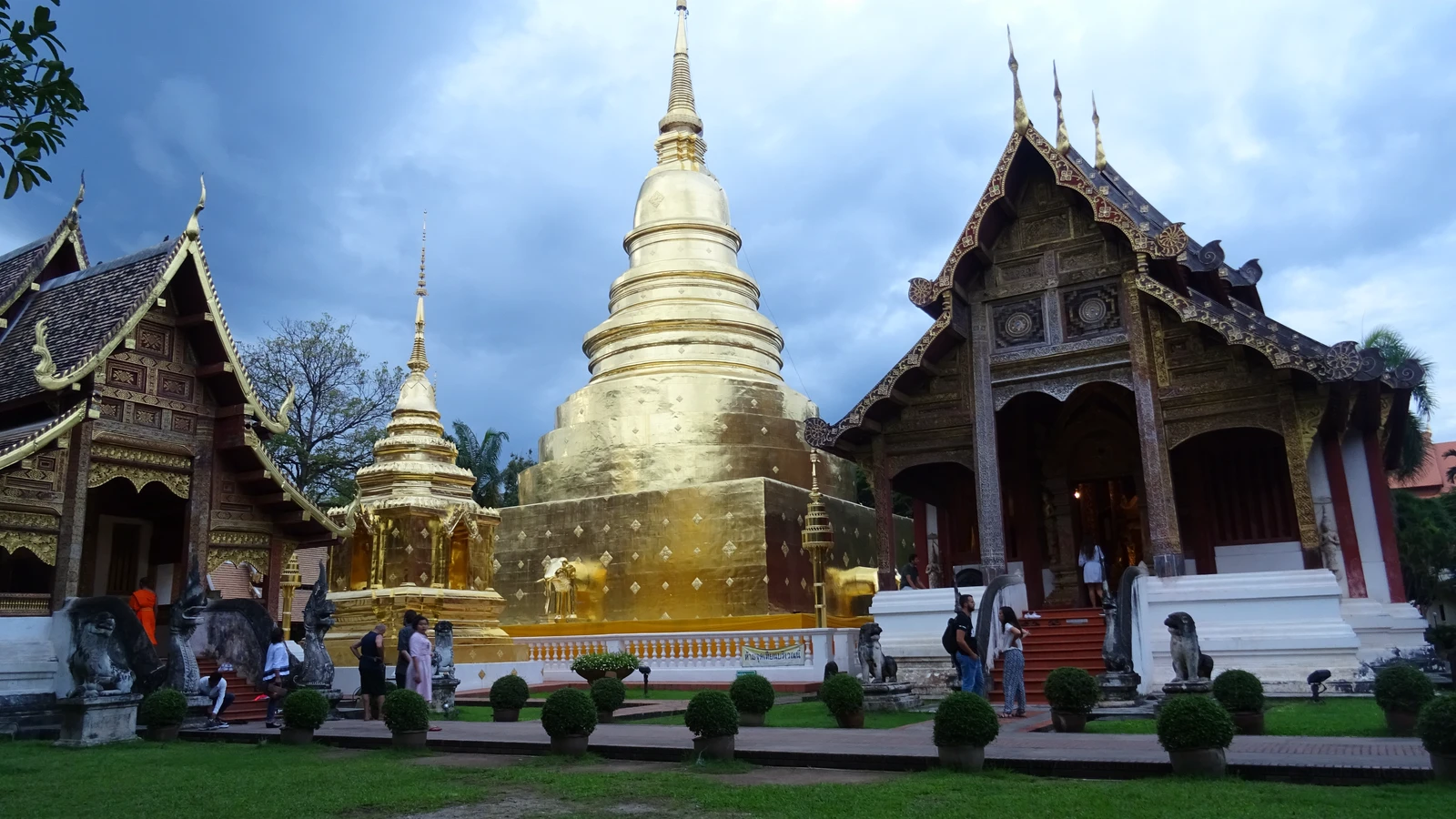
Chiang Mai Province's current tourism page lists Wat Phra Singh: 8:00am–5:00pm and Wat Chedi Luang: 8:00am–5:00pm. Those published hours are the planning anchor for this article. Check again close to your visit because religious sites can change access for ceremonies, maintenance or local events.
TAT's current Chiang Mai routing also groups Wat Chedi Luang and Wat Phra Singh into an Old City day rather than presenting dawn as a required condition for appreciating them.
That is why a first trip usually works better when breakfast, temple access and onward plans form one continuous morning. If your hotel location is still undecided, the Tha Phae vs Wat Phra Singh micro-location guide is more consequential than shaving 45 minutes off the alarm clock.
Pick the morning you actually want
Walk first
Best if you already stay inside the moat and genuinely enjoy quiet streets, coffee runs and architecture before the temple interiors become the main event. This is an optional atmosphere block, not a sightseeing requirement.
Temple first
The strongest default. Start when the major temples are officially open, keep the route compact, then transition into lunch or another Old City stop without creating a second journey later.
Slow day
Completely reasonable if you are not building the trip around photography or temple density. It is especially useful after a late arrival, a market night or a substantial excursion the day before.
A first-timer's Old City morning does not need five temples
The bigger mistake is not arriving at 9:30 instead of 8:00. It is turning the Old City into a temple checklist so dense that Wat Phra Singh, Wat Chedi Luang and every smaller shrine start to blur together.
A cleaner plan is to choose one or two headline temples, then give the rest of the half-day a different texture: breakfast, a museum, a shaded lane, a café, lunch or a route toward a market. TAT's current Old City material treats the moat area as a wider historic district, not a single attraction. The four-day Chiang Mai structure uses the same logic: keep the Old City coherent, but do not let one urban block consume the whole trip.
If those two headline names are exactly where you are stuck, use the new Wat Chedi Luang vs Wat Phra Singh comparison: choose Chedi Luang for monumental historic impact, or Phra Singh for Lanna religious art and a more detailed devotional-space visit.
If you want a concrete clock, use this one
If you are deciding what should happen after a mountain morning instead, use the separate Nimman vs Old City after Doi Suthep guide. Do not copy this Old City clock onto a day whose real fixed point is Doi Suthep.
When an earlier start is genuinely worth protecting
There are three good reasons to be outside before 8:00am, and none of them is “because every guide says temples are better early.”
You already stay inside the moat
A short, reversible walk is different from ordering a car across town at dawn. If your room is near Wat Phra Singh, Tha Phae or another walkable Old City pocket, you can enjoy a quiet circuit and still return for breakfast. This is where accommodation geography earns its keep. Compare Old City vs Nimman before treating dawn access as a reason to commute.
You care about the streets as much as the interiors
Gate remnants, lanes, exterior architecture and the changing feel of the neighbourhood can justify an early walk even before the major temple interiors open. TAT's current moat guide specifically frames Tha Phae Gate as an entry into the wider Old City, with temples and attractions around the historic core. If that urban fabric is part of your interest, the walk has value on its own.
You want to protect the rest of the day
Finishing the Old City before lunch can free the afternoon for a completely different zone. That is useful if you are keeping Nimman, a market or another district as a separate block. It is less useful if the rest of the day is already intentionally slow.
When normal daytime is actually better
Choose normal daytime if you arrived late, slept badly, are travelling with someone who hates early starts, or know that rushing breakfast will make the whole morning worse. Chiang Mai is not a city where one missed 7:00am window destroys the Old City experience.
It is also the better choice when your important evening is fixed. If your dates include a weekend market, compare Saturday Wua Lai with Sunday Walking Street before spending all of your energy on an unnecessarily early temple morning.
Do not confuse this with Doi Suthep timing
Doi Suthep is a different planning problem because it involves road time, hill access and a separate return chain. If the mountain temple is one of your top priorities, the Doi Suthep morning vs late-afternoon guide explains why an earlier fixed block can make more sense there.
Likewise, if you want a quieter forest-temple experience instead of another urban temple, compare Wat Pha Lat with Wat Umong. Do not wake up earlier simply to duplicate a kind of temple visit you already have elsewhere in the itinerary.
Dress for the temple, plan for the walk
TAT's general visitor guidance for Buddhist temples says to dress politely and remove shoes before entering temple buildings. For an Old City morning, that means a practical outfit should work for both temple etiquette and several kilometres of walking: shoulders and knees appropriately covered for sacred spaces, shoes you can remove without drama, and something comfortable enough for heat and pavement.
For women travelling solo: do not let “early” become “isolated”
A pre-breakfast walk is optional. If a lane feels too empty, the route is poorly lit, or you would be more comfortable starting after breakfast, choose the later start. You are not giving up the main temple experience by arriving for the official 8:00am opening window.
Keep the route simple enough that you can change your mind without negotiating a long ride. Staying near the Old City is useful precisely because you can shorten, reverse or pause the morning. If you are choosing between two edges of the historic core, the Chiang Mai Gate vs Tha Phae Gate guide shows how different evening and walking patterns can become even within the same broad district.
What if you only have one Old City morning?
Then the answer becomes even simpler: do not waste the morning chasing an imagined “perfect” quiet hour. Start with the temple you would regret missing, keep one second stop optional, and leave enough slack for breakfast, heat, prayer activity or a slower-than-expected visit.
If the entire trip still feels overfilled, return to the Chiang Mai destination hub or the broader Thailand itinerary guides and remove a block before you optimize it.
The final test
Would you still wake up early if the temple doors opened at 8:00am and the streets were not empty? If yes, protect the early walk because you genuinely want the atmosphere. If no, sleep, eat breakfast and start the Old City when the main temples actually open. That is the stronger default for most first trips.