
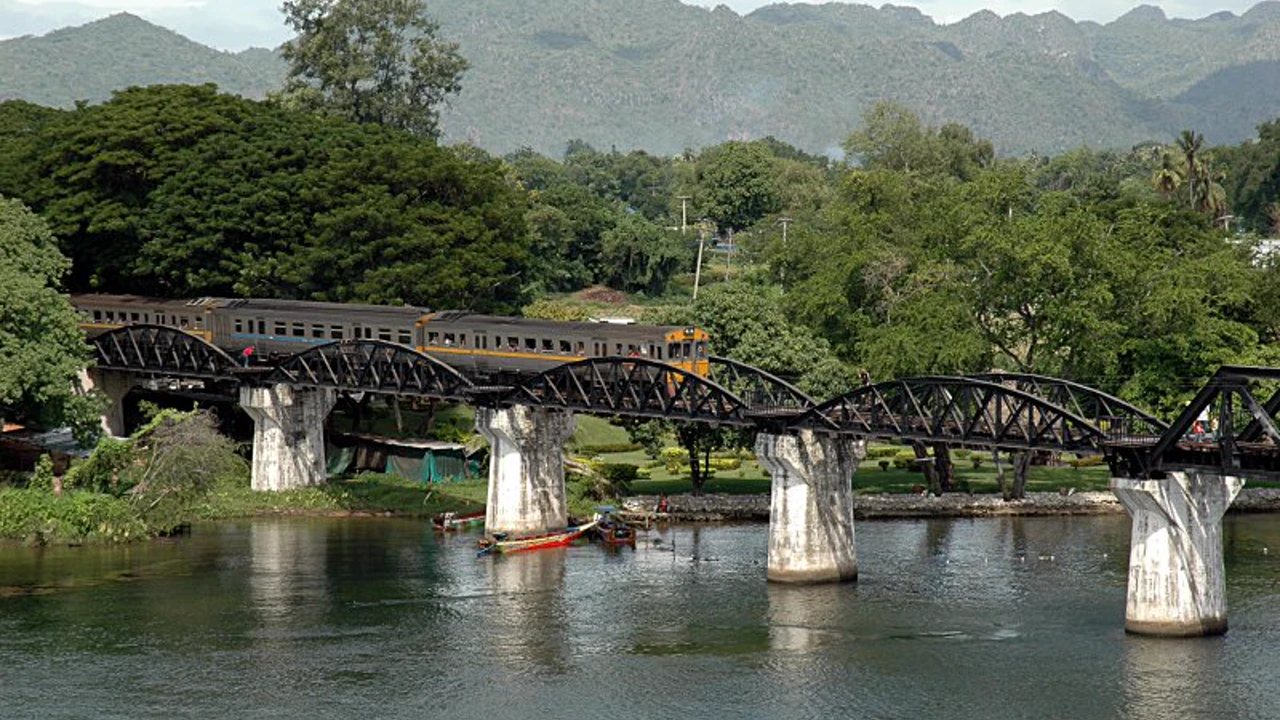
These places make more sense as one sequence than as three pins to collect. Start where the railway is still part of the landscape, pause at the cemetery, then step into the museum beside it to understand the railway’s scale and human cost. That order keeps the travel simple and gives the visit room to change tone without forcing a rushed museum sprint.
This is a town itinerary, not a day trip to the entire province. Hellfire Pass is far outside central Kanchanaburi and cannot be tacked onto this half-day without changing the whole plan. If you have only a few hours, the in-town bridge and the cemetery–museum pair already make a coherent visit.
Why this order works better than pin-hopping
The bridge is the stop that needs the most attention to timing. It is an active railway crossing, not a static exhibit, and the experience changes when a train approaches. Going first lets you watch the crossing, walk onto the structure when it is open for visitors, and leave without watching the clock over the cemetery and museum later.
Don Rak and the Thailand–Burma Railway Centre are adjacent to one another. Treating them as a single neighborhood stop avoids an unnecessary second ride. I would visit the cemetery before the museum: the quiet memorial grounds provide space to register the names and scale of loss, while the Centre gives the chronology, maps and context that are difficult to absorb from the bridge alone.
JEATH is the optional branch, not the required finale. It is farther south, and its displays overlap the same broad wartime subject. Add it only if you still have time and interest after the Centre; otherwise, protect the quality of the first three stops and use the remaining time for lunch or a slower return into town.
A practical half-day sequence
| Part of the visit | What to do | Why it belongs here |
|---|---|---|
| First stop | River Kwai Bridge and its approach | Arrive before the day heats up; allow time for a train pause rather than treating the crossing as a quick photo. |
| Second stop | Don Rak War Cemetery | It is next to the Railway Centre and gives the route a quiet memorial interval before the interpretive visit. |
| Third stop | Thailand–Burma Railway Centre | Spend the time needed to follow the railway’s planning, construction and aftermath, rather than squeezing in another distant attraction. |
| Optional extension | JEATH War Museum | Choose it only if current access works and you want another museum after the core sequence. |
Think in blocks rather than promising yourself exact arrival times. Train movements, heat, the time you spend reading cemetery headstones and your pace inside the Centre can all shift the finish. Check the Centre’s current visitor information before setting off, then leave the final slot flexible enough to drop JEATH without feeling that the day has failed.
Start at the bridge while the visit is still unhurried
The bridge is a working piece of railway infrastructure and a memorial site at once. The black steel spans and concrete supports are immediately legible; the story behind them is not. Built as part of the wartime railway, the crossing was later damaged in air raids and repaired after the war. The practical point is simpler: trains still use the line, so the structure is not yours to cross on your own terms at every moment.
Once there, follow posted instructions and give railway staff and other visitors room. When a train is due, step clear as directed and do not try to turn the crossing into a timed photo opportunity. If you happen to see a train pass, let that be the day’s natural pause. If not, the bridge still makes the route tangible without requiring you to wait indefinitely for a particular moment.
Keep the bridge visit self-contained. Walk the accessible section, look back along the line and river, then leave for the cemetery area. If you start the day from Kanchanaburi town, a short local ride is usually more sensible than assuming the bridge, cemetery and museum form one continuous walk; confirm your pick-up point before you get out.
Give Don Rak time without turning it into a checklist
The cemetery changes the pace of the day. Its lawns and rows of headstones are carefully maintained, but the setting is not a decorative detour. Don Rak is the final resting place for 6,982 prisoners of war who died during construction of the railway and were reburied there after the war. I would not compress that scale into a quick walk-through between transport stops.
Move quietly, read the inscriptions that draw your attention and leave room for other visitors. You do not need to photograph every row to make the stop count. If you are travelling with children or friends, agree on a meeting point near the entrance so nobody has to call across the grounds. The cemetery is beside the Railway Centre, so there is no practical benefit to rushing out simply to beat a second transfer.
The memorial is primarily for Allied service personnel, while the railway’s human toll also included Asian civilian laborers whose deaths were often not recorded in the same way. Keep that distinction in mind as you move to the museum: the cemetery is a specific memorial, not a complete accounting of everyone harmed by the railway’s construction.
Use the Railway Centre to connect the places
The Thailand–Burma Railway Centre is next to the cemetery, which makes it the natural third stop. Its galleries follow the railway from planning and construction through operation and the postwar aftermath. This is the point where maps, objects and written records can turn separate sights into a route with geography and chronology, rather than leaving the bridge as a famous image and the cemetery as an isolated memorial.
Give yourself enough attention for the material. The galleries trace the route’s planning and construction, then follow the aftermath and burial of those who died. You do not have to read every panel to benefit; follow the sections that answer the questions raised by the bridge and the cemetery, then pause if a display needs more time. The on-site cafe can make a useful break between the cemetery and museum, though I would not let lunch push the core visit into a rushed final hour.
Check the Centre’s visitor page before you travel. Its published schedule was last updated in 2022, so confirm current access rather than building a tight plan around an old listing.
Choose a base that keeps this morning simple
If you are staying overnight, compare the exact address with the bridge, town and your onward transport. A riverside room can be part of the trip; it is not automatically the easiest base for every early start.
When JEATH is worth adding
JEATH can make sense if the first three stops have left you with energy for another museum and you specifically want to see its presentation of the wartime railway. Its location farther south means it is not a seamless add-on from the cemetery pair. Decide after the Railway Centre, and check that it is open before you pay for a ride there.
I would skip it on a short morning if you are already saturated with museum material, if your return ride is fixed, or if you have plans to continue west to another railway site. The town route works without JEATH. Adding a fourth stop is only an improvement when the additional displays answer a question you still have, not when the itinerary looks too short on a map.
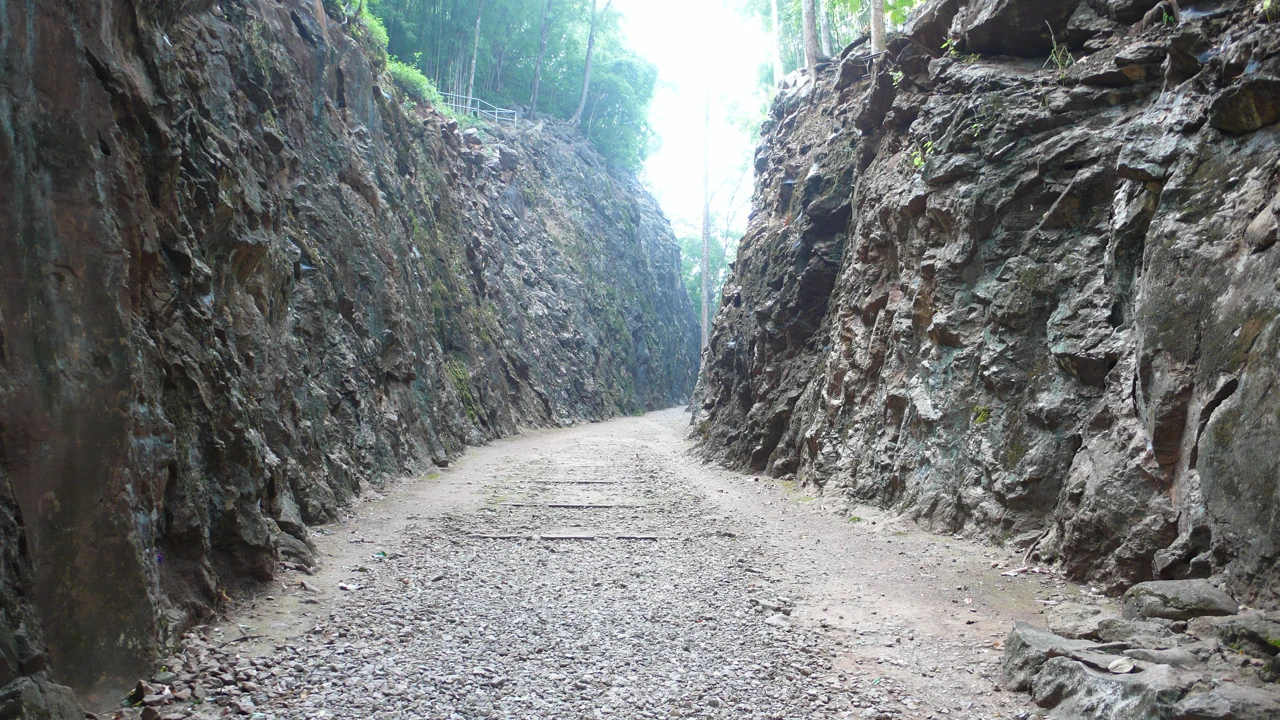
There is also a difference between the JEATH visit and Hellfire Pass. Hellfire Pass is a remote railway cutting and memorial area well outside town; reaching it requires a separate transport plan and a substantial share of the day. The photograph above is included as context for that wider history, not as a stop to combine with this half-day loop.
Getting between the stops without overplanning
The useful transport choice here is not a complicated mode comparison. It is deciding which legs deserve a vehicle and where you want it to wait. The Bridge is away from the Don Rak–Railway Centre pair, and JEATH adds another leg in the opposite direction. A local driver or taxi arranged for the sequence can keep the half-day legible, especially if you want to avoid negotiating a new ride after each stop.
If you prefer to arrange each ride separately, save the names of the cemetery and Centre in Thai or keep their map pins offline. Set the next pick-up location before leaving the vehicle; the entrance you arrive at may not be the most convenient place to meet again. Our Bangkok-to-Kanchanaburi train versus minibus guide covers the intercity leg, which is a separate decision from moving around town.
Do not build a tight return connection around an estimated bridge visit. If you are catching a train or bus later, include the trip back to the station, a margin for traffic and time to collect bags. For a same-day arrival from Bangkok, this sequence is a poor fit unless your arrival is early and transport is already settled; staying overnight makes the visit more humane and far less dependent on a perfect transfer.
Heat, pace and the respectful version of a history day
There is outdoor walking at the bridge and cemetery, followed by an indoor museum visit. Carry water, sun protection and shoes that feel steady on uneven approaches. The contrast is useful: you can step indoors at the Centre during the hottest part of the day, then choose whether you have the energy for one more stop.
This is a memorial itinerary, so leave some space in it. A long lunch or a quiet break after the museum is a better finish than another attraction added out of obligation. If you are with a group, let people spend different amounts of time inside the Centre and choose a clear place to regroup rather than pulling everyone through at the same pace.
For the rest of the visit, the Kanchanaburi experiences guide helps separate town sights from trips farther into the province. If the question is whether to make the town a day trip or stay overnight, use the separate Kanchanaburi day-trip versus overnight guide; this page focuses on the order of the historic town stops, not the broader stay decision.
Keep the evening close to the kind of stay you want
For a museum-focused morning, a central address can simplify the ride. If the river is the reason you are staying, compare the bridge-side route with your check-in and departure plans.
A compact plan I would actually keep
Begin at the River Kwai Bridge, then ride to Don Rak and take the cemetery at its own pace. Visit the Railway Centre while you are already beside it. Decide about JEATH only after those three stops and only if it is open, nearby transport is clear and you still want another museum. That sequence earns the half-day because it joins the physical railway, a specific place of remembrance and the historical context without pretending the whole province fits between breakfast and lunch.
For accommodation planning, the Kanchanaburi town versus Sai Yok comparison explains why your preferred landscape can change how much transport this route needs. Keep this itinerary as the town morning; give remote railway sites and waterfalls their own day.
Sources checked · 11 October 2026
- Kanchanaburi Provincial Government: River Kwai Bridge history and location
- Kanchanaburi Provincial Government: Don Rak Allied War Cemetery
- Thailand–Burma Railway Centre: visitor information and location beside the cemetery
- Thailand–Burma Railway Centre: gallery sequence and facilities
- Bridge image: Jpatokal (English Wikivoyage), RiverKwaiBridge Train.JPG, cropped to 1280 × 720 and converted to WebP; CC BY-SA 3.0.
- Hellfire Pass image: Niels Mickers, Hellfire Pass.jpg, cropped to 1280 × 720 and converted to WebP; CC BY 3.0 Netherlands.
The provincial pages are in Thai; place and memorial details are paraphrased. Centre visitor details can change, so check its current visitor information before setting the day’s schedule.