
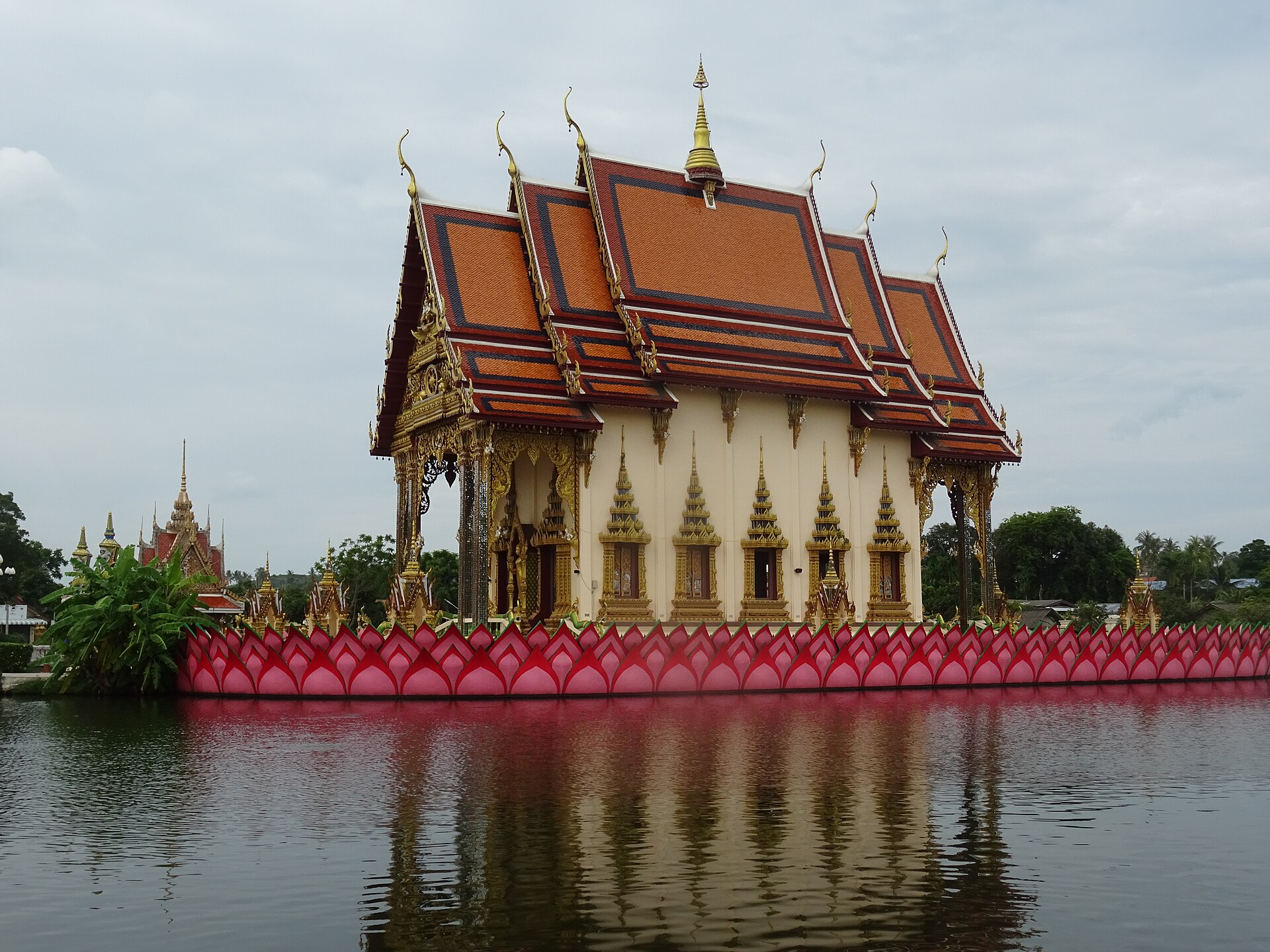

The two temples sit in the north-east part of Samui. Thailand's official tourism directory places Big Buddha at Ko Fan on the northern side of the island, while Tourism Authority of Thailand material identifies the 12-metre golden Buddha as one of Samui's major cultural landmarks. Once you have decided that this temple pair belongs in the trip, the useful question is not “which light will look prettier?” It is which half of the day you are willing to spend on sightseeing.
If you have not actually chosen the temples yet, stop here and solve that first. The temples vs south-island nature guide decides whether the north-east cultural corridor deserves your land-sightseeing block. If you already chose it but are still deciding whether to go alone or join a wider island circuit, use the separate Big Buddha and Wat Plai Laem independent-vs-tour guide. This page starts one step later: the temples are staying; now decide where they belong on the clock.
Why morning is the cleaner default for Big Buddha and Wat Plai Laem
A morning visit buys you margin. That matters more than trying to optimise every minute. You can leave the hotel, visit one temple, slow down if you want to, then continue to the second without mentally counting backward from dinner, sunset, a spa booking or a return ride. If the first stop takes longer than expected, the day bends instead of breaking.
It also separates your temple clothing from the hottest, most beach-oriented part of the day. TAT's temple-etiquette guidance asks visitors to dress appropriately, with shoulders and knees covered, remove shoes where required and avoid obstructing people who are praying. For women, it also specifically notes avoiding physical contact with monks or their robes. A lightweight temple layer in the morning is usually easier to plan than leaving the pool, changing clothes, drying off, travelling and then trying to arrive composed late in the day.
The morning does not have to become a full sightseeing morning. The point is to keep the cultural block compact. If you are based on the north or north-east side, the pair can still leave a substantial second half for your own beach, lunch or a treatment. That fits the broader Samui logic in the four-day resort-day decision: island time is not wasted time just because it lacks another landmark.
Late afternoon is really a vote for preserving your morning
The strongest argument for going later is not “better photos”. It is that a Samui morning can be valuable in its own right. Maybe your hotel has the beach conditions, breakfast, pool or quietest resort hours you actually paid for. Maybe the previous day was offshore and you deliberately want a soft start. In those cases, a temple-first default can turn the trip into another schedule.
That is why late afternoon can be the better editorial choice for a resort-led holiday. You keep the slow morning intact, have lunch, reset, then use one focused cultural block before dinner. The trade-off is that you must become more disciplined: do not bolt on a viewpoint, shopping stop and cross-island dinner just because you have already left the hotel.
This distinction is especially useful after a marine day. If you are deciding whether to leave the hotel again at all, read what to do after a Koh Samui boat day first. A late-afternoon temple visit makes sense only if the answer to “go out again?” is already yes.
Check temple access and sunset time before choosing a late visit
The temples are places of worship, not a sunset product
Sunset time changes through the year, clouds change the light, and access or local conditions can change. More importantly, your reason for being there should survive a mediocre sky. If you would be disappointed unless the visit produces a dramatic sunset photo, you are attaching the wrong condition to the decision.
Use “late afternoon” to mean a deliberately later cultural visit with enough buffer to behave respectfully and leave without rushing—not “arrive at the last possible moment”. Check current local information on the day, then work backward from the time you want to be back at your hotel or dinner area.
TAT's current Ko Samui destination guidance is useful here because it makes a broader point: the island has more beaches and activities than one visit can realistically cover. You do not need to turn every movement into a multi-stop loop. A temple pair, followed by dinner near your own base, can be a complete evening.
Your hotel base changes the cost of going late
Late afternoon is easiest to justify because you are already in the north-east orbit. If you are still choosing between the two micro-bases, compare Plai Laem vs Bangrak. Do not move hotels for the temples; simply notice when your existing base makes the timing cheap.
You can protect a beach morning and still keep the temple block geographically coherent. The larger accommodation decision is in Choeng Mon vs Chaweng, where quiet-resort value is weighed against broader evening convenience.
Both morning and later visits can work. The bigger question is whether you want to return to Bophut for a walk-out evening. The Bangrak vs Bophut guide shows why one sightseeing block should not overrule the evenings you repeat every night.
The later you go, the more your return matters. If you are crossing more of the island, keep the temple pair as the only north-east objective. Do not create a chain of “while we are here” stops that makes dinner timing fragile. If transport is the uncertainty, solve private driver vs separate taxis before adding attractions.
Morning is not automatically better if it destroys the best resort hours of your trip
There is a common planning bias on beach holidays: sightseeing feels productive, while sitting by the sea feels expendable. That makes travellers schedule every dry, energetic morning around an attraction and leave the resort the leftovers. If you specifically booked a beach hotel because you wanted slow mornings, that is backwards.
Use the stay-put vs beach-hop logic here. The valuable part of a beach day is often the lack of transport. If you only have one or two mornings where you can wake without a pickup time, preserving one may be worth more than putting the temples first.
The same applies when your trip already has two fixed marine mornings. The two boat days sequencing guide argues for protecting recoverable space between major commitments. A late temple block can be a smart use of that space because it keeps the morning uncommitted while still adding culture later.
But do not use “late afternoon” as an excuse to overfill the day
The weak version looks like this: breakfast, another beach, lunch on the opposite coast, Big Buddha, Wat Plai Laem, Fisherman's Village, then a long dinner and a late ride home. Nothing is individually unreasonable; together they remove the benefit you were trying to preserve.
A better version has one clear anchor before the temples and one clear ending after them. If the morning is for the resort, stay at the resort. If the afternoon is for the temples, let the temples be the activity. If the evening is for your own neighbourhood, return there. That creates three different textures without turning the day into a transport puzzle.
If your broader trip still feels too full, step back to the three-day offshore-vs-on-island allocation instead of continuing to optimise half-hours. Sometimes the timing problem is actually a trip-priority problem.
Women and solo travellers: the late visit needs a stronger return plan
Temple etiquette is straightforward but worth planning before leaving a beach. Carry clothing that covers shoulders and knees appropriately rather than assuming a swimsuit cover-up will work everywhere, and choose shoes you can remove and put back on without drama. TAT also advises visitors not to obstruct worshippers for photographs and notes that women should not touch monks or their robes.
For a solo late-afternoon visit, the practical difference is what happens after the second temple. Keep enough phone battery and mobile data for transport, set your return destination before you leave the temple area, and avoid creating a dark roadside walk just to save one short ride. TAT's current Samui guidance also advises extra care when walking on beaches or swimming at night, particularly alone, so a late temple block should finish with a clear return—not an improvised night beach detour.
A simple rule for placing the temples
Put Big Buddha and Wat Plai Laem in the morning if culture is one of the day's main reasons for leaving the hotel, you want maximum schedule margin, or your later evening already has another commitment.
Put them in late afternoon if the beach or resort morning is genuinely more valuable to you, the temple pair is the only sightseeing block you are adding, and the return to your base is easy enough that you will not spend the final hour worrying about it.
Move them to another day if you are trying to squeeze them between a fixed boat excursion and a fixed evening. Samui is small enough to tempt you into collecting stops, but that does not make every combination a good itinerary.
The decision in one sentence
Morning is the lower-risk default; late afternoon is the better choice only when protecting your Samui morning is itself a priority. Once you pick the time, use the independent-vs-tour guide for the format, then stop planning. You do not need a third optimisation layer.
For the rest of the trip, return to the Koh Samui hub or the Thailand itineraries hub.