
If you have already chosen Chaweng, the next hotel decision is surprisingly easy to get wrong. A map can show two properties only a few hundred metres apart, yet one lets you walk from breakfast to sand in swimwear while the other makes the beach a deliberate outing. That difference matters — but only if you will repeat it.
This is narrower than choosing Chaweng or Bophut, and it is not the same as choosing Chaweng Noi or central Chaweng. Assume central Chaweng is already the right area. The question here is whether the shoreline itself deserves part of your hotel budget.
The two-touch rule
If you are likely to step onto the sand in the morning, leave for lunch or an excursion, then come back for another swim or a sunset walk, direct access keeps paying you back. The hotel becomes a beach base rather than simply a bed near a beach.
If you expect one planned beach block and then spend the rest of the day elsewhere, the advantage shrinks. In that trip shape, being closer to restaurants, shopping, a pickup point or the exact room category you want can matter more.
Stay planning
Find a place to stay
See available rooms around the property or neighborhood discussed here, with prices for your dates.
Do not let the word “Beach” in a hotel name answer the question
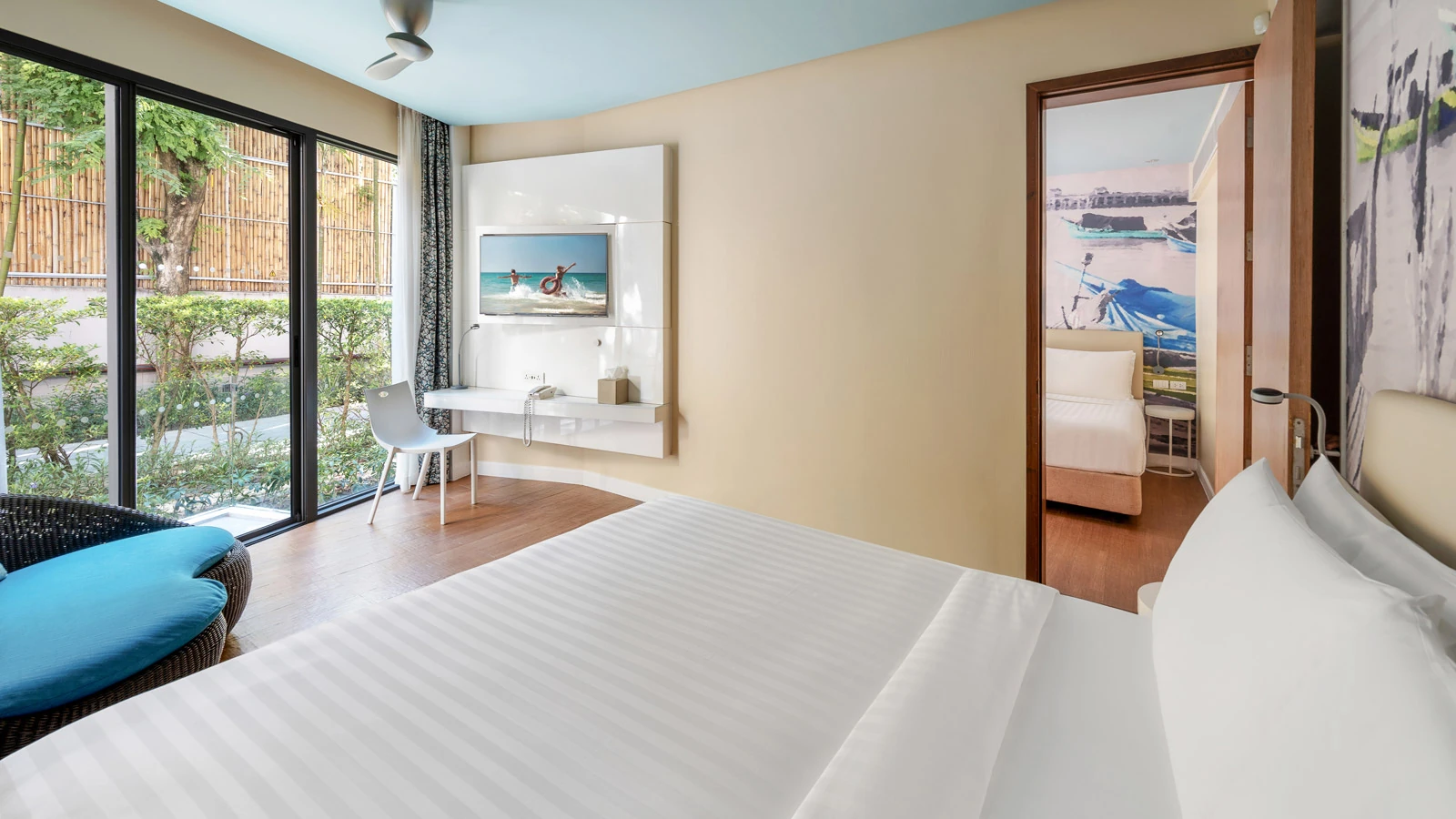
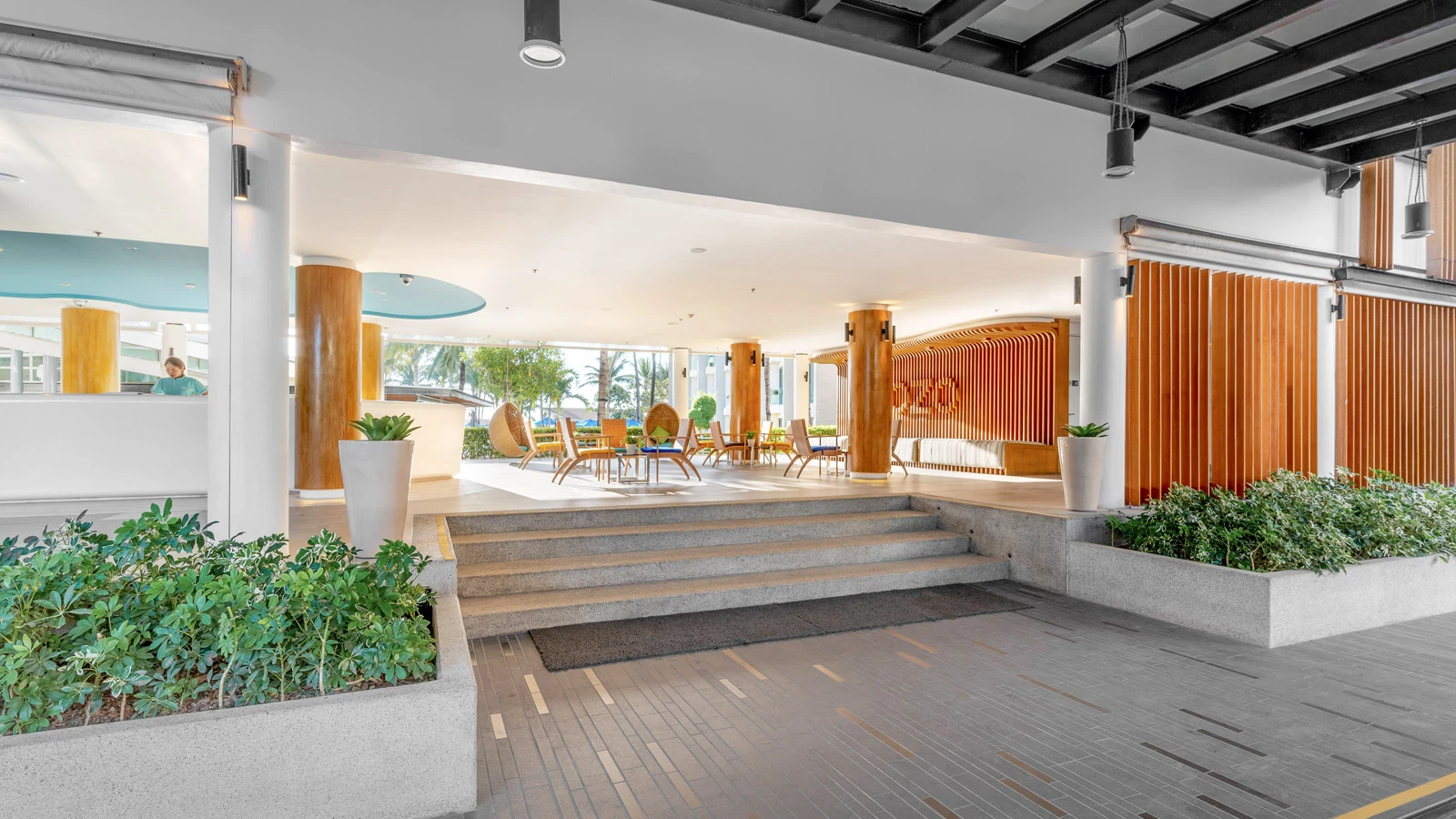
Current first-party hotel information makes the distinction unusually clear. OZO Chaweng Samui describes itself as beachfront on Chaweng Beach and says central Chaweng is a short walk away. Its current location page places Central Samui at about 0.5 km.
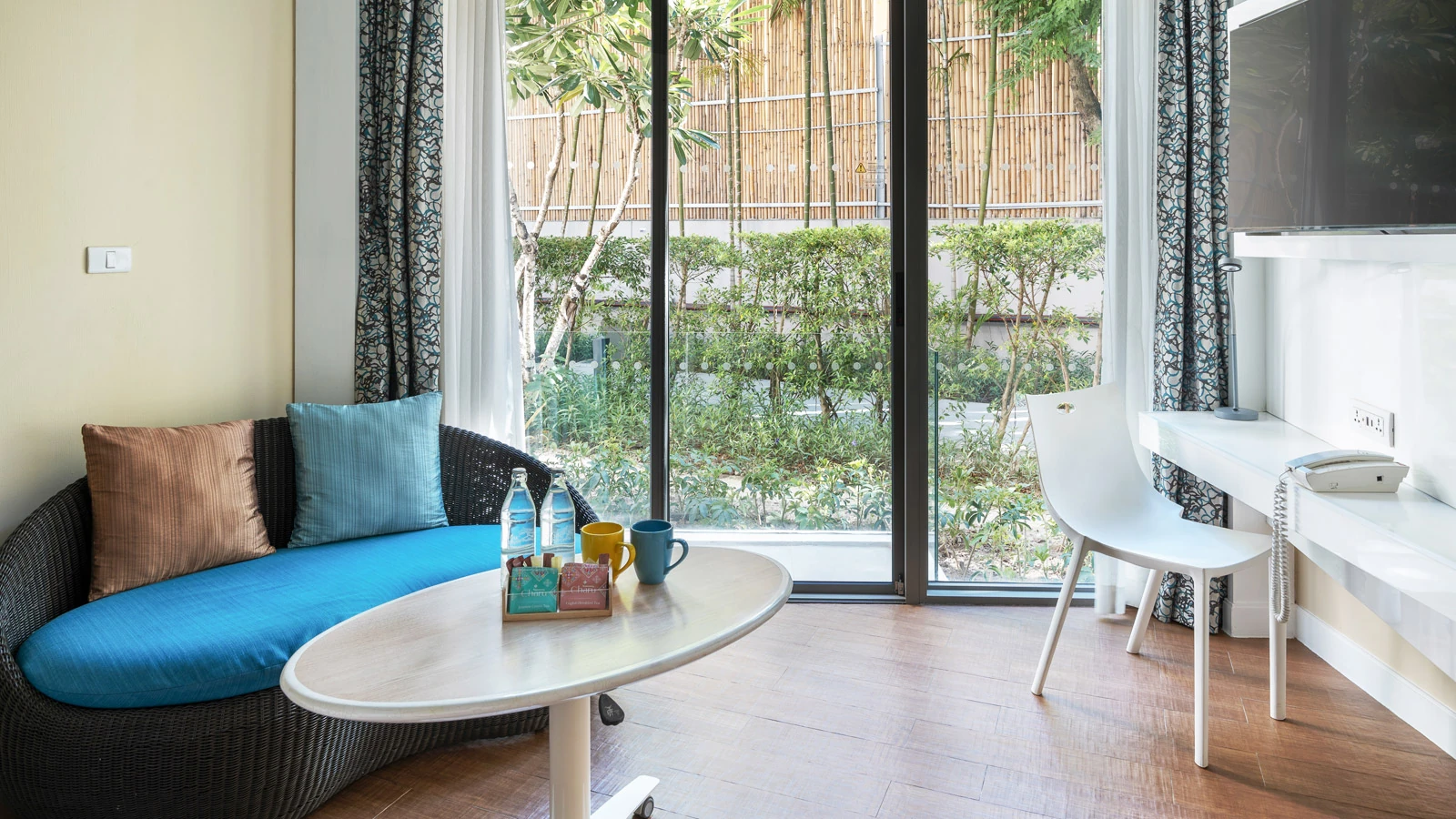
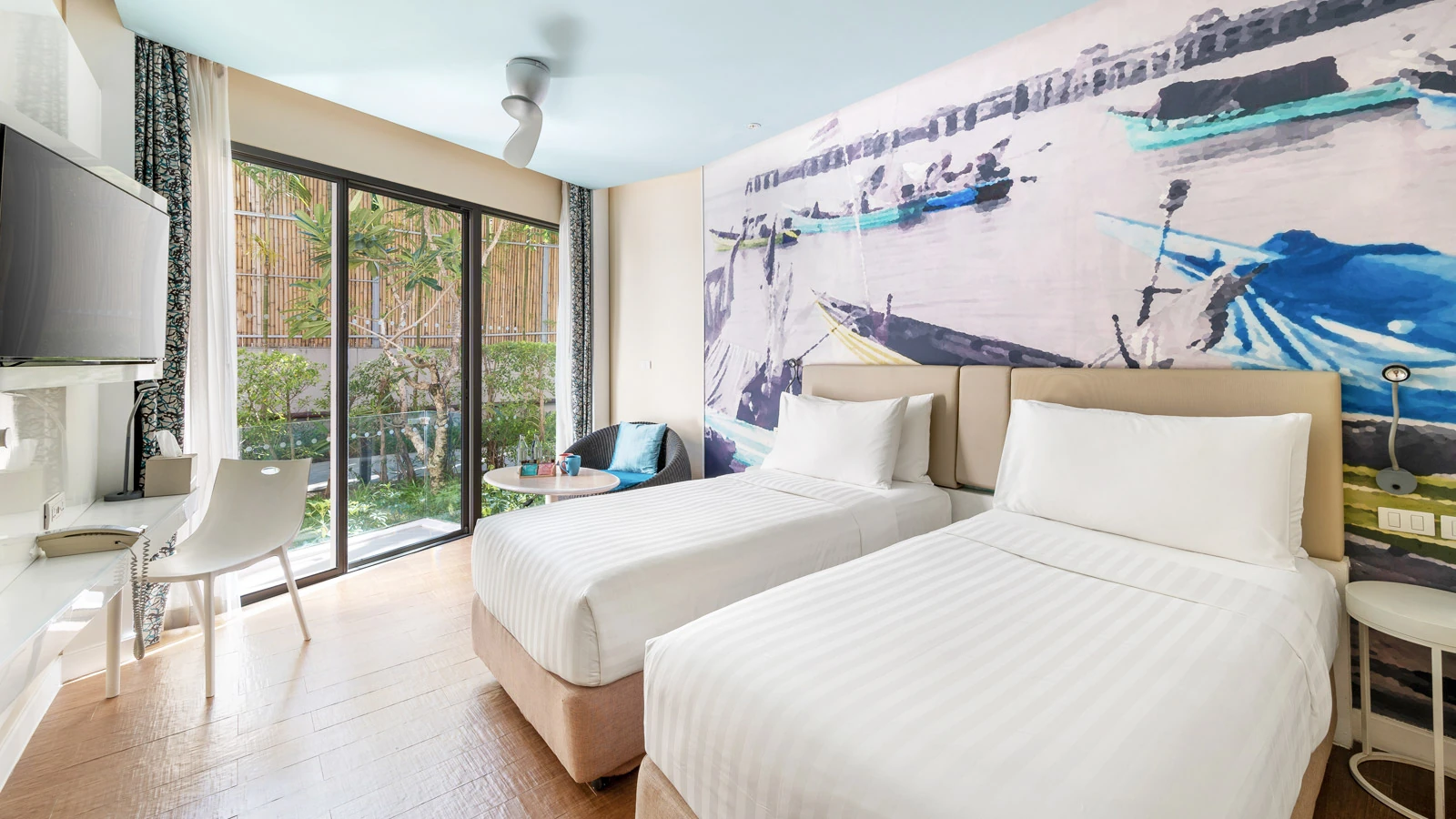
COSI Samui Chaweng Beach is a useful counterexample. Its official Centara contact page places the hotel about 10 metres from Central Festival Samui but about 0.85 km from Chaweng Beach. The same page places Samui Airport about 2.9 km away. The hotel name contains “Chaweng Beach”, but the hotel job is different: it is a highly central inland base with a rooftop pool and very short access to the commercial core.
Neither layout is automatically better. What matters is whether you want the hotel-to-sand transition to be effortless or whether you want the hotel-to-town transition to be effortless.
OZO Chaweng Samui
Current OZO material says the property is directly on Chaweng Beach, has a beach-front pool and is around a 10-minute walk from Central Samui. It also lists Samui Airport at roughly 4.5 km / 15 minutes under normal hotel guidance.
The value proposition is not isolation. It is getting both sand access and a still-central Chaweng position.
COSI Samui Chaweng Beach
Current Centara material places Chaweng Road and Central Festival Samui about 0.01 km away and Chaweng Beach about 0.85 km away. The property provides a rooftop pool rather than beach-at-the-door resort geography.
The value proposition is a compact town base that lets the beach be one choice among many, not the organising feature of the hotel.
Beachfront is strongest at the edges of the day
The obvious beachfront advantage is midday. The more important advantage is usually what happens around the main plan.
Before breakfast, direct access can turn a spare 25 minutes into an actual swim or walk rather than a decision about what to carry and whether to cross town. After a Koh Tao or Ang Thong day trip, you may have only a short usable beach window left. If the sand is behind the pool, that window is easy to use. If it is an 850-metre walk away, showering first and going straight to dinner may feel more sensible.
This is why beachfront can still be worth it on an active trip — but only if you are the kind of traveler who will actually use those short windows. If you know you will return from a boat tour tired, shower, dress and immediately go out, do not pay for an imaginary second swim.
Beachfront wins. You can move between room, breakfast, pool and sand without packing for a beach outing.
Inland gets stronger. On days when you leave early and return near dinner, direct beach access may go unused. See our guide to whether hotel location really matters for day-tour pickup before over-optimising around tours.
A hotel close to Central Samui and the Chaweng commercial core can reduce small walks in heat or rain. Central currently lists everyday opening hours from 10:00 to 22:00, so it can function as a practical weather-proof fallback rather than only a shopping stop.
If you mostly swim in the hotel pool, beachfront is less decisive. A good inland pool plus the room you prefer can be a better match than paying for shoreline you rarely touch.
An inland hotel is not automatically a compromise
For a three- or four-night first trip, Chaweng often works because you can keep changing your mind. That is the same reason it may beat Lamai in our Chaweng vs Lamai comparison. An inland hotel near the centre can lean even harder into that flexibility.
You can have breakfast, leave for a massage, join a tour, shop, meet friends for dinner and return without needing the hotel itself to be the main attraction. If your trip is built around experiences rather than resort time, that can be exactly right.
It is especially sensible when the inland option gives you something concrete that the beachfront option does not: a room layout you prefer, better laundry access, a rooftop pool, more flexible common space, or simply a rate you prefer on your actual dates. Do not invent a generic “beachfront premium” and assume it is always worth paying. Compare the real rooms you are considering.
If you are choosing between expensive room features rather than hotel positions, use the separate private pool villa vs beachfront room guide. That is a room-upgrade decision. This one is about where the entire property sits in your day.
Rain changes the value of “central” faster than it changes the map
On a clear beach day, direct sand access is wonderfully obvious. On a wet afternoon, the strongest hotel may be the one that makes food, coffee, shopping, a cinema-style indoor break or other dry options easier without organising a car.
That does not mean inland automatically wins in rain. A full-service beachfront resort can also be an excellent rainy-day container if you genuinely like its restaurants, spa, lounge and pool areas. The question is whether your hotel can carry the hours when the beach cannot.
If bad weather would push you toward a massage or spa day or a yoga or wellness session, count how much transport the exact property creates for that backup plan.
Noise does not follow a neat beachfront-versus-inland rule
A common shortcut is “beachfront is noisy, inland is quieter.” Chaweng is too mixed for that to be reliable.
A beachfront room can sit behind a pool, beach bar, restaurant or event space. An inland room can face a busy road, mall access, parking area or nightlife. The more useful booking question is: what does the room face, and what sits between the room and the place where people gather?
Ask the hotel or inspect the property plan when sleep matters. If you are a light sleeper, room orientation can matter more than whether the building is technically on the sand.
For women traveling alone, inspect the route from the drop-off point to your room
Do not treat the beach as an after-dark shortcut simply because it looks direct on a map. Tourism Authority of Thailand currently advises extra caution when walking on beaches or swimming at night, particularly alone.
For either hotel type, check the route you will actually use after dinner: the road entrance, any side lane, the last crossing and whether reception is reached directly from the street. A beachfront property may still have a perfectly practical road-side entrance; an inland hotel may have a very simple commercial-core return. The label alone does not tell you.
If your evenings are central to the trip, our Fisherman's Village vs Chaweng Night Market guide is useful for thinking about how often you will return to Chaweng late rather than stay by the hotel.
Airport distance should rarely decide this one
Both examples above sit in the broader Chaweng side of the island. OZO's current site lists Samui Airport at about 4.5 km, while COSI's official contact page lists it at about 2.9 km. Those numbers are useful for orientation, not for choosing the hotel.
Unless you have an unusually tight arrival or departure constraint, you will experience the airport transfer once in each direction and the hotel layout every day. If arrival transport is your concern, solve it separately with our Samui Airport to Chaweng or Bophut transport guide.
Three trip shapes make the answer clearer
Three nights, beach-first couple: beachfront is usually the better fit. With limited time, being able to swim before breakfast and again after a short outing gives the beach more usable hours without sacrificing Chaweng's restaurants.
Four nights, two major day tours: inland becomes much more credible. If two days are mostly offshore and another afternoon is shopping, spa or food-led, you may not repeat the beach enough to justify making direct access the main hotel criterion.
Friends trip with late dinners and separate plans: a central inland hotel can be excellent because each person can peel off for coffee, shopping, a treatment or food without every small plan starting from the resort. If the group also wants serious beach time, choose a genuinely central beachfront hotel rather than moving to a quieter edge of Chaweng.
Before paying, check these six things on the exact hotel
- Count your beach touches. Will you realistically use the sand once a day, or in two separate windows?
- Find the real beach entrance. “Near Chaweng Beach” and “direct beachfront” are not interchangeable.
- Find the road entrance too. This is the door that matters after dinner, during rain and for airport/tour pickups.
- Check room orientation. Pool, beach bar, road, car park and nightlife exposure can matter more than the broad hotel category.
- Count full-day absences. Every offshore or island-interior day reduces the hours available to use a beachfront property.
- Compare the actual room trade. If the inland hotel gives you a meaningfully better room or property for your dates, decide whether two-touch beach access is valuable enough to give that up.
The booking rule
Choose beachfront when you plan to use Chaweng Beach as part of your daily hotel routine. If you want to move between bed, breakfast, pool and sand without preparing for it, direct access earns its keep through small repeated moments.
Choose inland central Chaweng when the hotel is primarily a launchpad. If you will spend more of the trip on boats, at restaurants, in shops, at wellness appointments or out late, being several minutes from the sand can be a sensible trade for a hotel that better fits everything else.
If you are still not sure whether Chaweng itself is the right base, go back one level to the Koh Samui guide hub or browse all Koh Samui stay decisions. The right order is area first, hotel job second, room upgrade last.
Sources checked
Stay planning
Find a place to stay
See available rooms around the property or neighborhood discussed here, with prices for your dates.