
Koh Lanta · Pimalai Resort & Spa · family villa decision
Pimalai Two-Bedroom Pool Villa vs Three-Bedroom Villa for a Family Trip
At Pimalai, the choice between a two-bedroom and three-bedroom pool villa is usually a choice about how many people can sleep behind a closed bedroom door, not just how much floor area you get. The two-bedroom categories are listed for up to six guests; the three-bedroom categories for up to nine.
For grandparents, parents and children—or two families travelling together—the extra bedroom can protect sleep schedules and give one more household a private retreat. Whether that is worth the higher total depends on who is sharing, which bed plan is available, and how often your group will use the villa together.
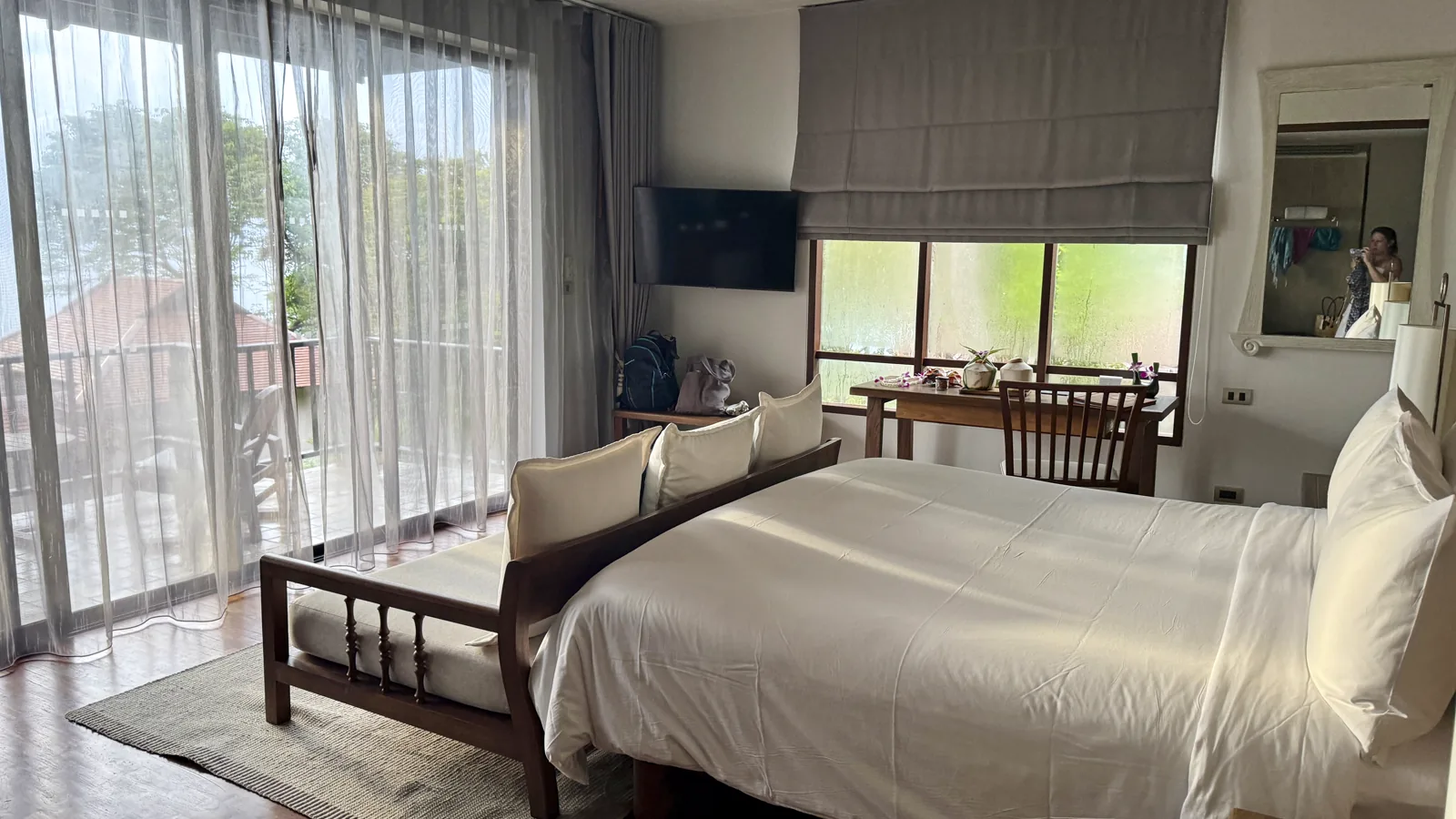
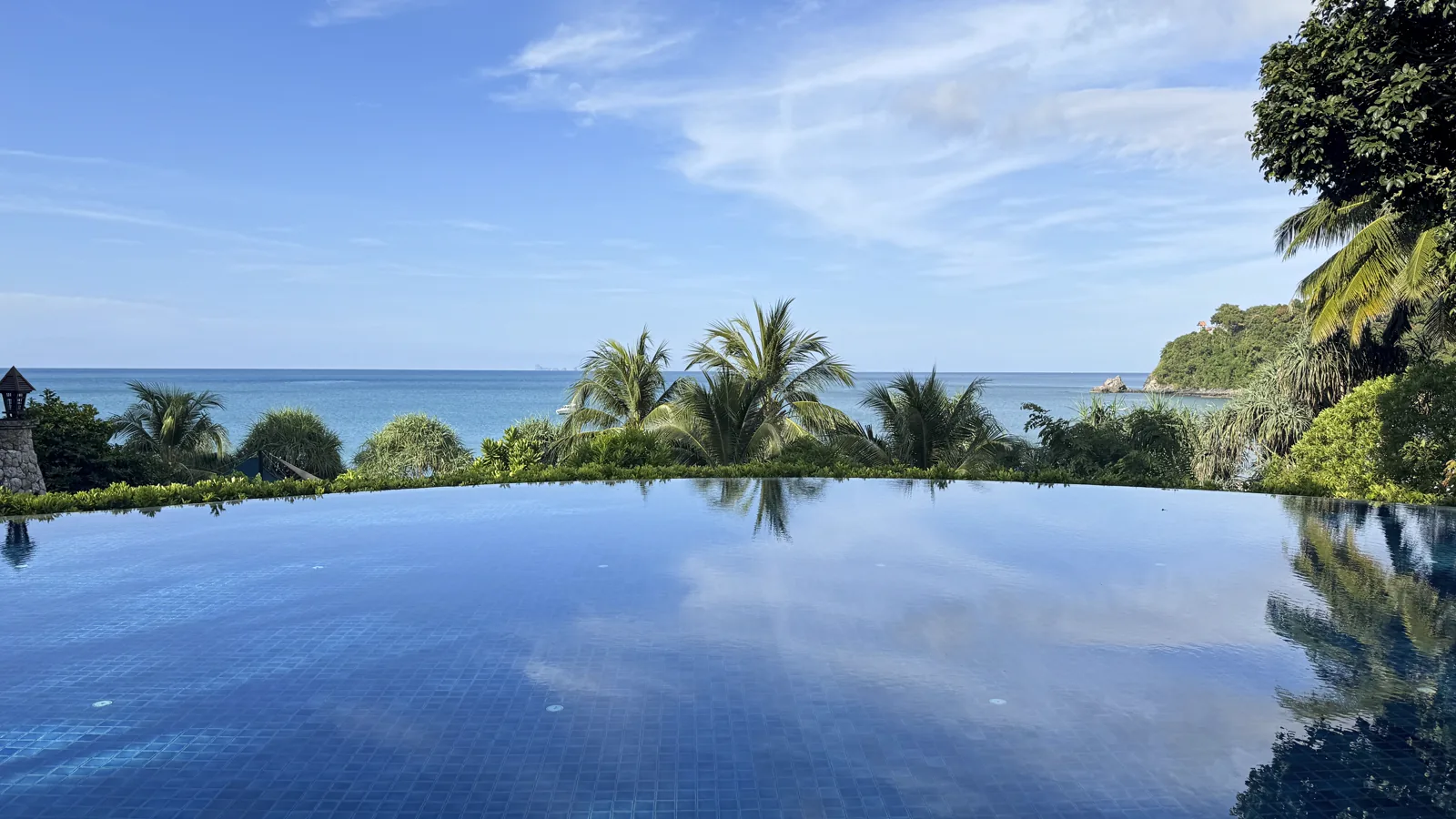
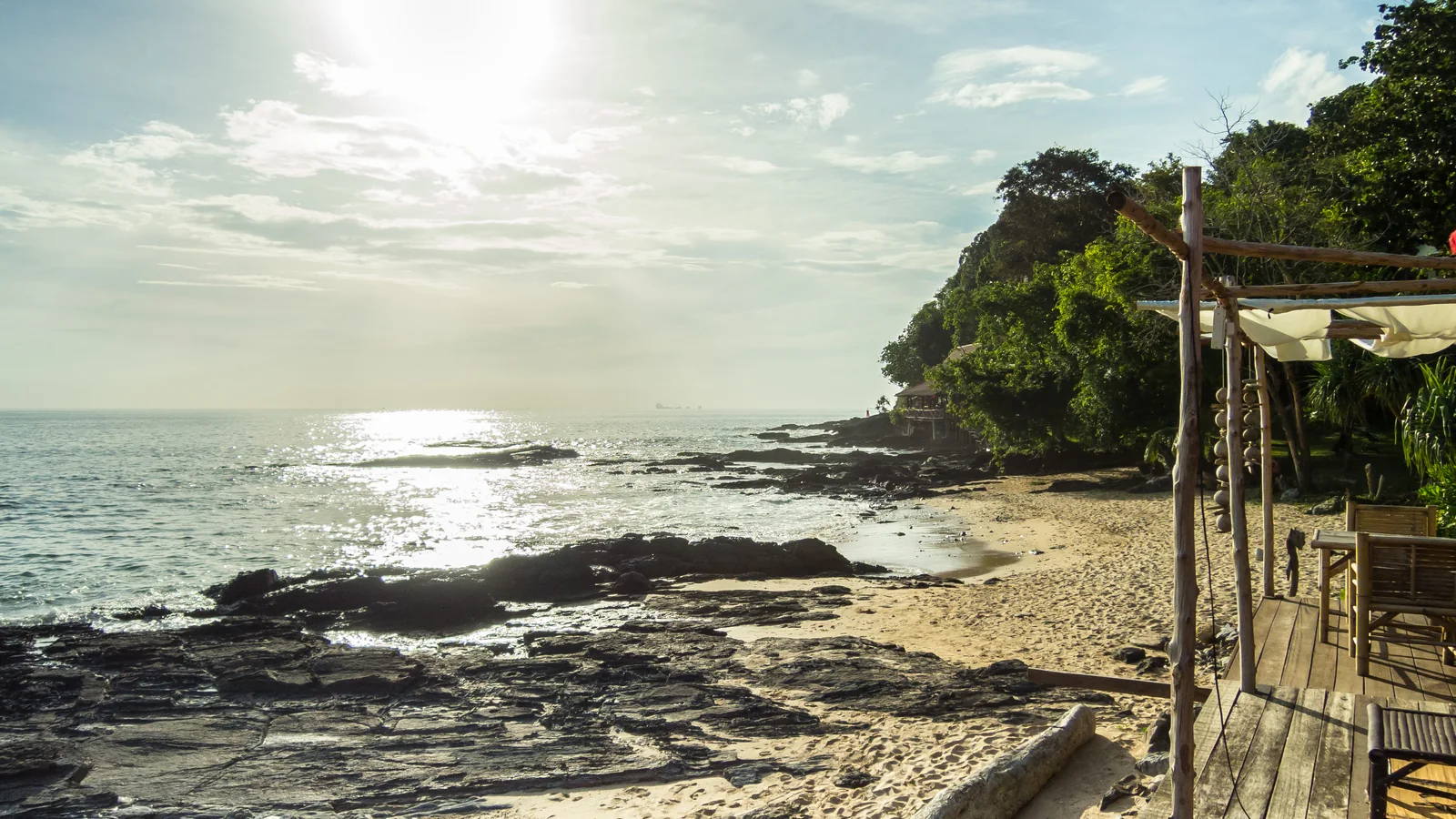
Swipe to view the villa example, resort pool and Koh Lanta setting →
What Pimalai lists for each bedroom count
Pimalai currently lists two-bedroom private-pool villas in two settings. Its Beachside Villa Two Bedrooms With Private Pool is 350 square meters, accommodates up to six, and has one king bed plus two twin beds. The Hillside Oceanview Private Pool Villa Two Bedrooms is 279 square meters, accommodates up to six, and lists two king beds or up to four twin beds. Both have private pools; the published pool sizes are 45 square meters beachside and 22 square meters hillside.
The resort’s three-bedroom villas are also offered beachside and hillside. The Beachside Villa Three Bedrooms With Private Pool is listed at 650 square meters for up to nine guests, with three king beds or one king and four twin beds. Its pool is 45 square meters.
The Hillside Oceanview Private Pool Villa Three Bedrooms is 422 square meters, also for up to nine, with three king beds or one king and four twin beds; its pool is 40 square meters. Pimalai places its hillside pool villas 60 to 80 meters above sea level and notes that the pools are unfenced and unsuitable for children under 12.
| Official room category | Published area | Bed setup listed | Maximum occupancy | Access / pool note |
|---|---|---|---|---|
| Beachside, 2 bedrooms | 350 sq. m. | 1 king + 2 twins | 6 | Beach-facing setting; 45 sq. m. private pool |
| Hillside, 2 bedrooms | 279 sq. m. | 2 kings or up to 4 twins | 6 | 60–80 m above sea level; 22 sq. m. pool |
| Beachside, 3 bedrooms | 650 sq. m. | 3 kings or 1 king + 4 twins | 9 | Terrace stairs lead to the beach; 45 sq. m. pool |
| Hillside, 3 bedrooms | 422 sq. m. | 3 kings or 1 king + 4 twins | 9 | 60–80 m above sea level; 40 sq. m. unfenced pool |
The maximum is the property’s published occupancy, not a recommendation that every group use all available places. A six-person family may be more comfortable in a two-bedroom villa if the adults and children are happy with the stated bed plan.
A group of seven cannot fit within the listed two-bedroom maximum, so the three-bedroom category becomes the relevant single-villa option. For any child, ask the resort how it counts ages and extra beds on the exact dates; the room pages do not spell out every age or bedding rule.
The names and bed configurations above are taken from Pimalai’s current room pages. A room photograph does not establish which bed arrangement will be allocated. Confirm your chosen subtype, bedroom count and configuration in the written booking details, particularly if you need twin beds rather than kings.
Search places to stayStay planning
Find a place to stay
See available rooms around the property or neighborhood discussed here, with prices for your dates.
Privacy changes more than one bedroom at a time
With a multigenerational group, sleeping arrangements can affect the entire day. A grandparent who wakes early may want to dress and start the morning without turning on lights near a child who is still asleep. Parents may want a place to talk after bedtime.
Teenagers may value a room they can share without being folded into the adults’ routine. The second bedroom already creates a meaningful separation for six people; the third gives the family another door to close and more flexibility about who rooms with whom.
For two families, the third bedroom can make the room assignment feel fairer. A two-bedroom villa generally asks one household to share, split parents and children across the available rooms, or accept a common living area as overflow.
That may work for close relatives with compatible schedules, but it can become awkward when children are different ages or one family needs a quieter bedtime. In a three-bedroom villa, each couple can take a room while children share the remaining room if their ages and preferences make that suitable.
Alternatively, grandparents can have a room of their own, with the parents and children using the other two.
The official descriptions list bedrooms and bed options but do not state whether every bedroom is connected to the living space in the same way, which rooms are adjacent, or where each sits relative to the pool and outdoor areas.
If a family member has mobility, hearing or sleep needs, request the floor plan for the precise villa type and ask about bedroom positions before paying. The three-bedroom categories are not interchangeable in shape: the beachside option is substantially larger, and older property material describes a multi-level beachside layout.
Confirm current access and layout directly rather than assuming that a third bedroom is on the same floor or close to the others.
More rooms do not guarantee more quiet if everyone congregates in one lounge or keeps the same late schedule. Still, a separate bedroom lets someone rest while others talk, and allows a parent to settle a child without ending the evening for the whole group. That flexibility becomes more useful on a longer stay, after boat trips, or when the family includes both early risers and night owls.
Bed setup: plan the occupants before counting beds
The beachside two-bedroom bed plan is specific: one king and two twins. This can suit one couple and two children, or two adults who prefer separate beds alongside another pair sharing the king, subject to the resort’s occupancy rules. It gives the group a built-in split between one double bed and two individual mattresses. If the adults need two separate bedrooms for privacy, the one-king-plus-twins configuration does not change the fact that there are only two bedrooms.
The hillside two-bedroom villa offers two kings or up to four twins. That flexibility may be attractive when two couples want one bed each, or when a family wants separate mattresses for children. Ask the property how to request the twin arrangement and whether it must be confirmed in advance. “Up to four twins” describes the published setup; it does not tell you which configuration is automatically assigned when you book.
For either three-bedroom villa, Pimalai lists three king beds or one king plus four twins. The second setup can give two pairs separate beds and leave one king for adults, or it can let children share twins while parents and grandparents take kings.
A party of seven to nine should not assume the additional guests sleep in a particular sofa bed; confirm the approved bed arrangement, any extra bed, and the applicable charge in writing. The official maximum is nine, but the room page does not describe how every occupancy from seven to nine is distributed across beds.
Make a simple rooming chart before comparing prices: list each traveller, whether they can share a bed, whether they need a private bedroom, and any mobility or bedtime requirement. If your chart fits a two-bedroom option without an improvised arrangement, the third room may be extra cost without much day-to-day value. If it only works by putting a reluctant adult on a sofa or separating young children from their parents, price the three-bedroom category before booking.
Shared space and how the villa works during the day
Both options give the party one villa and one private pool, so you keep a shared base for meals, swims and downtime. The beachside three-bedroom page specifically describes a large living and dining area and a kitchen.
The beachside two-bedroom page mentions semi-outdoor living space and cooking equipment, but does not publish a detailed floor plan in its descriptive text. Pimalai’s room pages list amenities rather than a full room-by-room plan for every category.
Check the attached official floor plan and ask about dining capacity if all six or nine guests expect to eat together inside.
A three-bedroom villa is not the same as reserving a second self-contained unit. The family still shares the villa’s common areas and pool, and the public descriptions do not promise a kitchenette or separate lounge for each bedroom. The benefit is an additional sleeping room within one shared stay. If two families want independent kitchens, bathrooms or schedules, ask about the exact arrangement or compare the cost of two separate villas; bedroom count alone cannot answer that question.
Think through a normal day rather than an idealized one. Can the grandparents sit in the common area while the children swim? Does one parent need to take a work call during nap time? Will the group return at different times after an excursion?
A three-bedroom layout makes it easier for someone to retreat without occupying the whole shared space. A two-bedroom villa can feel more connected and easier to keep track of, especially with younger children, while leaving the party with a smaller footprint to move around.
Pool safety is a practical part of the space decision. Pimalai specifically warns that hillside villa pools are unfenced and unsuitable for children under 12. Do not infer that a beachside pool has a childproof barrier simply because the hillside warning is explicit.
If you are travelling with toddlers or a child who needs close supervision around water, ask the resort what barriers or safety measures are available for the exact villa. A larger villa gives more room to spread out, but it does not replace direct supervision.
Beach access versus the hillside route
The beachside three-bedroom villa has stairs from its terrace leading directly to the beach. The two-bedroom beachside villa is described as overlooking the Andaman Ocean; check its exact path and elevation if step-free movement matters.
These beachside options align more naturally with a family that wants to move between the villa and shore throughout the day, particularly when carrying towels, toys or snacks. Stairs can still be a barrier for anyone with limited mobility, and beach conditions vary, so confirm the route with the property.
Pimalai locates its hillside pool villas 60 to 80 meters above sea level and describes them as ocean-view stays. The position may suit guests who prioritize the view and a quieter elevated setting. It also means the walk or ride between the villa, beach, dining and shared facilities is part of the stay.
The official room page does not promise a travel time between an individual villa and each facility. Ask the resort how transport within the property works for your unit and dates, especially when travelling with older relatives, strollers or anyone who should avoid steep routes.
This is a daily-rhythm question rather than a general ranking. If several family members plan to spend long blocks at the beach and return to the room often, beachside access can reduce friction. If the group expects to spend more time at the villa, enjoys a higher outlook, or is comfortable coordinating property transport, hillside may fit. The extra bedroom choice does not settle the location choice: two- and three-bedroom categories exist in both settings.
When does the third bedroom justify the price?
Pimalai’s public room pages do not publish a stable rate, and the resort has limited inventory in these villa categories. A meaningful comparison needs live totals for your dates. Compare the two-bedroom and three-bedroom options with the same arrival and departure dates, meal basis, cancellation terms, taxes and occupancy. If one option has a different location or bed configuration, note that too; otherwise the apparent bedroom premium may include other differences.
Calculate the upgrade as a group cost, then divide it by the people who benefit from the extra room. For example, if the three-bedroom total is meaningfully higher but only one couple gets a better private room, ask whether that couple is willing to cover more of the difference. If all guests gain a needed sleeping space, the group can share the uplift. A per-person comparison can help, but it should not conceal an uneven room assignment or a material change in cancellation flexibility.
The two-bedroom villa can be the better value for four to six relatives who already share comfortably and will spend most waking hours together. A three-bedroom villa can earn its cost when the group has seven to nine guests, when the third room avoids a second property booking, or when privacy is likely to improve sleep every night.
Compare the three-bedroom hillside and beachside rates as well: the 650-square-meter beachside villa and 422-square-meter hillside villa offer different settings and pools, so their price gap is not a pure bedroom charge.
For two families, also price two two-bedroom villas if the dates allow it. That arrangement may cost more than one three-bedroom villa, but gives each household a separate entrance and shared space; whether it is available or practical depends on inventory and the villas’ proximity. A single three-bedroom unit makes it easier to gather, while two units can let each family follow its own routine. Ask the resort about locations before treating two reservations as neighboring accommodation.
Avoid deciding from a nightly teaser rate. Compare the total payable amount and the terms that matter to your group, then check the room name on the final confirmation. If the listing says “request” beside the bed configuration, get written confirmation that the resort has noted the arrangement. The cheapest option is only a saving if it still gives everyone an acceptable bed and enough privacy.
Search places to stayA quick choice by family shape
Grandparents, two parents and two children: A two-bedroom villa is within the published six-person maximum. Choose it if the adults and children fit the stated bed setup and everyone is comfortable with two shared bedrooms. A third bedroom is easier to justify when grandparents need quiet or a separate room.
Two couples and two children: Compare the hillside two-bedroom with two kings against the three-bedroom option. The smaller category may fit if both couples share their rooms with the children or if the kids are comfortable on the listed twin beds. Choose three bedrooms when the adults need separate rooms from the children.
Two families with seven or more guests: The resort lists the two-bedroom maximum as six, so compare a three-bedroom villa or two separate units. Confirm age and extra-bed rules before relying on the maximum.
A family with toddlers or a less mobile relative: Check the pool barrier, stairs, villa level and route to facilities. Pimalai’s hillside villa page warns that its pool is unfenced and unsuitable for children under 12; request written details for any other pool and for the beach access route.
Editorial scorecard for a shared family stay
These planning scores compare how well the published categories answer common family needs. They are editorial judgments based on room capacity, listed beds, space and location descriptions, not guest-review averages or a promise about a specific villa allocation.
Book the bedroom count that solves a real problem
For a six-person family with a workable bed chart, the two-bedroom pool villa is the sensible starting point. The hillside version allows two kings or up to four twins; the beachside version has one king and two twins. Choose based on the actual mix of couples, children and preferred location. A three-bedroom villa makes sense when someone needs a separate room, when the group exceeds six, or when sharing would predictably affect rest during the stay.
Before paying, confirm the villa subtype, bedroom count, published maximum, requested beds, child ages, pool safety measures, cancellation terms and total price. Ask for the specific floor plan if bedroom positions, steps or shared-space layout matter to anyone in the party.
For beachside versus hillside, compare the route your family will use each day, not just the view in a photograph. Those checks turn the choice into a fit for your group rather than an automatic upgrade to more square meters.
Search places to staySources checked and image credits
- Pimalai: Beachside Villa Two Bedrooms With Private Pool — room area, beds, maximum occupancy, pool and listed amenities.
- Pimalai: Hillside Oceanview Private Pool Villa Two Bedrooms — room area, alternative bed setups, occupancy, pool size and hillside location note.
- Pimalai: Beachside Villa Three Bedrooms With Private Pool — room area, beds, occupancy, living and dining space, kitchen and beach stairs.
- Pimalai: Hillside Oceanview Private Pool Villa Three Bedrooms — room area, bed options, maximum occupancy, pool size and child-safety note.
- Pimalai guest room: Bex Walton, source, cropped, resized and converted to WebP, CC BY 2.0; property example, not either compared villa.
- Pimalai resort infinity pool: Bex Walton, source, cropped, resized and converted to WebP, CC BY 2.0; shared resort pool, not either villa’s private pool.
- Koh Lanta shoreline: dronepicr, Wikimedia Commons file page, CC BY 2.0; context image, not Pimalai’s beach.
- Klong Nin Beach: Fabio Achilli, Wikimedia Commons file page, CC BY 2.0; context image, not Pimalai’s beach.


Stay planning
Find a place to stay
See available rooms around the property or neighborhood discussed here, with prices for your dates.