
The recommendation: reduce the source before you buy the barrier
Hotel noise is awkward because two completely different products get sold under the same idea of “quiet.” One hotel can sit in a lively part of Samui but publish room-level noise proofing. Another can sit in a secluded cove without making any acoustic claim at all. A third can be in a calm area but place your room beside a lift, pool walkway or service door.
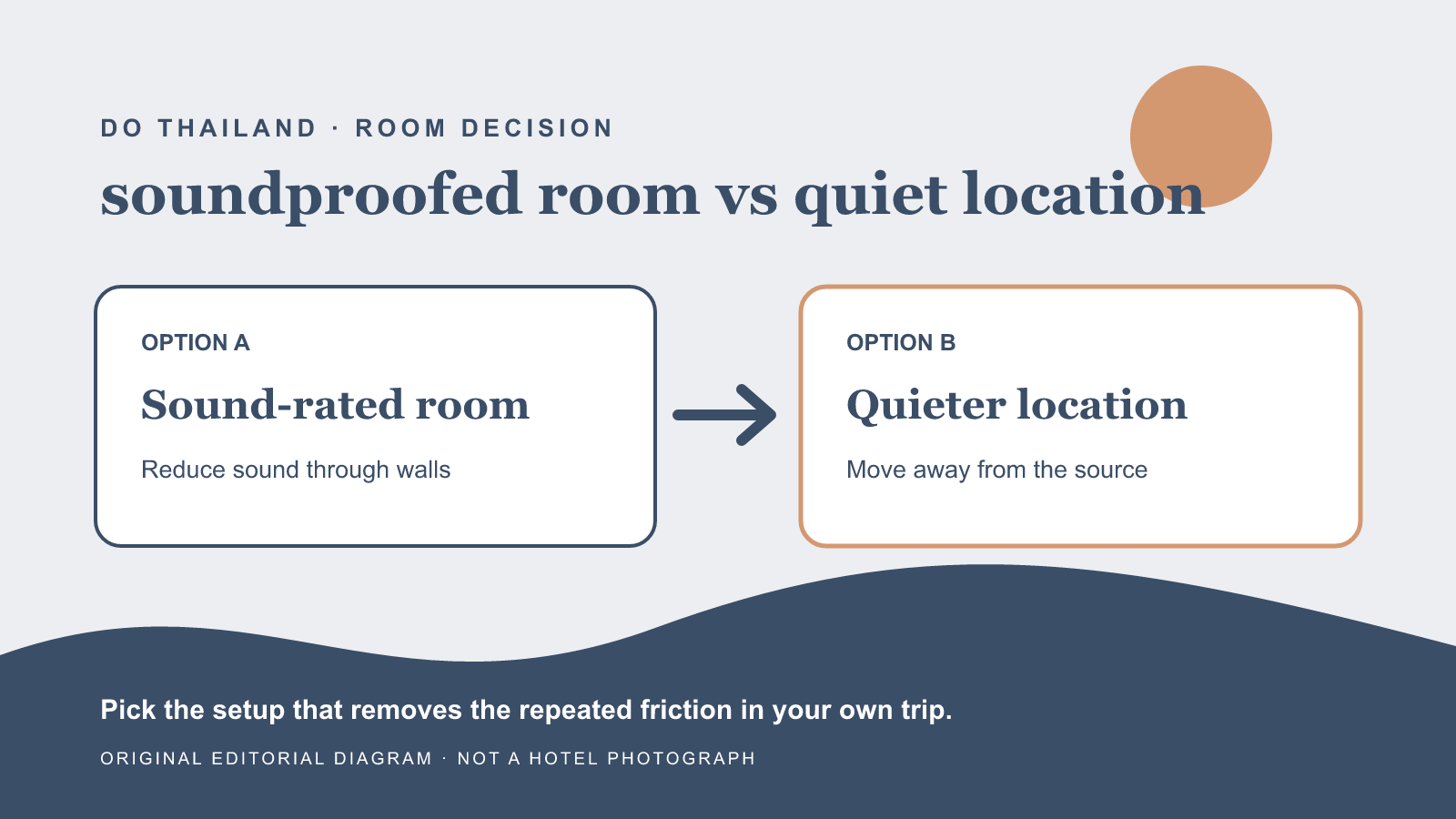
For a light sleeper, the order matters. Location and room position reduce the amount of noise that reaches the room. Soundproofing tries to reduce what gets through once the noise exists. The first job is usually more reliable.
This is also why our quiet room request vs best view guide is a different decision. That page is about room placement versus outlook. This one is about whether building-level acoustic claims can compensate for a noisier setting.
Stay planning
Find a place to stay
See available rooms around the property or neighborhood discussed here, with prices for your dates.
Build a noise budget before you compare hotels
Music, traffic, people leaving bars and late-night activity happen outside the hotel. They are hardest to control with a room request alone.
Pool music, beach bars, breakfast setup, kids’ areas and evening venues can be inside a lovely resort but still repeat every day.
Doors, voices, lift arrivals and connecting-room leakage are much more dependent on the building and exact room position.
Air-conditioning, mini-fridges and bathroom fans are the least glamorous noise source—and the one a sea-view label tells you nothing about.
You do not need perfect silence in all four categories. You need to know which category would genuinely bother you. A city sleeper may barely notice traffic but wake instantly when a neighbour closes a door. Someone else can sleep through corridor noise yet find bass from a late venue impossible.
Current Samui hotel disclosures show the two layers clearly
The hotel’s current official site positions it on Chaweng Beach, close to central Chaweng, while also explicitly describing its sleeping zones as having soft beds, blackout curtains and noise proofing. Its current room pages separately publish room size, view and bed configuration. This is a useful example of a lively-location hotel making a room-level sleep claim—but the wording does not publish a decibel rating or promise that every external sound disappears.
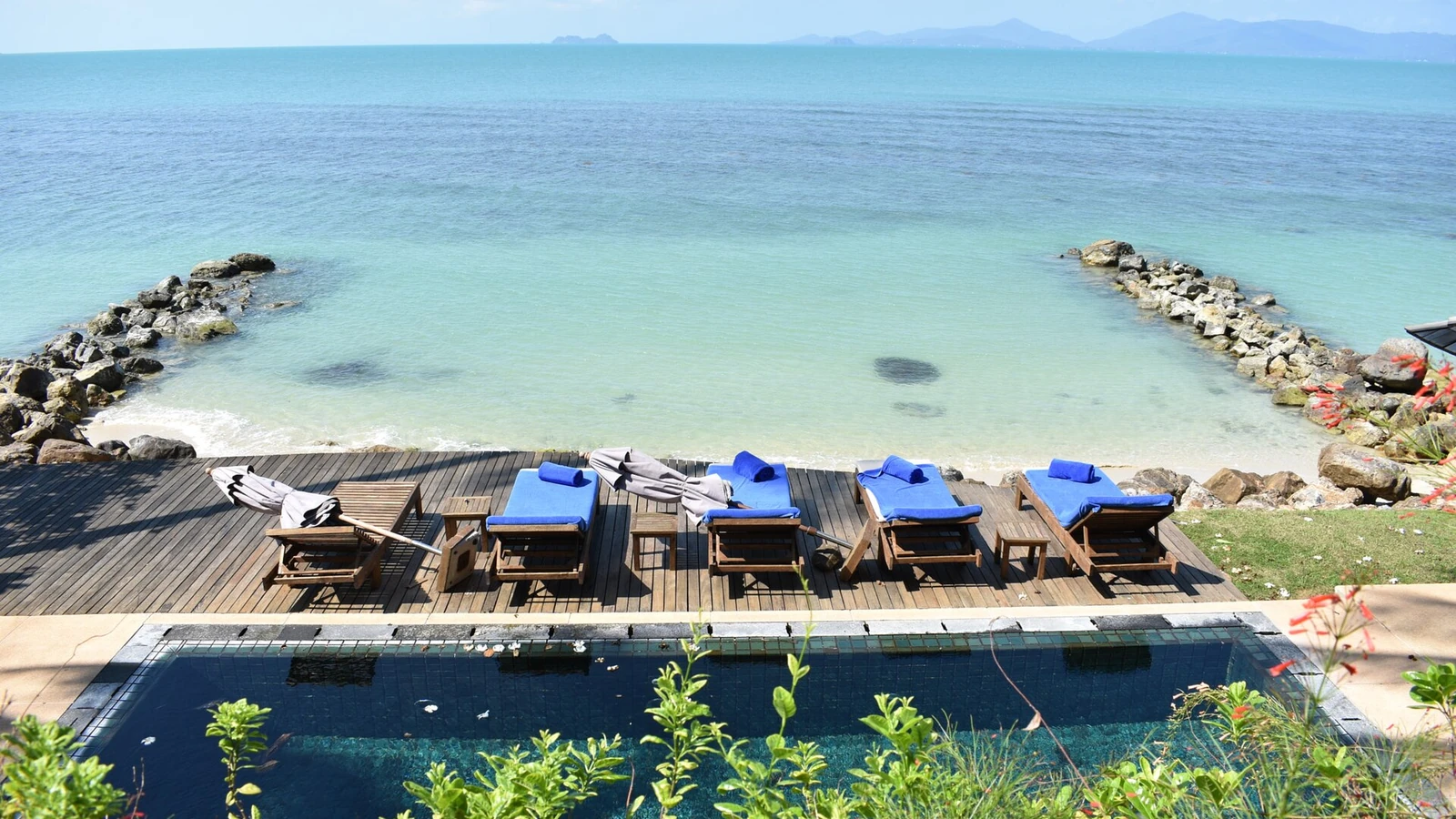
Marriott currently describes Vana Belle as tucked into a secluded cove on Chaweng Noi Beach and surrounded by tropical forest. That is a location-level reduction in obvious public-edge exposure. The reviewed page does not make an equivalent published “soundproof room” promise, so the sensible conclusion is only that the setting is more secluded—not that every assigned suite is acoustically superior.
IHG currently describes the resort as being in the heart of Fisherman’s Village, with walkable restaurants, cafés, boutique shops and a Walking Street environment with food, music and entertainment. That convenience is valuable. It also demonstrates why a lively walk-out base and a sleep-first base are not automatically the same thing.
TAT’s current Ko Samui overview explicitly describes the island as offering both quieter beaches for relaxation and lively, exciting areas. That wider destination context matters: “Koh Samui hotel” is not one acoustic environment.
Soundproofing can help, but it cannot rewrite the map
Choose the quieter location first when the noise source is predictable
If you know you are a light sleeper and your room would sit above a nightlife strip, beside a busy public road or directly over a social venue, the source is not hypothetical. A better room position or a calmer base removes the problem before glazing, seals and walls have to fight it.
This is where room near the main pool vs quiet wing and room near the lift vs end of corridor become more useful than an acoustic buzzword.
Give published soundproofing more weight when the location is non-negotiable
Sometimes the lively location is the point. You may want to walk to dinner, avoid late taxi dependence or stay close to the part of Samui where your friends are based. In that case, a credible room-level sleep specification has more value because you have consciously accepted some external activity.
But “soundproof” still needs modest expectations. Balcony doors open. Bass behaves differently from voices. Corridor doors may remain audible. A label can reduce risk without turning central Chaweng into a silent retreat.
The most expensive mistake is solving the wrong noise
Imagine a five-night trip. You choose a secluded resort because you hate nightlife noise. Then your room is beside the main pool walkway and you wake to early movement. Or you choose a hotel advertising noise proofing in a lively base, only to discover your actual problem is the connecting door to the next room.
That is why “quiet hotel” searches often disappoint. Identify the noise source and direction; a general label such as “quiet” may not describe your room.
Ask yourself which of these sentences sounds most like you:
- “I cannot sleep with bass or street noise.” Prioritise the public-edge location first.
- “I wake when people talk in corridors or doors slam.” Prioritise room placement and building layout.
- “I need complete darkness as much as quiet.” Pair this decision with our blackout curtains vs sunrise-facing room guide.
- “I sleep fine, but I do not want the pool outside my door.” Treat this as a zone-selection problem, not a soundproofing problem.
For a solo woman, “quieter” can create a different kind of friction
A secluded hotel can reduce public noise and still be the wrong choice if every dinner ends with a long ride back to an isolated resort entrance. A lively walk-out base may make evenings easier even if it carries more ambient activity.
So do not optimise sleep in isolation. Compare the last ten minutes of the night: restaurant to hotel entrance, hotel entrance to room, lighting, reception access and how much you depend on a car. Our guides to hotel near shops vs self-contained resort, covered vs open-air resort paths and private-entrance villa vs hotel room cover those trade-offs directly.
If you love going out for dinner, resort dining vs nearby restaurants may matter more than theoretical silence. If you regularly eat late, also check 24-hour room service vs late-night food access.
When should soundproofing actually change your booking?
| Trip pattern | What to prioritise | Why |
|---|---|---|
| Light sleeper + early boat days | Quiet location / quiet room position | Two bad nights can damage the exact mornings you paid to enjoy. |
| Loves nightlife and walking out | Location first, then published noise protection | You are intentionally keeping the lively area, so room-level protection has real value. |
| Resort-heavy couple | Internal zone | Main-pool, bar and restaurant routes can matter more than the public street outside. |
| Two friends with different bedtimes | Room layout + corridor exposure | Door location, bathroom noise and neighbour traffic may dominate external street noise. |
| Solo traveller returning late | Easy return route + acceptable sleep | A silent but inconvenient base is not automatically a better evening experience. |
| Deep sleeper, out all day | Overall hotel quality | Do not pay for acoustic features you are unlikely to notice. |
| Workcation with calls | Internal acoustic separation | Speech privacy and corridor/adjacent-room sound can matter more than nightlife. |
A quiet location still needs a room-position check
Seclusion only solves the public edge. Inside the resort, your room can still be next to a lift, stairwell, service route, restaurant setup area or pool access lane. If you care about sleep, make the room request specific rather than writing “quiet room please” and hoping the hotel guesses correctly.
Useful wording is closer to: “If possible, I would prefer a room away from lifts, service doors, the main pool and evening entertainment.” That gives the property something operational to work with.
Do not assume an end-of-corridor room is automatically better either. It may be quieter but farther from lifts, breakfast or the lobby. The right answer depends on whether repeated walking or repeated noise bothers you more. Our buggy resort vs walkable resort guide is useful if distance inside the property is already becoming part of the decision.
Ask these questions when sleep quality really matters
- Does the exact room category publish any acoustic or noise-proofing specification, or is “quiet” only marketing language?
- What is directly outside the room: road, pool, bar, restaurant, kids’ area, garden or another building?
- Can the hotel place the room away from lifts, service doors and connecting doors?
- Is evening entertainment on-site, and if so where is it relative to guest rooms?
- Does the room have a balcony or terrace door facing the noise source?
- Are blackout curtains also provided if light sensitivity is part of the same sleep problem?
- If you arrive late, is the quieter room position still easy to reach from reception?
- Is a quiet-room request a preference only, or can the property confirm a specific room type or zone?
For tour-heavy trips, sleep and logistics interact. A slightly livelier hotel may still be the better base if it simplifies early pickup; check our tour-pickup hotel location guide. If you are moving hotels to chase two different atmospheres, compare the trade-off with one resort vs split stay before creating extra packing friction just for quiet nights.
Final rule: remove one repeatable noise source first
If one predictable noise source is likely to affect three or more nights, choose the location or room position that removes it before you pay for a soundproofing claim. Once the hotel location already fits your trip, published noise protection becomes a useful tie-breaker.
In practice, the best Samui room is rarely the one with the strongest adjective. It is the room where your sleep problem has the fewest chances to start.
Continue planning from the Koh Samui destination guide.
Sources checked
- OZO Chaweng Samui — current official OZO overview and room pages, checked 14 August 2026, for central Chaweng positioning, blackout curtains and the hotel’s published “noise proofing” sleep claim: OZO overview and OZO rooms.
- Vana Belle, a Luxury Collection Resort, Koh Samui — current official Marriott overview, checked 14 August 2026, for its secluded Chaweng Noi cove and forest setting: Marriott.
- Holiday Inn Resort Samui Bophut Beach — current official IHG property page, checked 14 August 2026, for its Fisherman’s Village location, walk-out restaurants, shops, Walking Street, music and entertainment context: IHG.
- Tourism Authority of Thailand — current Ko Samui destination guidance, checked 14 August 2026, for the island’s mix of quieter beaches and lively areas: TAT.
Stay planning
Find a place to stay
See available rooms around the property or neighborhood discussed here, with prices for your dates.