
When four friends plan a Bangkok stay, the room question often sounds like a square-footage contest. It is really a question about how the group wants to share time. Will we come back between plans, sit down together, and use the room as a home base? Or will we mostly shower, sleep, and head out, with each pair wanting a little independence at the end of the day?
At Mandarin Oriental, Bangkok, those patterns point toward two genuinely different setups. The Premier Two-Bedroom Suite is a single 150-square-meter suite with one king bedroom and one twin bedroom, two bathrooms, a separate living area, balcony, dining area, pantry, and walk-in closets.
The Deluxe Premier Connecting Room is two Deluxe Premier rooms in the River Wing joined by an interior door. The hotel lists the connected arrangement at 86 square meters and for up to six guests. Each room can be configured with a king or twin beds, subject to the confirmed assignment.
My starting call for four adults is the suite when being together is part of the trip, and the connecting rooms when sleeping arrangements and separate routines are the deal-breakers. That call changes if your group has two couples who expect equal bedrooms, if anyone needs a separate bed, or if the price difference buys something you will actually use. Resolve those details before comparing the room names.
Four friends · Bangkok riverfront
Compare both room plans for your dates
Price the same nights and four guests, then confirm the booked bed arrangement and room connection directly with the hotel.
Start with the four-person bed plan
The suite’s published sleeping layout is king plus twin. That can sleep four if two friends are comfortable sharing the king and the other two take the twin beds. It is a clear plan for two close pairs, siblings, or a group that has already agreed who will share.
It is not an equal arrangement for four friends who each expect a separate bed, and the room description does not promise an extra bed as part of the standard setup. Ask the hotel what can be added for your dates and get the exact layout confirmed before booking.
Two connecting rooms can make the bed assignment feel fairer because the hotel says each room is available with king or twin beds. A pair might choose one king room and the other request twins; four people who each want their own mattress could ask whether both rooms can be set as twins. The online description gives options, not a promise that every combination is available on every date. A preference entered in a booking is not the same thing as an assigned and confirmed configuration.
For two couples, bed fairness also includes which pair gets the king. In the suite, decide this before you book and avoid leaving it to a tired conversation at check-in. If neither pair wants to be the one assigned to the twin bedroom, the connecting setup gives each pair a full room with its own bathroom.
If your group includes one person who sleeps lightly, snores, keeps a different schedule, or needs medical equipment nearby, ask whether those needs are better handled by a separate room rather than by a shared suite door.
Count beds, not just bedrooms. “Two-bedroom” does not mean four single beds, and “connecting” does not establish who gets which room. Write out the names and sleeping surfaces: two people in the king and one in each twin, for example, or two friends in each room with the twin option requested for both. If that sentence does not sound comfortable to everyone, the plan is not settled yet.
Decide whether the room needs to host the group
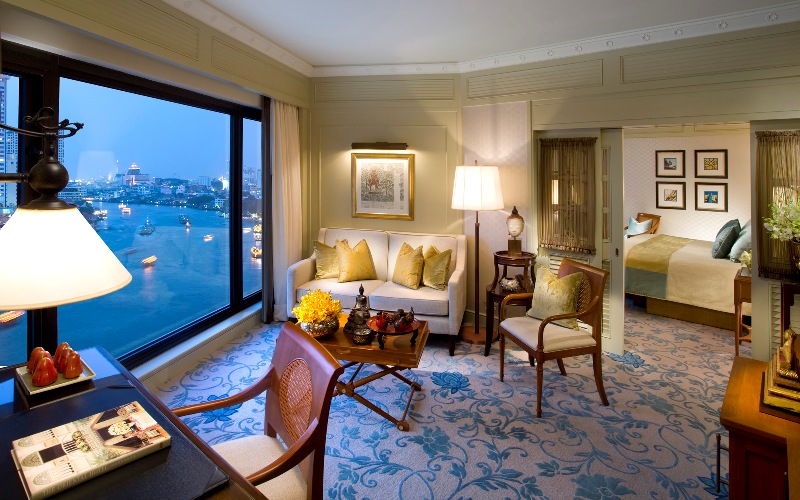
The Premier Two-Bedroom Suite earns its size through shared indoor space. Its living room and dining area create a natural place to eat breakfast, regroup after the river, or settle the next day’s plan without asking four people to perch on the edge of a bed. The pantry and walk-in closets add everyday utility, while the balcony offers another place to pause. Those features matter most on a multi-night trip with a slow morning or a planned afternoon back at the hotel.
The connecting rooms provide two private sleeping rooms and their own bathrooms, but they are not one large living room. The connecting door means you can move between the rooms without going into the corridor; it does not turn the pair into a suite with a common dining table. You can gather in one bedroom, sit on its available sofa or chairs, and use the hotel’s public spaces, but four adults may find that there is no single comfortable indoor spot designed for everyone to linger together.
Think about the hours you will spend in the room while awake. If everyone expects to get ready at once, then leave for breakfast and return late, the suite’s extra living area could sit unused. If the group wants a quiet hour after lunch, a shared drink before dinner, or a place to compare photos and plan tomorrow, the room itself becomes part of the itinerary. In that case the suite’s additional area is functional, not merely impressive in a listing.
There is also a social trade inside the suite. Shared space makes spontaneous conversation easy, but it can make it harder for one person to withdraw without feeling absent. Two connected rooms let each pair close its own door and choose when to join the others. The suite still has two bedrooms, so it does offer a retreat; the difference is that the group’s default gathering area belongs to everyone and sits just outside those rooms.
The room itself is part of the plan
Check what is available before you split the cost
Compare the suite’s shared living space with the two-room configuration, then divide the total according to the bed and privacy arrangement your group accepts.
Two bathrooms do not solve every morning bottleneck
Both options give four friends two bathrooms in practical terms: the suite listing specifies two bathrooms, and the connected configuration has one marble bathroom in each room. That is a useful baseline. It avoids the single-bathroom queue common in a standard room shared by several adults, and it gives each bedroom pair a place to shower and keep toiletries.
The difference is control. In connecting rooms, a pair can close its door, set out clothes, and use its bathroom without crossing the other pair’s bedroom.
That can feel more comfortable when friends have different modesty preferences, when one couple wakes much earlier, or when someone wants to shower after coming back while the others keep talking.
In a suite, bathroom access is still divided by bedroom, but the public living area and one bedroom may be on the route between a friend and the shared parts of the home.
Ask what the twin setup means in each room and whether both rooms have the same bathroom features. The hotel describes marble bathrooms with a bath and rainforest shower for the connected room configuration.
A room category’s description does not answer every practical detail, such as whether a particular tub is easy to step into, where the vanity outlets sit, or whether the bathroom door offers the privacy your friends expect.
If accessibility or a specific bathing setup matters, ask about that exact room before comparing decorative features.
For four people, a useful exercise is to name the busiest 45 minutes of your day. Perhaps two friends want showers after a boat outing while the other two get ready for dinner. If separate rooms let both pairs run their own routine, the connection is valuable. If everyone expects to get ready at once in both room plans, two bathrooms help but do not guarantee four independent mirrors, outlets, and counter spaces.
What the river-view wording does and does not settle
The hotel describes the Premier Two-Bedroom Suite as having panoramic Chao Phraya River views from private balconies. The Deluxe Premier Connecting Room is described with river or city views. That makes the suite the clearer choice if seeing the river from the room is part of why you are choosing this address. The connecting category may still deliver a river outlook, but the wording leaves the view dependent on the rooms assigned.
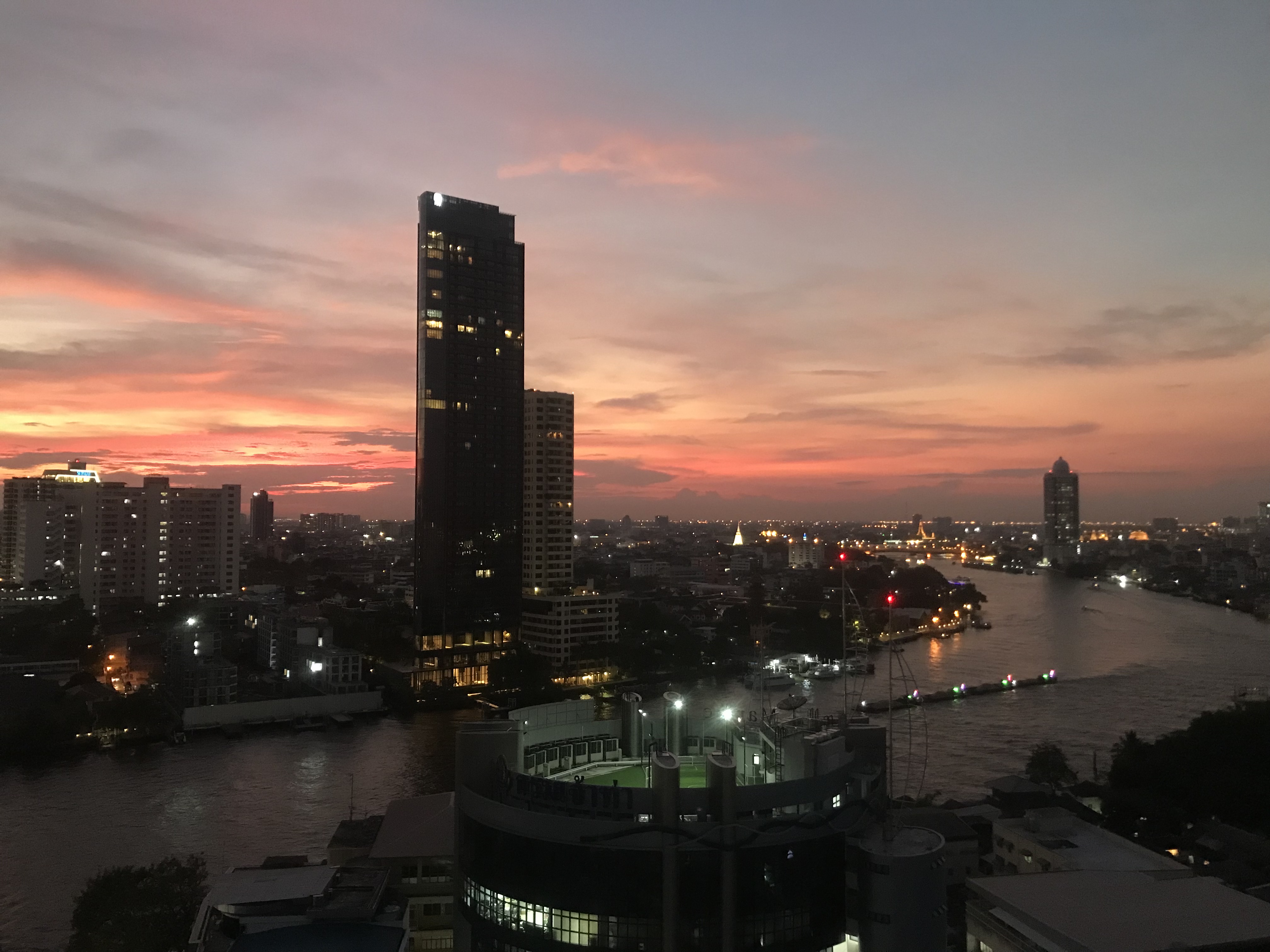
For friends who will spend most daylight hours out, I would not let the view decide the room plan. Bangkok is more interesting when your shared memories include the river itself, a ferry ride, a riverside dinner, or an evening walk than when four people each take a quick look through a window. The location puts the Chao Phraya in the trip’s frame, but the photograph above is city context and does not show either room or a view from the property.
A river-facing balcony is easiest to value when the group has time to use it: coffee before the day starts, a short reset between activities, or a drink before dinner. If those pauses are likely, the suite has the more definite view description and a larger interior to complement it. If the booking is mainly a place to sleep, paying for a view you barely see can be a poor use of the group budget.
The connecting rooms sit in the River Wing, with floor-to-ceiling windows and either river or city views in the hotel’s description. Before paying a premium for a view, ask whether both connecting rooms will face the river or whether only one room type or orientation is being promised. Four guests may not agree that one person’s room gets the better outlook while the other pair gets the city side. A confirmed room assignment is more useful than a broad phrase on a search result.
Use the nightly total as a group decision, not a per-room headline
There is no stable public price that answers this comparison for every date. Rates move with season, demand, cancellation terms, and the room allotment available for a particular stay. Compare the total for the same dates, the same four guests, the same flexibility, and the room plan you actually want. Then divide by four. A room advertised with a lower headline amount can become less attractive once the second room, taxes, or stricter terms enter the total.
Ask the hotel whether the connected pair must be booked as the named Deluxe Premier Connecting Room or whether two separate Deluxe Premier rooms can be linked by request. The published connected product describes a two-room configuration; it does not mean that any pair of rooms bought separately will be physically adjacent or connected. Make sure the quote and confirmation refer to connecting access, not merely two rooms on the same floor.
For the suite, check the guest maximum, bed setup, included breakfast, cancellation deadline, and any extra-person conditions on the rate you are considering. A listed maximum occupancy answers whether the hotel permits the number of guests, but it does not prove that the sleeping layout suits your group. Likewise, a large suite can look efficient when its price is divided by four, yet still cost more than the group wants to spend on a room it will leave after breakfast.
When the suite is more expensive, I would ask each friend a direct question: how much would you pay for a common living room and a definite river-facing balcony? If the answers are close, the suite may be an easy shared decision. If one person cares about the lounge and the others only want their own bed, it is fairer to price two rooms and spend the difference on the parts of Bangkok everyone will use.
Six fit scores for this specific choice
These editorial scores describe how well each plan fits four friends under the conditions named. They are not guest ratings. A high score does not replace confirming the booked room, view, and bed arrangement.
The 150-square-meter layout includes a separate living room and dining area, so four people have a place to sit together away from the beds.
Two rooms and an interior connecting door let each pair close its own bedroom while staying inside the same two-room booking configuration.
The hotel describes king or twin beds in each room, giving the group more possible assignments if both room setups are confirmed.
One king bedroom and one twin bedroom can work for four, but the two couples do not receive identical sleeping arrangements.
One bathroom in each room lets each pair manage showering and toiletries without walking through the other pair’s bedroom.
The suite is described with panoramic river views; the connecting-room description allows river or city views, so the exact assignment needs checking.
My booking rule for four friends
I would choose the Premier Two-Bedroom Suite for a group that wants one shared indoor base, plans to spend meaningful time at the hotel, and is genuinely comfortable with one king and one twin bedroom. The separate living and dining space answers a real group need: it gives everyone a place to come together without making a bedroom carry the entire social load. Its river outlook also has a clearer description, which matters if that view is part of the reason for choosing the hotel.
I would book the Deluxe Premier Connecting Room if equal room access and independent routines outweigh a shared lounge. It has two complete rooms, a connecting door, and a stated maximum of six. For four friends, that can mean two people in each room, a bathroom for each pair, and a simpler way to close the door when the conversation is over. I would ask the hotel to confirm twin or king assignments in both rooms and whether the selected view faces the river.
If all four friends want separate beds, neither label by itself proves the group will get four single mattresses. Ask for the specific arrangement in writing. If the hotel cannot confirm the setup that makes everyone comfortable, look at another category or property before paying. The best view and the largest room do not repair a bed plan that one traveler already knows they will dislike.
Before you commit, put three details in the booking conversation: the names of the four guests, the requested bed configuration in each bedroom, and whether connecting access is confirmed or the suite itself is confirmed. Add the view requirement only if you would pay for it. Then compare the complete date-specific total.
That small checklist should make the choice clear: the suite is for a group that wants to gather; the connected pair is for friends who value having two rooms that operate separately.
Before confirming the stay
Match the confirmation to your room plan
Check the exact room name, number of guests, bed configuration, connecting access, view wording, and cancellation terms for your dates.
Room details and image credits
- Premier Two-Bedroom Suite details · current room size, bedroom arrangement and suite features.
- Deluxe Premier Connecting Room details · connected-room area, occupancy, beds and bathroom features.
- Executive Suite interior and Somerset Suite interior · hotel-supplied archive images, CC BY-SA 3.0, VRT ticket 2010052710032299.
- Chao Phraya sunset · Linh Anh Moreau, CC BY-SA 4.0; longtail boats · David McKelvey, CC BY 2.0.


