
Chiang Mai makes this decision unusually visible because both areas belong to the city's everyday visitor rhythm. The Old City is the moated historic core; Nimmanhaemin sits by Chiang Mai University and moves at a more contemporary street pace. You can visit both from either base. Your hotel mainly decides which one is easiest to step into at the start or end of a day.
If you are still building the whole trip, open our Chiang Mai four-day itinerary alongside this guide. It deliberately keeps the Old City, Nimman and mountain time in separate blocks so you can see which urban block you want closest to your room.


Use the 9 a.m. / 9 p.m. test before you open hotel filters
Imagine the same room quality and the same nightly rate in both areas. Now choose which friction you would rather remove.
Lean Old City. It is the stronger default when your first hours are about temples, gates, old streets and walking before the day gets more complicated.
Lean Nimman. It is the stronger fit when dinner, cafés, bars, contemporary shops and an easy modern evening routine are a large part of why you chose Chiang Mai.
Stay planning
Find a place to stay
See available rooms around the property or neighborhood discussed here, with prices for your dates.
What the Old City buys you before breakfast
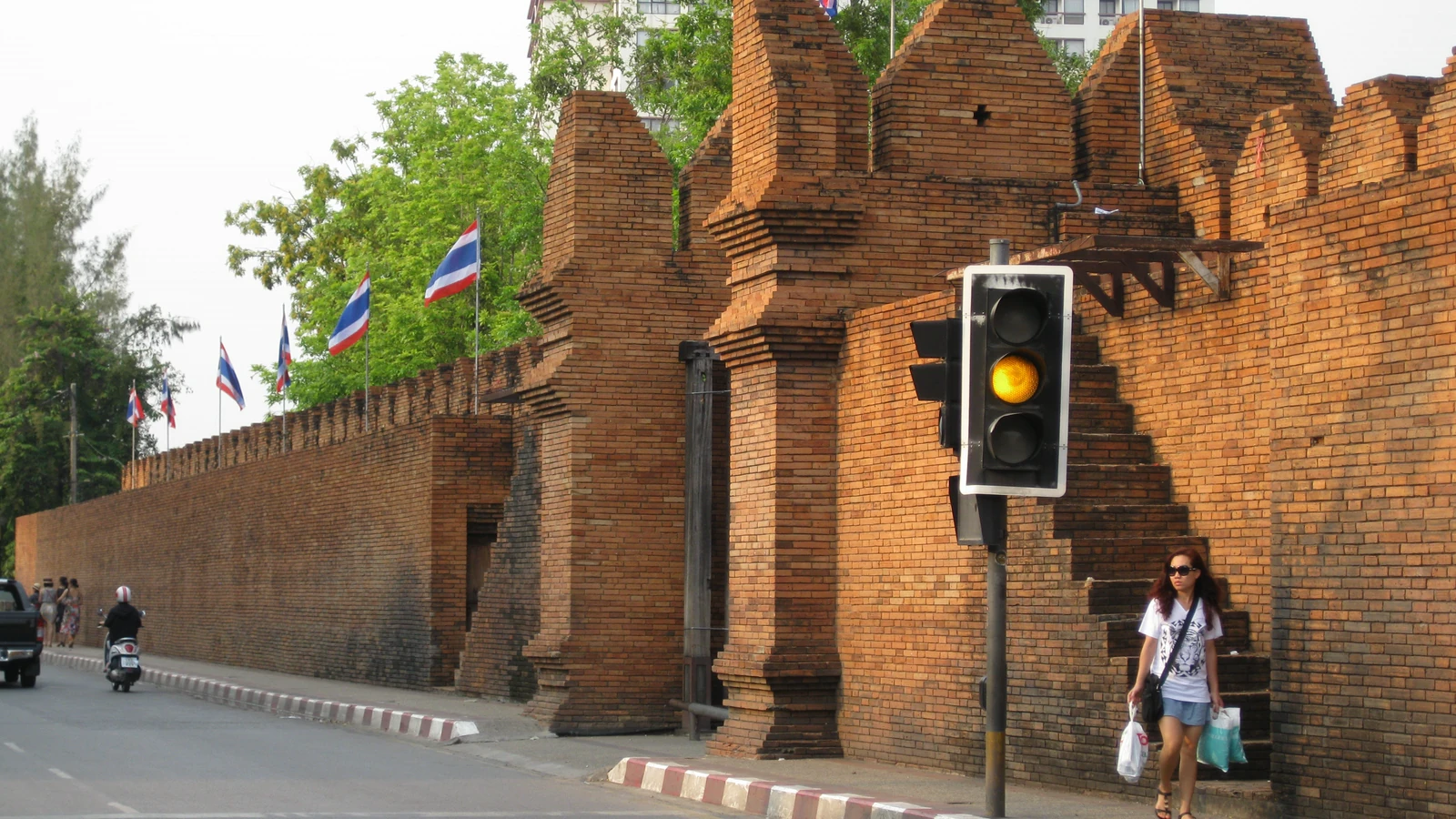
The Old City is physically defined by its moat and surviving walls. Tha Phae Gate marks the eastern entrance; from there, temples and Ratchadamnoen Road's Sunday walking street fit into a natural walking route. That layout matters when you want a first morning that starts on foot instead of with a ride across town.
The value is not that every sight is automatically “walkable” from every Old City hotel. The old core is still large enough for the exact hotel pin to matter. The real advantage is that a hotel inside or close to the moat can put multiple small decisions — breakfast, the first temple, a coffee break, returning to the room, walking to another old-city sight — into the same urban block.
That makes the Old City especially persuasive on a two- or three-night first visit. If one of your four usable mornings is lost to checking routes, waiting for rides and crossing town before you have even started, the percentage cost is high. A historic-core base protects the sightseeing hours you are most likely to use on a first trip.
There is a second advantage that is easy to miss when comparing hotel photos: you can return to the room without mentally ending the sightseeing day. If the afternoon is hot or wet, a central Old City hotel can work as a reset point between two short walking blocks. That is a different kind of convenience from a “better” room farther away.
What Nimman buys you after 6 p.m.
Nimmanhaemin Road — Nimman for short — stays lively around the university, with shops, food and cafés woven into the same evening radius. It suits a trip where dinner is part of the plan rather than the last stop after a full sightseeing day.
That is why Nimman often makes more sense when you want the hotel close to your usual evening plans. Your first-trip days may still include the Old City and Doi Suthep, but your repeated evening can stay close to the hotel: dinner, dessert, a café, a drink, a short walk, then bed. The value comes from making the low-stakes part of the day easy.
Nimman can also suit a trip where you expect to return to the hotel during the day. If you want a long breakfast, a gym or pool session, a few hours of remote work, or a slower afternoon before going out again, a modern urban base may match the rhythm better than a hotel chosen purely because it sits beside the historic sights.
Nimman also works on a first visit when contemporary city life matters as much as heritage stops. It fits a Chiang Mai stay split between sightseeing and long stretches of cafés, relaxed meals or time back at the hotel.
Sunday can temporarily change the Old City calculation
Sunday Walking Street starts around Tha Phae Gate and follows Ratchadamnoen Road into the Old City, with stalls beginning to appear around 5 p.m. If the market is a fixed part of your trip, a room inside or near the moat can turn the evening into a walk instead of another cross-town ride.
The market changes the arrival calculation as well as the evening walk. Vehicle access and pickup points can shift around the event, so the useful detail is the hotel's exact entrance and where a car can stop during Walking Street hours, especially with luggage.
The airport does not need to decide Old City vs Nimman for you
A late landing can work from either area: airport taxis, metered cars and app-based rides are available, with app pickups using designated locations. The hotel entrance and the next few days' routine matter more than choosing a base around the airport handoff alone.
Late arrival rule: solve the hotel entrance, not the neighborhood name
If you land late, the useful questions are whether the reception will be staffed, where the ride can stop, whether the entrance is obvious, and how far you must carry luggage from the curb. Our Chiang Mai airport late-arrival guide handles that handoff separately.
A fixed “airport-to-Old-City” or “airport-to-Nimman” travel time is a weak deciding metric. Traffic, pickup conditions and the exact hotel entrance shape that first ride; the area choice affects every morning and evening that follows.
A mountain day has its own transport plan
Most first trips eventually leave the center. If Doi Suthep or Wat Pha Lat is on the plan, you are already accepting a transport block. Our Doi Suthep songthaew vs private-car guide is more useful for that day than trying to choose a hotel that is somehow “best” for every direction.
For an onward trip to Chiang Rai, the bus or private transfer has its own departure logic; our Chiang Mai to Chiang Rai transport comparison covers that leg. A hotel move across the city only pays off when the departure is tight enough to justify changing bases.
Trip length changes how much the base matters
Bias toward Old City
You have very few repeated mornings. If this is your first visit and the historic core is the priority, spend the short stay reducing sightseeing setup time.
Choose by your dominant half-day
If two or more half-days are Old City-heavy, sleep there. If the trip includes slow cafés, later dinners and substantial hotel time, Nimman becomes much easier to justify.
Nimman gains value
Longer stays create more ordinary hours — laundry, coffee, work, gym, repeat meals and nights without a sightseeing target. The base that feels liveable can matter more than the base closest to the first temple.
Choose your Chiang Mai base
Compare stays in both areas
Use the same dates for each search, then check the exact hotel pin against your morning and evening plans.
If you arrive from Bangkok and are still deciding between an overnight rail journey and flying, solve that separately with our Bangkok to Chiang Mai sleeper train vs flight guide. Arrival mode should shape the first few hours, not automatically dictate the entire stay area.
Solo traveler, two friends or couple: the same district can feel different
| Trip type | Lean | What to inspect before booking |
|---|---|---|
| Solo first trip, sightseeing-heavy | Old City | Choose a hotel on a route you are comfortable repeating after dark; a nearby temple pin does not show the return walk. Check entrance visibility, ride pickup and the walk from your last evening stop. |
| Solo, café-and-evening-heavy | Nimman | A central pin keeps dinner and the final walk short. The exact street approach matters after dark because nearby blocks can feel quite different. |
| Two friends | Either | The room may matter more. Check real twin beds, bathroom privacy, mirror/lighting position and whether two suitcases can stay open without blocking the path. |
| Couple on a short first visit | Old City if temples dominate; Nimman if evenings dominate | Decide which repeated walk you want to share: morning sightseeing or dinner-and-drinks. |
| Remote work mixed with sightseeing | Nimman | Verify the actual room desk, Wi-Fi policy if stated, nearby cafés you would use, and whether daytime hotel facilities justify returning between plans. |
Rain makes micro-location more important than the district label
A rainy day exposes weak hotel pins quickly. “Inside the Old City” can still mean a walk that feels longer with luggage and a wet pavement. “In Nimman” can still mean crossing a busy road every time you want to reach the cluster of places you actually saved.
In the wet season, the curb-to-lobby route, any covered drop-off, ride pickup point and nearby meal options can decide whether a specific hotel works. Those details vary from one property to the next within both areas.
Mountain weather affects that excursion separately from the city stay. The hotel base works best when it serves the routine you repeat in town; the day trip needs its own flexible transport plan.
Six map-pin checks before you compare room prices
- Mark the hotel entrance, not the map label. Large compounds and corner properties can have an entrance on a different street from the pin you first notice.
- Trace the last 300–500 metres of your likely evening walk. Look for major road crossings, quiet side streets and where a ride would actually stop.
- Check your first morning route. If you choose Old City, does the pin genuinely reduce the walk to the sights you want? If you choose Nimman, does it put you in the part of Nimman you plan to use?
- Check Sunday separately. If your stay includes Sunday Walking Street, confirm how market activity changes the hotel approach and pickup point.
- Check two bad-weather fallbacks. A meal and a café or indoor option within a short radius can matter more than an extra hotel star when rain arrives.
- Check the room function you actually need. Two suitcases, twin beds, desk space, bathroom privacy, mirrors, lighting and a usable hairdryer matter every day; a prettier lobby may not.
What not to do: split a short stay just to experience both
Old City and Nimman are close enough within the same city that most two-, three- and four-night visitors do not need to change hotels simply to “try both areas”. A hotel move costs checkout time, repacking, luggage handling and another check-in. That friction only makes sense when the second property creates a materially different phase of the trip — for example, moving from a city hotel to a remote resort later, not moving a few urban kilometres because you want dinner in a different neighborhood.
For a four-day trip, it is cleaner to keep one city base and visit the other area as a dedicated block, which is exactly how our four-day Chiang Mai plan is structured.
So which one should you book?
After picking a base, compare the same dates, room conditions and cancellation terms. Check the exact hotel pin against the journeys you expect to repeat; a lower headline rate may not be better value once local transport is included.
Stay planning · compare the two bases
Compare stays in the Old City and Nimman
Search each area for your dates, then check the hotel entrance and routes you expect to use most.
The simplest decision rule
Old City is the safer first-trip default; Nimman is the stronger lifestyle default. Pick the Old City when you want Chiang Mai to begin outside your door every morning. Pick Nimman when you want the part of the day after sightseeing to require less effort. Then ignore the neighborhood label for five minutes and inspect the exact hotel entrance, the last walk home and the room layout you will repeat every night.
For the rest of the city's planning network, return to the Chiang Mai destination hub, browse all stay decisions, or use the experience guides once the base is settled.
Sources checked · 10 October 2026
Neighborhood context: Tourism Authority of Thailand — Chiang Mai and Nimman. City-wall and Sunday market context: Chiang Mai moat and Tha Phae Gate and Sunday Walking Street. Airport pickup: Chiang Mai International Airport transport information. Photography: Tha Phae Gate by shankar s. under CC BY 2.0; Wat Phra Singh by gary4now under CC BY 3.0; Nimmanhaeminda Road by Setawut under CC BY 4.0. All three images were cropped and converted to WebP.