
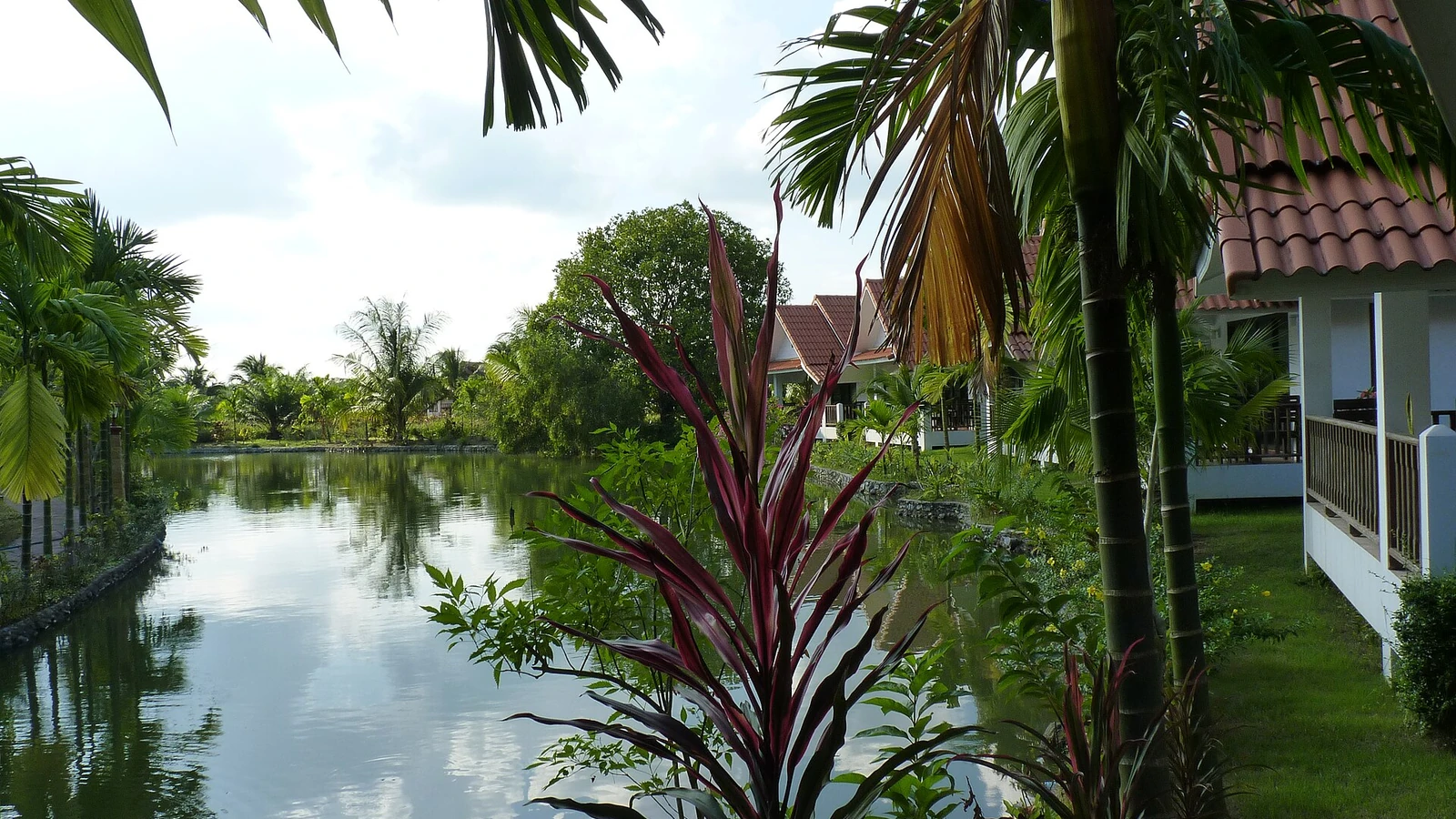
This is not the same decision as whether Phi Phi deserves an overnight at all, and it is not a longer version of our Tonsai vs Long Beach one-night guide. Here, the overnight is already settled and you have two nights. That extra day changes the maths: seclusion can finally earn enough hours to justify an extra transfer, but only if you actually want to stay secluded.
Tonsai
Choose the main pier and village core when you want ferries, restaurants, tour departures and the evening to remain easy to rearrange. It is the stronger choice when Phi Phi is one part of a busier Krabi trip rather than a two-night retreat.
Stay planning
Find a place to stay
See available rooms around the property or neighborhood discussed here, with prices for your dates.
Laem Tong
Choose the north coast when quiet beach time, slower evenings and staying put are genuine priorities. The trade is dependence on boats for the island's main hub and tighter choreography around arrival, departure and some activities.
Two nights give Laem Tong a case that one night usually does not
With one night, every extra handoff steals a large share of the stay. With two nights, you gain a full middle day that can be almost entirely protected from arrival and departure logistics. That is the first reason Laem Tong becomes credible: the local boat transfer is no longer eating into your only evening and only morning.
But do not confuse “credible” with “automatic winner.” Tourism Authority of Thailand currently describes the Phi Phi experience as a contrast between lively Tonsai—shops, bars, restaurants and nightlife—and smaller beaches suited to people seeking a more resort-like retreat. That distinction is the real decision. You are not choosing between a good beach and a bad beach. You are choosing independent island movement versus a place that becomes better the more willingly you stay there.
The two-night rule
If your middle day already includes leaving Laem Tong for Tonsai, joining a fixed departure there and then returning north again, ask whether you actually want Laem Tong—or just like the idea of a quieter hotel photo. Seclusion only pays when you consume it.
Tonsai wins the “change my mind” test
Tonsai Pier remains the central marine handoff for Phi Phi Don. TAT identifies Phi Phi Don as the island with the pier, accommodation, restaurants and visitor facilities, while current ferry operators continue to use Tonsai as the check-in point for many Krabi-side services. For a two-night stay, that creates a useful kind of freedom: you can change the shape of the middle day without also changing how you get back to the main transport core.
Want a later dinner? Easy. Decide to organize a boat outing only after seeing the weather? You are already in the island's busiest service zone. Finish a snorkelling or diving day wet and tired? Your last movement can be a walk rather than another planned boat connection. If you are comparing shared vs private Phi Phi boat formats or thinking about scuba versus snorkeling as a beginner, this flexibility matters more than a romantic map pin suggests.
Tonsai is also the safer logistical default when your onward mainland night matters. If you are moving back to Ao Nang, Railay or another fixed transfer after Phi Phi, reducing the number of morning handoffs leaves more margin for sea conditions and operator check-in rules. Our Railay vs Ao Nang before Phi Phi guide solves the mainland side of the same choreography.
Laem Tong wins only when “nothing else tonight” sounds good
Laem Tong is on the quieter northern side of Phi Phi Don and current resort material still frames the location as a boat-linked retreat rather than an extension of Tonsai Village. One current Laem Tong property describes Tonsai as a boat ride away; another current north-coast resort's access guidance tells public-ferry guests arriving at Tonsai Pier to arrange a longtail connection onward. Those are property-specific examples, not a universal transfer promise, but they capture the operational truth: the north-coast location is valuable precisely because it is not the main hub.
If your ideal evening is shower, beach, dinner, one drink and bed, that is not a limitation. It is the product. You do not need Tonsai's restaurant density if you have already decided you prefer a quieter resort evening. Two nights also give you one full morning and one full afternoon where the extra distance from the pier disappears from your attention.
What does not work as well is half-committing. Stay in Laem Tong but plan both evenings in Tonsai, or book a morning activity with an unclear meeting point and assume a boat will materialize at the exact time you need it, and you have bought seclusion while spending money and attention undoing it.
Where the two nights actually go
In August, do not build either choice around a generic ferry timetable
Low season is where neat comparison articles can become misleading. As checked on 12 August 2026, Aonang Travel & Tour's current site warns that low-season boats may not operate every day even when route tiles show regular schedules, and some individual Phi Phi return services publish seasonal exceptions. Travel time is also weather-dependent. That means your hotel location should be chosen around the specific service that is actually operating on your date, not around a timetable screenshot saved months earlier.
This matters slightly more at Laem Tong because a mainland ferry change can cascade into a second island transfer. At Tonsai, a change is inconvenient; at Laem Tong, it can also change the time you reach the north coast. If you are travelling during the wetter months, confirm the exact sequence again with both the transport operator and your accommodation before the transfer day.
Luggage is the unglamorous tiebreaker
Two nights sounds short until you carry a full-size suitcase across a pier and then realize your room still needs a boat connection. Tonsai is usually easier for travellers whose Krabi trip includes a large suitcase, shopping, or a second bag they do not want to repeatedly load and unload.
Laem Tong is more comfortable when you treat the move like a small island stay rather than a casual city hotel change: waterproof the things that cannot get wet, keep sandals accessible, separate one dry layer, and know who is responsible for the bag at each handoff. A property-arranged transfer can make this straightforward, but “the hotel is on Phi Phi” is not enough information. Verify the exact arrival meeting point and departure process.
For solo women and anyone who dislikes solving transport after dark
Tonsai gives you more independent evening options; Laem Tong asks for more commitment to the place you booked. That does not make one universally safer. It changes the kind of friction you manage. Around Tonsai, expect more people, noise and nightlife, so choose your exact hotel pin for the walk you want after dinner. At Laem Tong, the issue is the opposite: fewer spontaneous alternatives and more reliance on your resort or a planned boat if you decide to go elsewhere. If you know you hate negotiating a late transfer when tired, do not book a secluded coast and plan to escape it every night.
Three trip shapes make the decision almost automatic
Two nights + active middle day
Tonsai. If the middle day is a dive, early boat, or a plan you may change with the weather, stay where service density keeps options open.
Two nights + one slow day
Laem Tong. A full unhurried beach/resort day is enough to repay the extra arrival and departure choreography.
Two nights + fixed onward move
Tonsai unless the ticket says otherwise. Reduce the morning transfer chain before a Railay, Ao Nang or airport-positioning day.
Do not let the Phi Phi choice swallow the rest of Krabi
A two-night Phi Phi block already consumes a meaningful share of a short Krabi trip. If you are also trying to fit Railay, Hong Islands and inland days into four nights, the problem is no longer Tonsai versus Laem Tong—it is itinerary overload. Use the Krabi four-day islands vs inland guide before adding another compulsory marine day.
If you are still mainland-based and only considering a day trip, go back to the Klong Muang vs Ao Nang for Phi Phi decision instead. If you have not even chosen between mainland convenience and the Railay peninsula, start with Ao Nang vs Railay. And if an early Phi Phi excursion—not an overnight—is the actual problem, the early-bird vs standard Phi Phi tour guide answers that separately.
The decision in one sentence
Stay in Tonsai when two Phi Phi nights need to remain connected to ferries, activities and independent evenings; stay in Laem Tong when the quieter north coast is the thing you want to spend those two nights doing.
If you choose Laem Tong, verify three things before paying: where your Krabi boat actually lands, who handles the Tonsai-to-Laem-Tong leg, and how you reach the departure point on checkout day. If those answers are vague, the prettier location is not yet the better booking.
Sources checked
Stay planning
Find a place to stay
See available rooms around the property or neighborhood discussed here, with prices for your dates.