
When I picture this three-generation arrival, I start with the differences between relatives: grandparents may want a quiet room and a bathroom they can use safely, adult children want breakfast together without managing everyone’s bags, and younger travelers are already asking whether the sea is close.
Phulay Bay, a Ritz-Carlton Reserve, sits on Krabi’s quieter Nong Thale coast. It offers private villas and pavilions, a pool, spa, dining and arranged excursions; the hotel also invites groups to request a room block.
I see a shared base here, but only with advance planning: the property is about 40 kilometers from Krabi International Airport and is not a walk-out town hotel.
The central decision, as I see it, is how much togetherness the family wants built into the accommodation. A room block can keep relatives at one resort while preserving separate doors, sleeping schedules and bathroom routines.
A shared villa may bring everyone under one roof, but room counts, bed layouts, thresholds and accessible features have to match the exact product being sold. The property’s public room information does not publish a universal multi-bedroom plan for every villa type, so I would not infer one from a broad “stay together” message.
My first move: ask the hotel’s group team to propose a room block for the dates and household mix. I would request a written room list, the route between rooms, guaranteed room features, and a total price with taxes and breakfast terms. Only then would I compare the block with a larger villa category the hotel confirms can accommodate the group.
Room proximity matters more than the headline room count
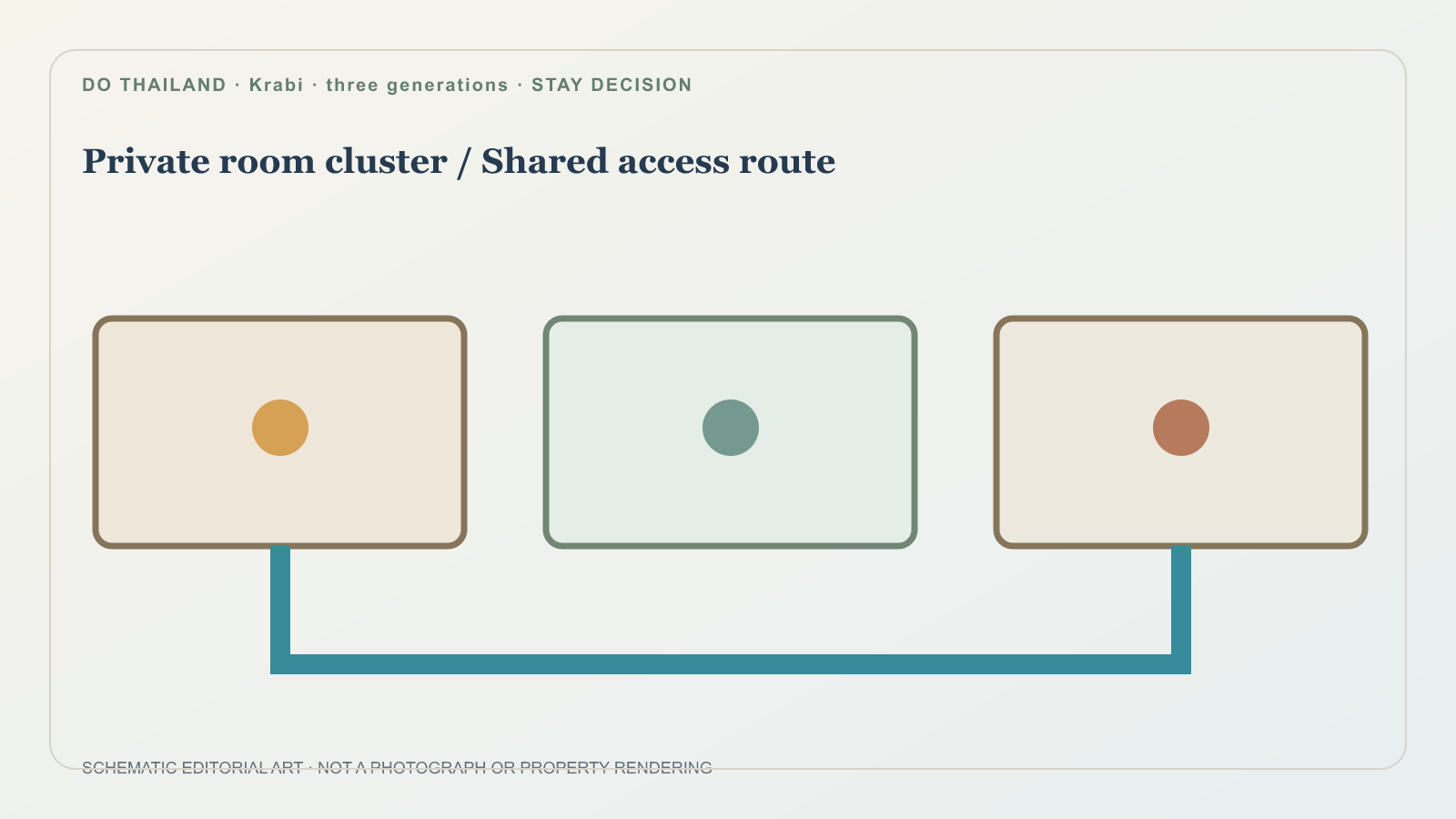
A resort room block is useful only if it works as a small family neighborhood. Ask whether the rooms can be placed near one another, which room categories are available in that cluster, and whether the hotel can guarantee the arrangement in writing.
“Nearby” could mean the same building, a short outdoor path or a longer route through landscaped grounds; the public room pages do not define it. That difference may decide whether a grandparent can join breakfast easily or needs someone to escort them each time.
Give the hotel a rooming list that reflects how the family actually travels. A couple who needs an early night may prefer a separate room from relatives who plan to socialize. Parents with a young child may need a crib, twin configuration or connecting option; request the exact bed setup and whether the connecting door is guaranteed.
Grandparents may value an accessible room more than the highest view category. If two adult siblings are sharing, confirm whether the rate is based on one or two guests and how breakfast is charged.
Avoid splitting the bill until those answers arrive, because the family’s fairest cost shares may depend on which room types and inclusions each household receives.
For a group that wants one gathering point, reserve a dining time or ask what private dining can be arranged. A room block does not automatically provide a shared living room, kitchen or private dining room.
That is the tradeoff: separate rooms protect rest and privacy, while shared meals and planned excursions have to create the reunion’s common rhythm.
If the group expects everyone to sit together for long stretches between activities, ask whether a confirmed multi-bedroom villa or private event space is available for your dates, and price it against the room block.
Nong Thale · Krabi
Compare rooms for the family’s dates
Check the same dates and household count, then confirm room proximity, bedding, breakfast and cancellation terms with the property.
Accessibility needs have to be attached to a specific room
The property lists several accessibility features, including accessible routes from the public entrance, accessible restaurants and meeting spaces, guest-room items such as grab rails and a bathtub seat, and adjustable-height hand-held shower wands.
Its room page cautions that accessible rooms may be limited for each room type and says to request one during booking. That is useful information, but it does not establish that a particular pavilion or villa has a step-free route from the entrance, a roll-in shower, a specific bed height or enough turning space for a wheelchair.
Before paying a deposit, describe the relative’s functional needs in plain language and ask the hotel to confirm the exact room and route.
Useful specifics include whether there are steps between drop-off and the room, whether the bathroom has a walk-in shower or tub, the position of grab bars, shower entry width, seat availability, lighting at night, and the distance to the restaurant and pool. Ask whether a mobility aid can fit through the room and bathroom doors.
If the answer is “accessible room available,” request photographs or a room plan and ask the property to confirm the same features for the allocated room, not only for a sample category.
Also plan the transition from the airport. Phulay Bay lists Krabi International Airport about 40 kilometers away and shows a one-way airport transfer at THB 3,885, on request. Those details can change, and the car type, luggage capacity, child seats and accessibility equipment are not specified in that line item.
Ask for a vehicle plan based on the family’s actual people, bags and mobility needs. One large vehicle may be easier for a reunion, but a split convoy can be more comfortable if a relative needs more space or a quieter ride.
Phuket International Airport is listed about 130 kilometers from the resort, with a one-way transfer shown at THB 10,593 by reservation. That makes Phuket a possible arrival point, not an automatic substitute for Krabi: a longer road transfer can be tiring after an international flight, especially for older relatives or children.
Compare the total journey rather than the airfare alone. If family members arrive at different times, agree in advance whether they will wait together, take separate cars or meet at the resort.
Krabi works best when the family agrees on a slower base
Nong Thale offers the quiet coast and resort setting that suit a family who wants to spend time together on property. It does not provide the same easy independent evening choices as Ao Nang.
Thailand’s tourism authority describes Ao Nang as a growing seaside strip of hotels, restaurants and shops and a major launch point for nearby boat trips. That is a meaningful alternative for relatives who want to step out separately for dinner, browse shops or choose their own activity without arranging a car.
At Phulay Bay, treat transport as part of the plan and ask the concierge to confirm current transfer options and prices before building a day around them.
Excursions work best when they have a clear opt-in. The hotel promotes long-tail boat outings to Hong Island, where beaches and limestone scenery can make a memorable shared day. The group should still ask about boat departure time, ride duration, boarding conditions, shade, restroom access and the return plan.
A scenic island outing is not automatically suitable for every relative. One grandparent might prefer the resort pool and a relaxed lunch while younger family members go by boat; keeping the room block and a meal reservation as the shared anchor lets both choices feel intentional.
For a mixed-age trip, leave at least one full day without a long excursion. A slow morning lets everyone recover from travel and adjust to the heat. A short pool visit, a lunch on property and a quiet afternoon can be more valuable than filling every day with transfers.
If a family member wants a cultural activity, the property advertises Thai cooking and batik painting alongside nature outings; confirm the current schedule, duration, minimum age and accessibility before treating an activity as a guaranteed option.
Build a family rhythm around shared meals and separate rests
Arrival afternoon: keep the first commitment small. Meet at the resort, confirm room keys and special requests, and choose one dinner plan everyone can reach. Ask the hotel to note who needs help with luggage or the route to the restaurant. If arrivals are staggered, avoid making the first group wait through a long meal reservation.
First full day: use breakfast as the one fixed gathering, then split the morning by energy level. Some relatives can stay around the pool while others book a spa treatment or a short activity. Meet again for lunch or early dinner. The value of the room block shows up here: nobody has to check out of one base just because the family wants different mornings.
Second full day: choose one excursion that most of the group actively wants. Hong Island is a strong candidate for the boat-loving branch of the family, but it should not become a loyalty test. Make a parallel resort plan for anyone who prefers not to board. Rejoin for dinner and trade stories instead of asking the whole party to follow the most energetic itinerary.
Final full day: leave room for weather and fatigue. If the first boat trip is postponed or a relative wants another quiet day, the schedule still has space. Confirm checkout at noon and check-in at 3 p.m. for any onward hotel; when the family is changing properties, ask about luggage storage and transfer timing rather than filling the gap with a fixed tour.
This cadence suits a three- or four-night stay. A shorter visit can feel dominated by the airport transfer and one excursion. A longer stay gives the room block more time to earn its coordination cost, but only if the family is comfortable spending several days at a resort rather than moving around Krabi. Settle the number of nights alongside the room plan, not after the resort quote arrives.
How to judge the quote without splitting the family unfairly
Ask for a written total that shows room category, occupancy, breakfast, taxes, transfer, deposits, cancellation deadline and any group-block release date. Room-block terms can differ from a standard flexible booking, and the hotel’s public page does not explain a universal group deposit or cut-off policy. Confirm whether the family can reduce or change room count if someone’s plans change. Agree who carries that risk before one relative becomes the informal trip treasurer.
Then divide the total in a way that reflects the actual arrangement. A household with a larger room or a private pool may not consider an equal split fair. A room with an accessible bathroom may be essential to one traveler, not a luxury upgrade they selected freely. Decide whether shared transport and meals are divided per person, per household or by use. This conversation can feel less elegant than choosing a view, yet it is what keeps a high-end family stay from turning into a quiet dispute.
At this level, value is not simply the nightly rate divided by headcount. A room block earns its place if relatives can stay close, move through the day at different speeds and come together without repeated logistics.
It loses value if the group pays for resort services while spending most waking hours in a car or if accessibility requirements remain uncertain. Compare one all-in room-block total with a more central Ao Nang stay plus planned day trips.
The lower nightly figure may not be lower after transfers; the secluded resort may not be better if independence is the family’s priority.
Room block · Multi-generation travel
Check what is available together
Compare the property’s confirmed room combinations and ask which requests can be guaranteed for your family.
Phulay Bay for a three-generation stay
The property invites groups to request a room block across its villas and pavilions; room proximity and exact bed layouts still need written confirmation.
Published accessible routes and room features provide a starting point, while limited accessible-room inventory and unpublished villa routes make advance confirmation essential.
On-property dining, pool time, spa and arranged activities let relatives reconnect without requiring every person to join the same excursion.
The coast is a strong launch point for planned nature trips, but the 40-kilometer airport distance and resort setting make spontaneous town errands harder than from Ao Nang.
A room block allows different wake-up times and rest periods while keeping the group on one base; boat access and weather still shape excursion days.
The shared resort setting can reduce daily coordination, but a room block, transfers and meals require an all-in quote before the premium can be judged.
Who should choose this base?
I would shortlist Phulay Bay for adult children traveling with parents or grandparents who enjoy resort time, want separate private rooms and are willing to arrange transport for outings. The case is strongest when the family can use the pool, spa, on-property meals or cultural activities between excursions. A room block gives the reunion one shared address without asking relatives to share a living room or sleep schedule.
I would pass on it for a family that expects walkable cafés, independent evening plans or a different outing every day. I would also keep it off the shortlist until accessibility is confirmed for the person who needs it; property-wide features cannot answer room-specific questions.
If those details check out and the all-in room-block quote feels fair across households, the resort makes sense for the time the family expects to spend there. Otherwise, I would use Ao Nang as the more independent base and arrange transport for the days everyone wants to explore together.
Before the family pays a deposit
- Get a written rooming list, room proximity and exact bedding setup.
- Have the hotel confirm the specific accessible room and route for the relative who needs it.
- Price transfers for the full headcount, luggage, child seats and mobility equipment.
- Check group-block deposit, cancellation and room-release terms.
- Agree on room-cost shares, shared meals and optional excursions before collecting money.
Phulay Bay · Krabi, Thailand
Compare your dates and family room plan
Use the final headcount and the room types the property has confirmed, then review the complete stay total.
Sources and image credits
Hotel policies, room-block availability, transfers, prices and schedules can change. Details below were checked on October 6, 2026. Confirm the terms for the family’s own dates and exact room categories.
- Phulay Bay Suites & Rooms — room types, accessible-room limitation, and the room-block inquiry route.
- Phulay Bay property overview — address, airport distances, listed transfer prices, check-in/out and accessibility features.
- Phulay Bay experiences — current property and regional activity descriptions.
- Tourism Authority of Thailand: Krabi — Ao Nang’s role as a seaside visitor hub and boat-trip departure point.
- Room image: Reserve Pavilion bedroom; source: Phulay Bay official photo gallery; reuse permission not verified.
- Room image: Ocean Pavilion bedroom; source: Phulay Bay official photo gallery; reuse permission not verified.
- Destination image: Hong Island beach and limestone peaks; source: Phulay Bay official photo gallery; reuse permission not verified.
- Destination image: limestone islands in the Andaman Sea; source: Phulay Bay official photo gallery; reuse permission not verified.