
My starting point would be the reception pin
For a solo arrival, my choice would be Phuket Smart Bus if the hotel confirms an easy approach from its recommended stop. For a beachfront resort with a separate pickup to arrange, I would compare the whole journey with a direct airport car. The useful difference is how much work remains after unloading the bag. Bang Tao covers several hotel neighborhoods, and an address containing “Cherng Talay” does not establish that the bus stops outside reception.
The Airport–Rawai bus serves the Cherng Talay area before continuing south toward Surin and Kamala. Its current timetable labels the relevant southbound stops Cherngtalay School and Lotus Cherngtalay. Boat Avenue is a useful landmark for discussing the hotel area, but I would not ask a driver for a presumed Boat Avenue stop based on an older route description. I would show the hotel's recommended stop on the current route map, alongside the accommodation address.
This matters even for a small guesthouse. The entrance may be on a side street rather than the main road shown in the booking pin. A property can be close to a bus corridor while its usable pedestrian approach involves a crossing or a detour. The entrance pin and the hotel’s advice about walking with a rolling suitcase would settle that question for me. A straight line across a map is not a walking route.
Where the public bus journey ends
The last link can decide the transport choice even when the airport bus fare looks attractive. A direct car takes the hotel entrance as its destination; the public bus follows its own route.
Finding the bus after an international flight
The boarding point is outside Exit 3 of the Domestic Terminal. After baggage collection, the route to the stop follows the public transport walkway outside that terminal. An international arrival needs to reach the Domestic Terminal first. That terminal transfer belongs in the connection time, particularly after an international flight.
An offline hotel address and a screenshot of the current stop map would be useful here. Airport Wi-Fi can help with a first check, but a second connection may be needed at the other end if the hotel pickup depends on a message. That is an extra practical cost of a two-stage arrival: someone needs to know where I am waiting and whether the bus is delayed. A confirmed meeting place is more useful than an instruction to call “when nearby.”
A direct car also needs a precise meeting arrangement. For a booked pickup, I would want the terminal, meeting area, and contact method in the confirmation. The reservation should include the arriving flight so the provider can identify a schedule change. If I choose an airport car after landing, I would agree on the full hotel destination and total charge before setting off, including any extra charge for a larger vehicle.
Fare and timing: what I would budget around
The current Airport–Rawai single-ride fare is 100 baht per passenger. Cash and contactless Visa, Mastercard, or JCB are available; Thai banking apps can use PromptPay. For a visitor arriving from the United States, I would keep the exact cash fare as a fallback even if I intend to tap a card. PromptPay is useful if I already have a compatible Thai banking app, but it is not something I would expect to set up at the bus door.
The southbound timetable checked on October 12, 2026, effective January 16, 2026, starts airport departures at 8:15 a.m. and ends at 11:30 p.m. Those are departure times at the airport, not flight arrival cutoffs. The late part of the table includes uneven gaps, so the actual departure list is more useful than an assumption of half-hourly service throughout the evening.
For an evening flight, I would compare the next departure with the time I can realistically reach the boarding point after immigration and bags. A landing near the final departure leaves little room for delay. If reaching the last bus requires everything to go quickly, I would arrange a car or make sure I have a workable alternative at the airport. A missed bus should change the transport plan, not leave me trying to improvise a hotel pickup after midnight.
The live tracker works best alongside the timetable. The timetable explains which service I am trying to catch; the tracker helps show where the vehicle is now. Neither establishes an exact reception arrival time. Road traffic and the final leg still matter, especially if the hotel has a check-in arrangement that needs advance notice.
Cherng Talay and Boat Avenue: check the walk street by street
For accommodation around Boat Avenue, I would ask reception which of the current Cherng Talay stops it recommends and request the walking route from that exact side of the road. “Near Boat Avenue” is too broad to answer the airport question. The restaurant and shopping area is a useful reference point, but it does not identify the pedestrian entrance to every nearby apartment or hotel.
With a small bag in daylight, a confirmed short walk could make the bus the sensible choice. With a large suitcase, I would look at the surface and road crossings before accepting the same route. A path that a hotel employee walks comfortably without luggage can still be awkward when I need to keep a wheeled bag out of traffic. If reception recommends a car from the stop, I would include that charge in the airport comparison.
I would also clarify the direction of travel. The stop needed after an airport arrival may be on a different side of the road from the one used for the return. The return journey needs a separate stop pin. The hotel should identify both boarding locations if I plan to use the bus in each direction.
Laguna: internal shuttles do not finish every airport arrival
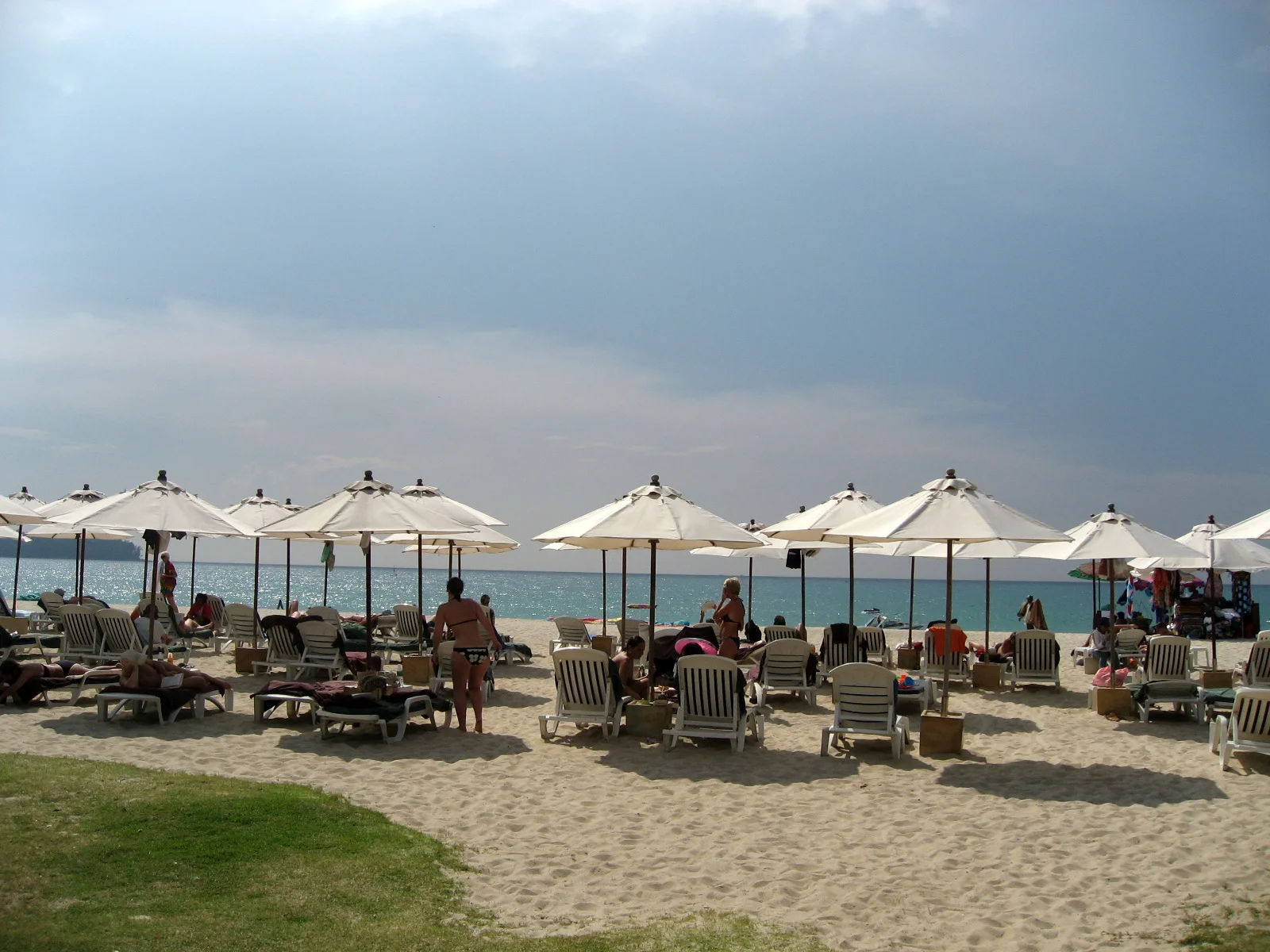
For Angsana Laguna Phuket, Dusit Thani Laguna Phuket, or SAii Laguna Phuket, I would plan the route to the resort reception rather than treat the estate entrance as the destination. These beachfront properties are within Laguna, while the airport bus follows the Cherng Talay road corridor. The remaining estate journey needs its own arrangement if I arrive by public bus. A photo of a beachfront location can help explain the setting, but cannot show where an airport bus drops passengers.
Banyan Tree Phuket and Cassia Phuket also need their own entrance pins. Belonging to the same integrated destination does not make their reception desks interchangeable. My message to the hotel would include the named public stop and ask about pickup costs, with a separate question about what happens if the bus is delayed. If the answer is only about transport between resorts, I would still need to solve the public-stop connection.
Laguna guests can use complimentary internal shuttle buses and boats, subject to hotel rules. The current internal bus service runs on call from 6 a.m. to midnight; boats run from 9 a.m. to midnight at 20-minute intervals. Those services could make getting around easier after check-in. For airport arrival, I would rely on them only if my hotel confirms that the particular pickup I need is included and available.
For a villa or a hotel toward the quieter northern part of Bang Tao, I would lean toward a direct car when the approach is long or the host cannot arrange a reliable handoff. A villa address needs more detail than the development name: the driver may need the entrance gate and unit location. Giving that information ahead of time avoids finishing the airport ride at the wrong gate with bags to carry.
When I would pay for the car
A direct car becomes more persuasive when two adults share the cost or when the bus plan needs another paid ride. Two adult bus fares total 200 baht before the final transfer. That complete amount is the useful comparison with a current car quote for the same hotel. The car quote should cover the luggage and number of passengers actually traveling.
For a family, I would confirm the child seat arrangement before reserving a vehicle. “Family transfer” does not tell me which seat is supplied or whether it fits the child's age. With bulky bags, I would also check the vehicle size rather than assume any standard car will hold everything. Those details can change the quote, and they matter more than a small saving on the advertised starting price.
Rain changes the final leg more than the bus ride itself. If the hotel is a short, covered approach from a confirmed stop, rain may not justify changing the plan. If arrival means a roadside walk followed by a wait for another driver, I would put more value on being dropped at reception. An unclear hotel approach after dark would also favor the car.
The return bus needs a separate plan
For departure, I would start with the airline's airport arrival requirement and work backward through the northbound timetable. The southbound airport departure list is not a return schedule. Reception can confirm the northbound stop. Reaching it with bags takes time, and the flight plan needs room for road delays before check-in. An early flight may make a prearranged car the practical choice even if the bus worked well on arrival.
If the hotel uses an on-call internal shuttle, I would arrange the first leg in advance rather than expect it to appear at the time I want to leave. A car option would be useful if the live tracker shows a delay that threatens the flight buffer. On arrival, waiting can cost some evening time; on departure, the consequence can be a missed flight.
Bang Tao's airport position does not settle a later ferry connection. A transfer to Rassada Pier needs its own timing plan. For travel elsewhere on the west coast, the Patong to Karon and Kata bus comparison explains a different stop-to-hotel problem. If the beach base is still undecided, where to stay in Phuket is a useful next read; the airport-to-Patong guide applies to that arrival instead. A Krabi-side trip needs the separate Krabi or Phuket Airport comparison.
Transport sources and photo credits
Transport information checked October 12, 2026. Phuket International Airport transport listing; operator airport boarding instructions; Airport–Rawai route; current timetable (southbound image effective January 16, 2026, naming Cherngtalay School and Lotus Cherngtalay); live tracker; fare and payment; Laguna internal transport; Laguna hotel locations.
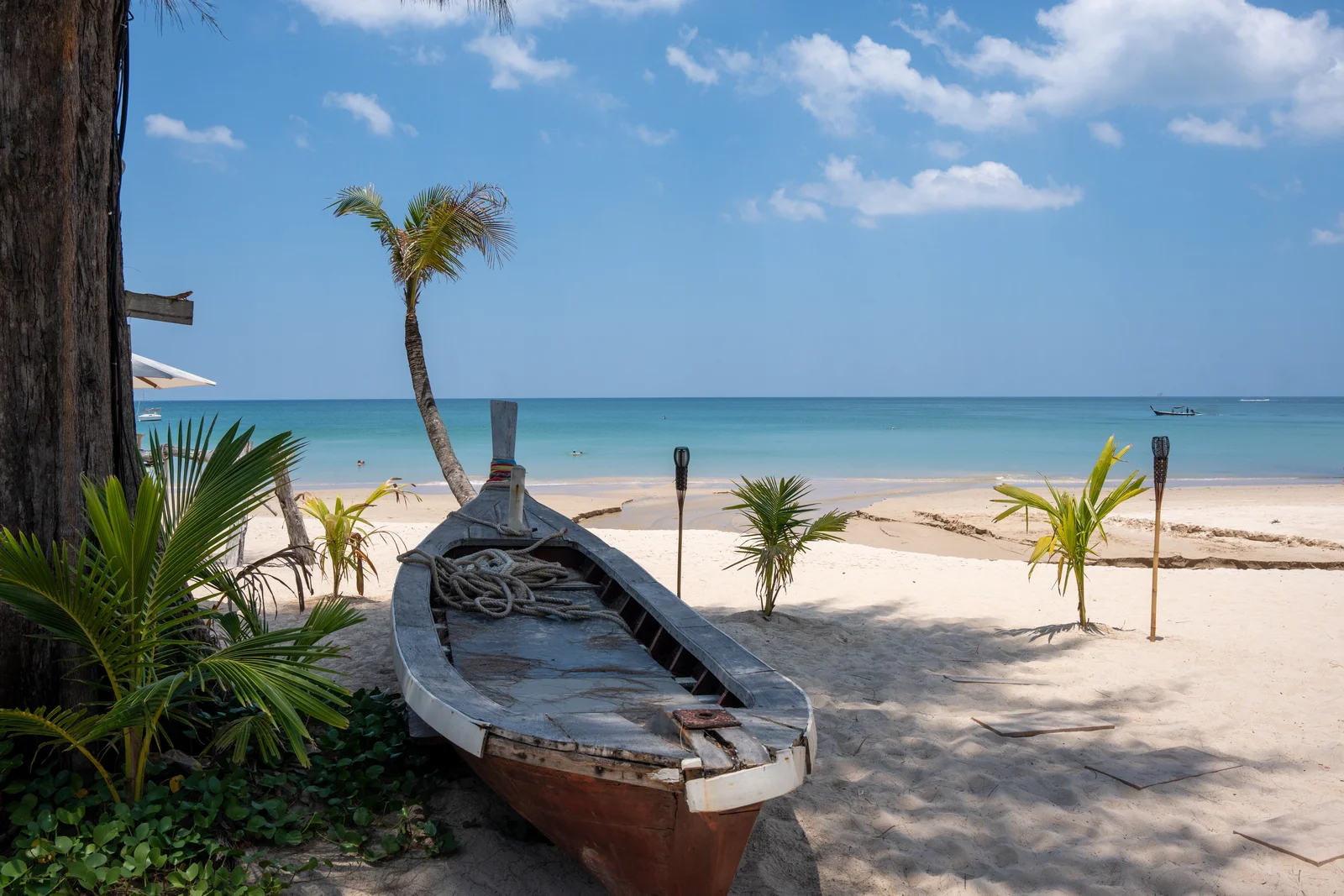
Cover and first gallery photograph: Bang Tao Beach, March 18, 2024, by Raita Futo. Original Commons file and subject metadata; photographer's original Flickr image; CC BY 2.0. Location metadata: 7.988604, 98.289202. Resized and converted to WebP, with a center-cropped 320×200 card thumbnail; display crops vary by layout.

Second gallery photograph: Bang Tao Beach at the then-named Sheraton Grande Laguna Phuket, November 19, 2007, by Tiger@西北. Original Commons file and subject metadata; archived original photograph; CC BY-SA 3.0. Location metadata: 8.006978, 98.292350. Resized and converted to WebP under the same license, with a center-cropped 320×200 thumbnail; display crops vary by layout. This historical beach photograph illustrates the Laguna beachfront setting, not current hotel facilities.
