
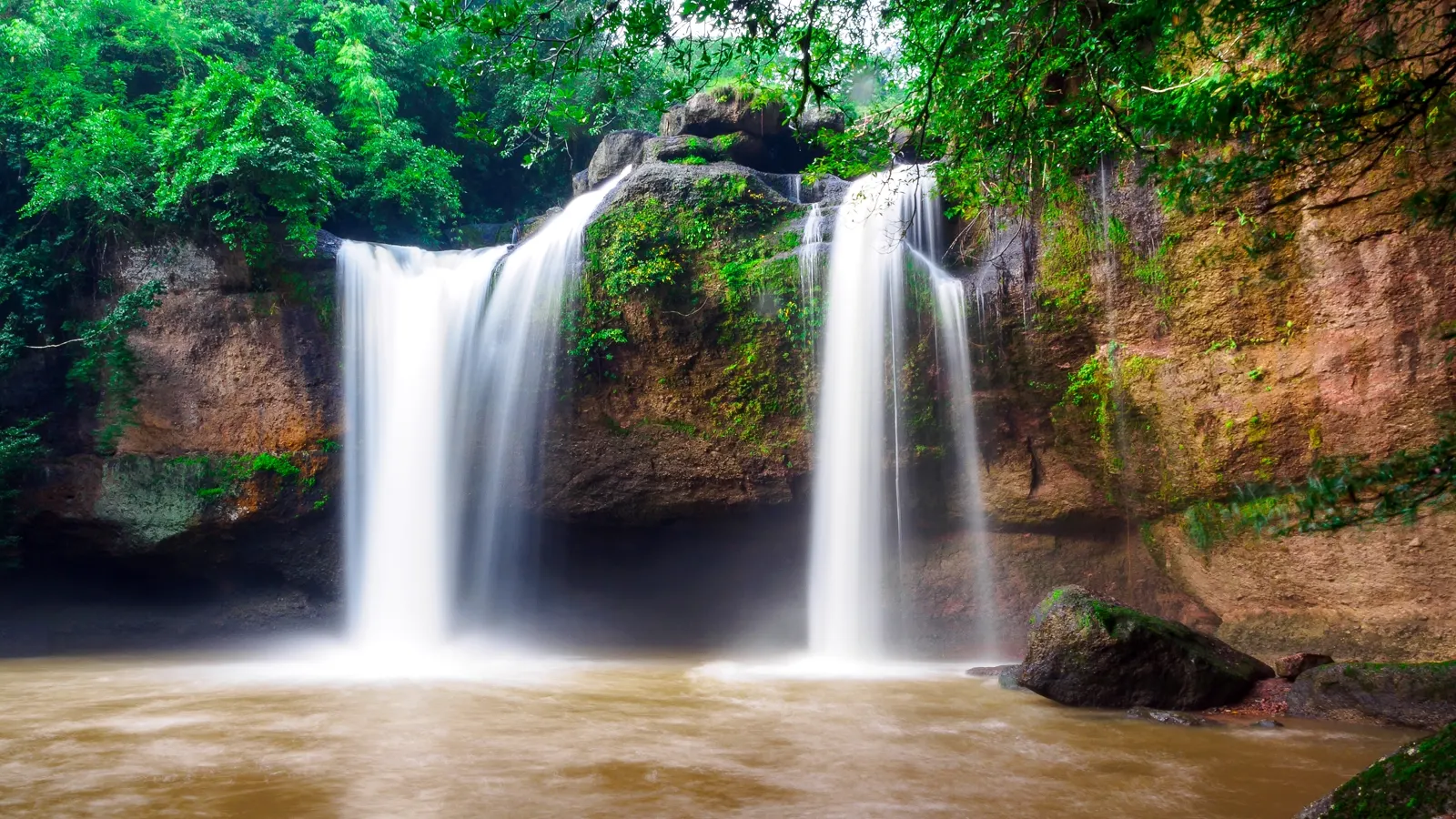
Khao Yai is often described as an easy escape from Bangkok because the park is roughly 200 kilometres from the capital. That distance answers only the intercity question. Inside the park, waterfalls, trailheads, viewpoints and the visitor centre are spread along a large road network. The national park’s own guidance says there is no transportation service inside the park and describes a private car as the most convenient way to move around. So plan for two separate journeys: reaching the northern Pak Chong side, then moving between places after the entrance gate.
This guide compares four ways to solve that second journey: a guided trip from Bangkok, a private driver from your accommodation, a rental car, and public transport combined with a locally arranged vehicle. The best option depends less on whether you like trains than on how many independent stops you want and whether you need the vehicle to wait while you walk.
First decide what “without a car” means for your day
Some travellers mean they do not want to drive from Bangkok. Others mean they will not drive at all. Those are different constraints. Taking a train or bus to Pak Chong and then hiring a driver for the park day avoids the long self-drive, while still giving you a vehicle where the attractions are scattered. A packaged day trip removes more of the handoffs, at the cost of a fixed schedule.
There are also two official entrances: the northern Pak Chong entrance and the southern Noen Hom entrance in Prachin Buri. If your hotel, driver or tour says “Khao Yai,” ask which entrance and which side of the park the itinerary uses. Do not infer that a transfer to one gate will make a loop through the whole park practical. A route that enters on one side and exits the other needs a deliberate plan for both the group and the vehicle.
The park is open daily from 6 a.m. to 6 p.m. according to its current official information. That makes late starts costly: road transfers, entry formalities and time between stops all draw from the same daylight window. For a half-day visit, narrow the itinerary before choosing transport; the separate Khao Yai half-day versus full-day guide helps decide how much park time you actually need.
Guided day trip from Bangkok: fewest handoffs, least freedom
Pick a guided day trip if you are sleeping in Bangkok, have one open day, and want someone else to coordinate the long road journey and park stops. It suits a first visit when the priorities are recognisable highlights and a predictable return to the city. You do not need to negotiate a station pickup, explain several trailheads to a driver or arrange a separate ride back from the gate.
The trade-off is that the schedule belongs to the group. A tour may combine a waterfall, a viewpoint, a short walk or another nearby stop; that does not mean you can stay longer at the one place you care about. Before booking, inspect the actual park time rather than the headline duration. Check the departure and return points, pickup radius, maximum group size, whether the listed stops are inside the national park or in the surrounding Khao Yai area, and whether entrance fees are included.
I would not choose this format for a long nature trail, a relaxed wildlife-focused day or a trip where the group wants to split up. Ask whether the guide remains with the group inside the park, how much walking is planned, and what happens if rain closes or disrupts a stop. If the answers are vague, the itinerary may be less useful than a driver who simply stays available while you set the pace.
Private driver from Mu Si or Pak Chong: best control without driving
A private driver is the most adaptable choice for a couple, family or small group that wants to select its own route but does not want to handle unfamiliar roads. Agree a full-day window, pickup point and list of intended stops in advance. The essential detail is whether the driver remains with you between stops, including when a trail begins and ends at different places. A drop-off at the gate is not a park-day transport plan.
Starting from Mu Si usually shortens the morning handoff to the northern side and makes it easier to reach the gate early. Pak Chong town can make more sense if you arrive by rail or want to stay near the station, but you still need a confirmed ride from town to the park and back. Compare the base decision in Pak Chong vs Mu Si; the practical answer depends on whether station access or an early park start matters more for your dates.
Get the price and scope in writing. Confirm the start and finish times, overtime rate, fuel and park vehicle charge, waiting time, passenger and luggage capacity, payment method, and cancellation terms. Share a short route rather than a wish list: for example, one trail plus a waterfall and lunch. If you plan a one-way trail, agree exactly where the driver will meet you and what to do if the group finishes late. Carry the driver’s phone number and keep mobile data available, but do not rely on a messaging app as the only meeting plan in a weak-signal area.
For a longer visit, a driver by the day can be better value than paying for separate rides between every stop. For one short visit from a resort, ask the accommodation for a named local contact and a clear return arrangement. A low quoted price is not useful if it covers only the outward transfer or leaves the car unavailable once you enter the park.
Khao Yai stay planning · early park start
Stay near the northern park approach
Mu Si can shorten the morning drive to the Pak Chong entrance. Check the property pin and confirm the driver can collect you there.
Rental car: useful when you are comfortable driving in the park
Rent a car when the group wants independent timing, has a confident driver and expects to make several stops over one or more days. You can leave when ready, carry food and rain gear, and avoid coordinating each pickup. This option also makes sense if the wider Khao Yai stay includes attractions outside the park, where taxis may not be readily available at the time you want to move.
Driving yourself transfers responsibility to you. Review the route, fuel, insurance and licence requirements with the rental company; check the vehicle before leaving; and avoid planning a long drive after a full park day. The park asks visitors to follow road signs and ranger directions, and warns that elephants may be on the road. If you meet one, follow the park’s current safety instructions, stay in the vehicle and give the animal space. Do not treat wildlife viewing as a reason to approach or block an animal.
The national park currently lists separate vehicle entry charges, so include that fee in your comparison rather than comparing only rental prices. A rental is usually unnecessary if the plan is one guided stop near the hotel, and it can add stress if nobody in the group wants to navigate, park or drive in changing weather. If a private driver costs more than expected, compare the complete daily cost for your group, including rental, fuel, insurance excess exposure and parking, rather than only the base rate.
Train or bus to Pak Chong, then arrange the last mile
Public transport works best when the journey itself is part of the plan and you are willing to make connections. The State Railway of Thailand provides a live timetable tool; use it for your actual date rather than building a day around a schedule copied into an older guide. Bus services also connect Bangkok with Pak Chong, but departure point, frequency and operating details can vary. Confirm directly with the transport operator before committing to a timed park pickup.
From Pak Chong, the remaining distance still matters. A public songthaew may serve the approach to the northern entrance at certain times, but availability and return timing should be confirmed locally. Even if you reach the gate, the park states that there is no internal transport service. You would still need a way to reach the visitor centre, trail start, waterfall and eventual exit. Do not arrive assuming that a ride will appear when you need it.
This combination is reasonable if you are staying overnight, have arranged a driver for the park day, or only intend to visit a specific point that your local transport provider has agreed to serve. It is a poor fit for a same-day return to Bangkok with several stops and a fixed train home. Delays on the road or a slow park visit can turn the return leg into the day’s main activity.
If you want the train experience, consider sleeping near Pak Chong or Mu Si and using the arrival day for the transfer. Then reserve a separate, confirmed park vehicle for the following morning. That extra night can cost less—in time and missed stops—than trying to make an intercity timetable carry the entire park visit.
Khao Yai stay planning · rail arrival
Compare a station-side base in Pak Chong
Pak Chong suits a train arrival and an overnight handoff. Arrange and price the separate ride to the park before choosing a hotel.
Compare the options by the problem they remove
A tour removes coordination from Bangkok. A private driver removes driving while preserving choice. A rental removes pickup negotiation and gives the group control, provided someone is happy to drive. Public transport reduces the intercity driving burden, but it does not solve movement inside the park. When comparing quotes, count the full chain from your accommodation to the first stop and from the final stop back to your accommodation.
For two people, a tour can be simpler if its included stops match your priorities. For a family, a private vehicle may justify its cost through flexible meal, toilet and rest breaks. A group of friends can divide the driver or rental cost, but only if everyone agrees on the same pace. Solo travellers should compare a scheduled group trip with a private option and avoid building the day around an unconfirmed hitch or informal lift.
Weather changes the value of flexibility. A fixed tour may continue with substitutions, while a driver lets you reorder stops if the operator agrees. Self-driving gives you control over when to leave, not control over closures or wildlife. Check official announcements before travel, and keep one alternative stop in mind. If your primary trail is closed, do not assume the journey is wasted; decide whether another walk or a shorter scenic drive is worthwhile.
What I would confirm before paying
- Start and end: exact pickup address, gate, visitor centre or park exit, and return location.
- Vehicle availability: whether it stays with you inside the park and waits during walks.
- Time: departure, park entry, planned duration at each stop and overtime terms.
- Cost: driver or rental, fuel, park admission, vehicle fee, guide, meals and any cash-only items.
- Route changes: the alternative if a trail, waterfall access or viewpoint is closed by weather or a seasonal notice.
- Return reliability: driver contact, meeting point and a backup plan if mobile signal is weak.
For current park questions, contact the official visitor centre before the trip; its published number is +66 86 092 6529. Entry hours and seasonal closures can change, so check the national park’s announcements close to your date. Keep the Khao Yai destination hub for the broader trip plan, and use the transport guides for the Bangkok and station handoffs. If you are still deciding whether the park fits as a long day from Bangkok or deserves a nearby night, use our day trip versus overnight itinerary guide before choosing your pickup and return plan.
My decision rule
Choose a guided Bangkok day trip when convenience and a defined highlights route matter most. Choose a private driver when you want to set the pace and visit several parts of the park without driving. Rent a car when someone in the group genuinely wants to drive and the itinerary extends beyond the park. Take public transport only after confirming the local leg—and use it with an overnight stay or a prearranged park vehicle, not as a substitute for one.
The one detail I would settle first is who controls the vehicle after the entrance gate. Once that is clear, the choice between tour, driver and rental becomes much easier.
Sources checked
Checked 12 October 2026. Khao Yai National Park official FAQ and contact page for its two entrances, 6 a.m.–6 p.m. hours, internal transport guidance, vehicle fees, road safety and visitor-centre contact; Khao Yai National Park official site for current announcements and park scale; State Railway of Thailand timetable tool for date-specific rail planning; Tourism Authority of Thailand Khao Yai listing for destination context. Timetables, local connections, park fees and closures are subject to change; reconfirm them for the visit date.