
Choose the hour by what you want to see
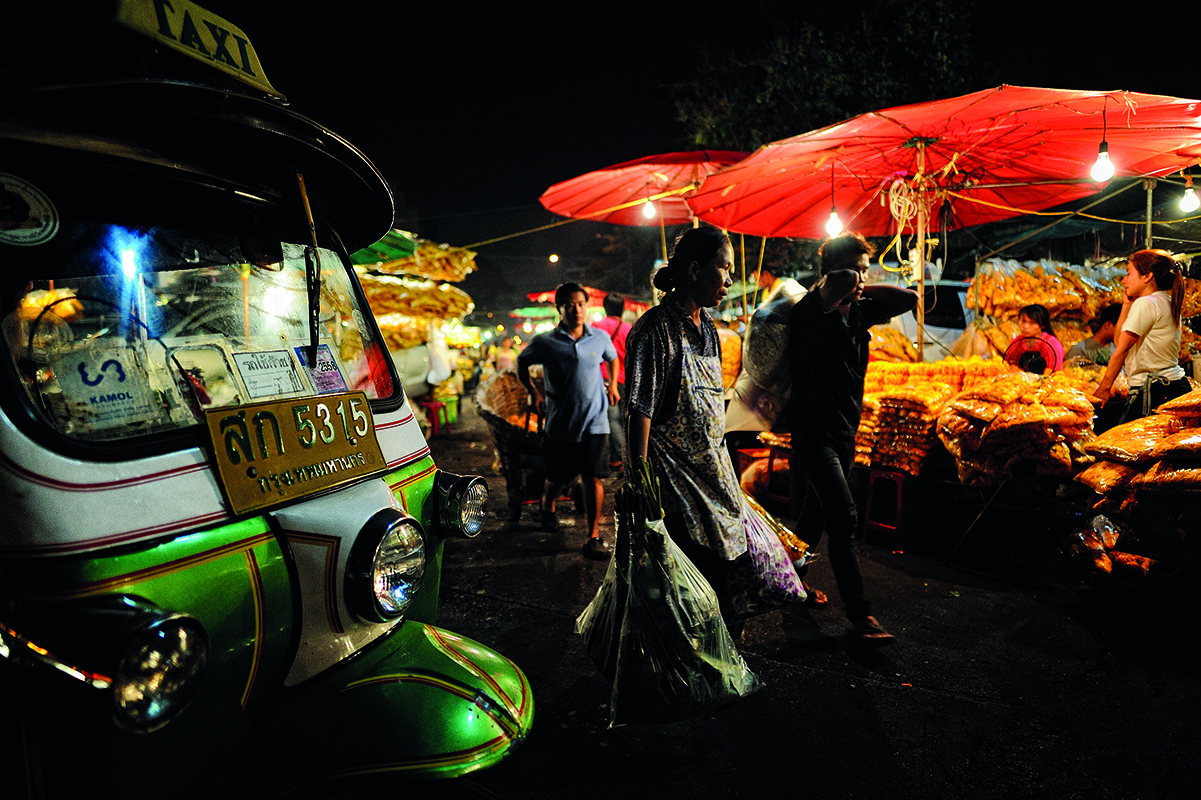
If Pak Khlong Talat is one stop in a Bangkok day, I’d slot it into the evening. The market area operates around the clock, though individual sections and shops do not all follow one schedule. Flower stalls are active in the evening; you can see the color and variety without giving up sleep or rebuilding the next morning around a market visit.
Pre-dawn is for seeing the wholesale rhythm, not simply for finding the market open. Deliveries arrive from nearby provinces before sunrise, and that is when the market is at its busiest. I’d make the early start only if watching the trade is part of the reason for going.
If you are fitting the market around the old districts, first decide whether to combine them or split them with Old Town and Chinatown on the same day. For a temple-first day, use the Grand Palace, Wat Pho and Wat Arun order guide.
The useful distinction is what the market is doing while you are there. In the evening, the flower stalls give you the clearest visitor-facing look: cut flowers, orchids, garlands, wrapping materials, and people choosing stock for arrangements. Before dawn, the same district feels more like a working supply chain. Buyers and deliveries are moving through the lanes, so the energy is stronger but the space is less forgiving for visitors who stop often or walk as a group.
The Tourism Authority of Thailand describes Pak Khlong Talat as several adjacent markets rather than one room with a single opening pattern. That matters when a map pin says “open 24 hours”: it does not promise that every stall, service, or section will be active at every hour. If you are looking for a particular flower, bouquet service, or wholesale purchase, contact the relevant shop first. For a general walk, treat the market as a district and follow the activity you find rather than arriving with one exact stall as the whole purpose.
What the evening visit gives you
Choose evening when the market is one piece of a full Bangkok day. You can arrive after a riverside or Old Town visit, spend roughly an hour walking the active lanes, then continue to a planned dinner or return to your hotel. That hour is a planning allowance, not a gate time: photography, a flower purchase, or a slower walk will stretch it, while a quick look at the main flower area can be shorter.
The evening also makes it easier to notice the range of flowers sold for different uses. The official destination description mentions both Thai-grown and imported flowers, along with arrangement supplies and retail as well as wholesale sales. You do not need to buy anything to understand the place, but the market reads more clearly if you look at how flowers are bundled, sorted, and prepared rather than treating every stall as a photo backdrop. Prices, stock, and which sellers are serving walk-in customers can vary; ask before handling a display or assuming an item is available by the stem.
An evening visit is the easier call for a first-time Bangkok visitor, a couple fitting in one more stop, or friends who want an atmospheric walk without splitting up for an early start. It also leaves the next morning intact for a temple, a museum, or a long breakfast. I would not label it the “quiet” option: traffic, shoppers, and delivery activity can still make the surrounding streets busy. Its advantage is that it asks less from the rest of your itinerary.
Go before dawn only for the working-market rhythm
The early visit earns its place when you are curious about trade, not because you need proof that the market is open. Fresh stock arriving from outside Bangkok and wholesale buyers selecting flowers are part of the reason activity intensifies overnight. The scene is more interesting if you can stay observant without getting in the way: keep to the edge when carts pass, let buyers finish a transaction, and avoid blocking a narrow entrance for a photograph. These are working lanes, not a staged attraction, and giving people room makes the visit better for everyone.
There is a real trade-off. Before sunrise, you will have less time to recover from the previous day and fewer convenient transport options than during normal sightseeing hours. Plan the ride before bed, agree on the pickup point in a place your driver can actually reach, and save the address or map pin offline. If you are traveling with someone, decide in advance whether you will stay together or set a simple meeting point; the market’s connected lanes can make “I’ll wait somewhere nearby” less precise than it sounds.
Do not build the morning around a guaranteed purchase or a specific stall unless you have checked directly. Flower stock changes with deliveries and demand, and festival periods can make the district busier and prices different from an ordinary date. The visit works best as a look at the wholesale rhythm; if you mainly want a bouquet, a flower-arranging service, or a relaxed browse, daytime or evening is the more forgiving choice.
Walk the market without turning it into a photo stop
Start with a loose loop rather than trying to cover every adjoining market. From Sanam Chai, walk toward Chak Phet Road and enter where the public activity is already visible. The district is a set of streets and market sections, so the most useful route depends on which stalls are open; keep your map available, but do not expect every pin to mark a separate attraction entrance. If you arrive by river, check the current pier and boat timetable before setting out, then leave enough time to walk between the pier and the flower-market lanes.
Once inside, move with the flow and step aside before checking directions or framing a shot. Ask before photographing a vendor at close range, and do not photograph customers or workers as if the transaction were a performance. A phone camera is enough for most of the visit; carrying a tripod, large suitcase, or bulky shopping bag through busy aisles makes the walk harder for you and for the people moving stock. Keep valuables close in any crowded market and carry small cash if you plan to buy something, but do not assume every stall takes cards.
The surface can be wet around fresh produce and flower work. Wear shoes that you can walk in, and avoid turning up in footwear that becomes slippery when damp. If you have limited mobility, are pushing a stroller, or dislike crowded narrow paths, aim for a quieter evening window and keep the route short. The market is not a controlled indoor exhibit: the streets, loading activity, and condition of each lane change the experience from one visit to the next.
Before dawn means planning around the first train
Sanam Chai is the nearest MRT station, but the Blue Line’s first trains run at about 6 a.m. A visit in the busiest pre-dawn hours therefore needs a ride there and back; set the pickup point and return arrangement before leaving your hotel. If you go in the evening and plan to take the MRT home, check the last train for your direction on that date rather than relying on a general closing time.
For a solo visitor, the ride home belongs in the plan, not as a decision to make after wandering the market. Thailand’s Tourist Police hotline is available at 1155 around the clock in eight languages; it is emergency support, not a substitute for arranging transport.
Keep the next morning realistic
A pre-dawn visit can turn into a long day if you already have the Grand Palace, Chinatown or another fixed activity planned. I’d pair it with a lighter morning or choose the evening visit instead. If this is your last night before an early flight, check the Bangkok early-flight evening plan; if Chatuchak is competing for the same limited time, use the short-trip Chatuchak guide.
If you would rather spend the evening eating or walking a heritage neighbourhood, compare Talat Noi and Song Wat. For dinner and drinks, see Ari, Thong Lo and Ekkamai; for a green-space break, compare Benjakitti and Lumphini.
Pair the timing with the rest of your Bangkok route
If you choose the evening, put the market after a nearby Old Town or riverfront stop and decide dinner separately. It is easy to overestimate how much sightseeing fits into one day in Bangkok’s heat; a market walk is a flexible finish, not a reason to add three distant neighborhoods beforehand. For an Old Town-and-Chinatown day, check travel time between each district and leave slack for meals. If the Grand Palace is the anchor, use the order guide above and place the market only where the return trip remains simple.
If you choose pre-dawn, keep the schedule after the market deliberately light. A sunrise finish can lead into breakfast and a rest, but it is a poor setup for a tightly timed temple entry if your transport runs late or the group is tired. Do not stack the wholesale market, a full Old Town walking route, Chinatown, and a late evening into one “efficient” day. Pick the one experience that needs the early hour and let the rest of the itinerary adapt to it.
The decision is straightforward once you name your reason: evening for a flexible flower-market walk that fits around dinner and sightseeing; pre-dawn for the busier wholesale movement, with a prearranged ride and a gentler morning after. If neither purpose sounds compelling, leave the market off this trip. It is better to give the district a proper window than to squeeze in a rushed stop simply because it appears on a list of Bangkok sights.