
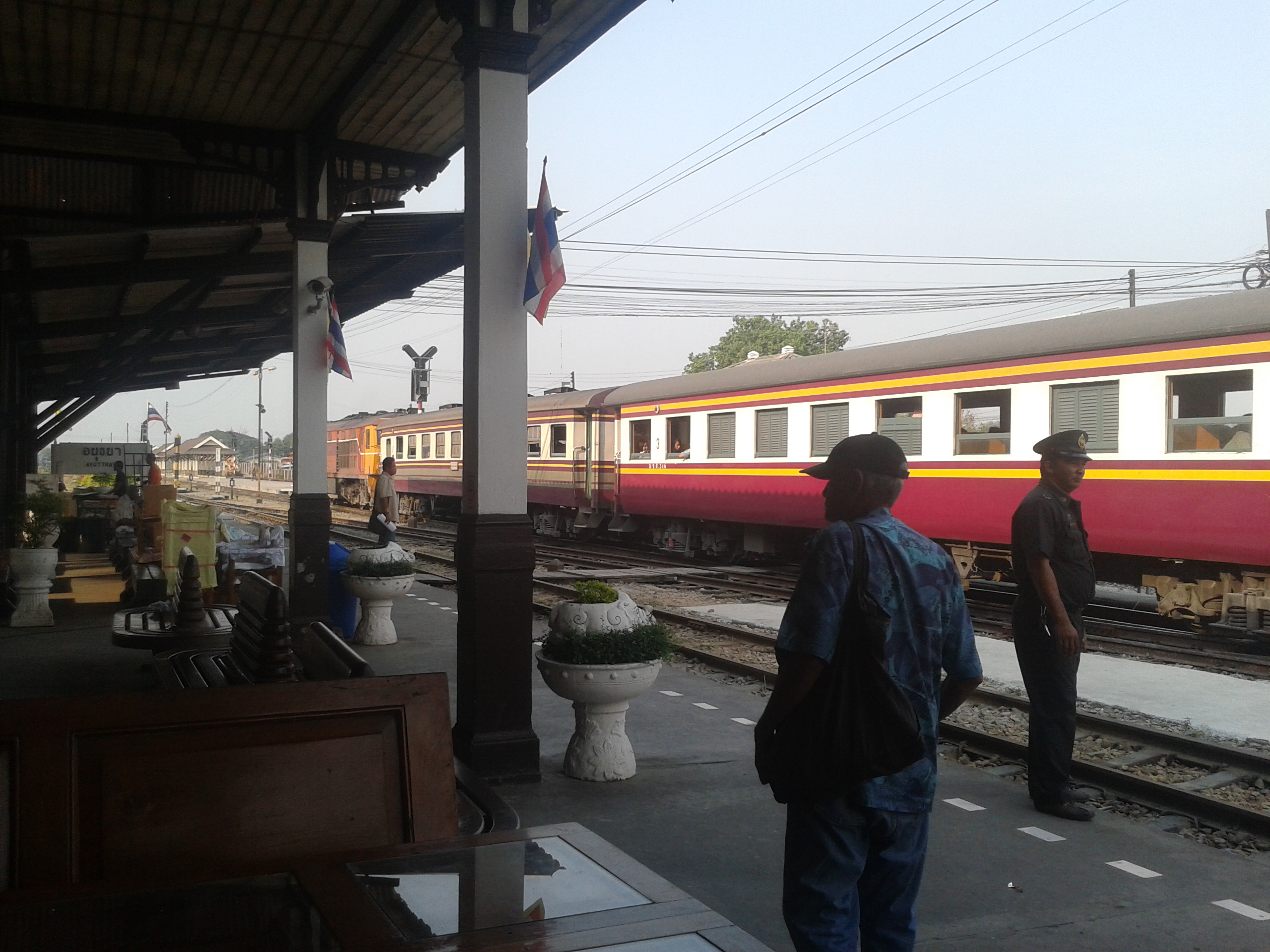
This itinerary is built around a simple trade: fewer airport days in exchange for a narrower slice of Thailand. It suits travelers who want a large city, historic remains, a river-and-railway town and a Gulf beach without packing and unpacking every night. It does not include Chiang Mai, Phuket or the islands; adding one of those usually means a flight or several extra overland hours, which would change the rhythm the route is designed to protect.
Allow ten nights if you have ten full days. With only nine nights, remove a Hua Hin night or make Ayutthaya a long day trip; do not squeeze Kanchanaburi into a single overnight if Erawan Waterfall is a priority. The timetable and local transport details can change, so use the current State Railway of Thailand timetable for your dates before booking non-refundable stays.
The route at a glance
Bangkok (Days 1–3) → Ayutthaya (Days 4–5) → Bangkok connection → Kanchanaburi (Days 6–7) → Hua Hin (Days 8–10). The backtrack through Bangkok is deliberate. Ayutthaya and Kanchanaburi sit on different rail corridors, and forcing a neat geographic loop can mean awkward connections. Returning to the capital gives you more reliable options for the westbound leg; use a bus or pre-arranged road transfer for Kanchanaburi to Hua Hin if a same-day rail combination does not suit your date.
The trip has three proper transfer days: Bangkok to Ayutthaya, Ayutthaya back through Bangkok toward Kanchanaburi, and Kanchanaburi to Hua Hin. Keep those days light. A station arrival, hotel check-in and one nearby meal are enough; do not attach a museum visit or timed tour to the end of a long connection.
Days 1–3: arrive in Bangkok, then choose a manageable city rhythm
Day 1: Treat the arrival day as a landing, not a sightseeing test. Stay near a rail or river connection that makes sense for your arrival airport and first two days. If you land late, eat near the hotel, set up cash and connectivity, and sleep. A tired first morning is an expensive way to lose the best part of a short trip.
Day 2: Spend the morning in the historic riverside area. Choose a compact temple-and-river sequence, then stop for lunch and leave the afternoon flexible. Heat, queues and boat waits make ambitious cross-city plans fragile. If you prefer a quieter start, put the main temple visit early and move the market or shopping time to late afternoon.
Day 3: Make this your city-choice day. Stay central for a museum, food neighbourhood and an evening market, or use the day for the Grand Palace and nearby temples if those are your priority. Avoid trying to combine Chatuchak with the old city on the same day unless the weekend timing and your energy clearly support it. The site’s Bangkok first-full-day comparison helps choose the right side of town for that day.
Three nights give you two usable days after arrival. That is enough for a first impression, not a claim to have “done Bangkok.” If the capital is the main reason for your trip, take one night from Hua Hin and add it here. If you have visited before, two nights can work, but arriving and leaving on flight days still makes the city feel compressed.
Plan the first two bases
Compare Bangkok and Ayutthaya stays
Choose a Bangkok area around your first city days, then compare an Ayutthaya base near the historic island or your planned local transport.
Days 4–5: stay in Ayutthaya instead of racing through the ruins
Take a morning train north and stay two nights near the historic island or a convenient local transport point. The UNESCO-listed Historic City of Ayutthaya was founded in 1350 and inscribed in 1991; its remains are spread across a historic landscape rather than contained in one indoor attraction. A day trip can cover a few headline sites, but an overnight stay makes it easier to start before the hottest hours and continue at a slower pace.
Day 4: Check in, have lunch and visit one cluster of ruins in the late afternoon if opening times and heat allow. Otherwise, keep the first afternoon for the riverside and save the archaeological sites for the next morning. Rent a bicycle only if you are comfortable riding in local traffic and can manage the heat; otherwise, arrange a tuk-tuk by the hour or use short point-to-point rides.
Day 5: Start at a major temple complex, pause for water and shade, then choose a second site based on how you feel. Wat Mahathat and Wat Chaiwatthanaram are not interchangeable quick stops: the first works well with a central group of ruins, while the second sits across the river and is better treated as its own outing. Leave time to return to your room before dinner rather than crossing town at midday. For a tighter Bangkok-based alternative, compare this overnight plan with the existing four-day Bangkok and Ayutthaya decision guide.
Do not assume the train station is beside every temple. On arrival, confirm your onward ride before stepping away from the station, and agree on the fare or the basis of a hired vehicle before the trip begins. The value of staying two nights is not that you see every ruin; it is that you can stop when the day becomes uncomfortable without feeling the return to Bangkok is ticking away.
Day 6: cross back through Bangkok for Kanchanaburi
This is the route’s least elegant leg, so plan it honestly. Ayutthaya and Kanchanaburi are served by different lines, and a simple direct train is not a safe assumption. Return toward Bangkok, allow time for the station-to-station transfer, then take the onward service or road vehicle that fits the published schedule. If the connections leave you with a late arrival, spend the night in Bangkok and shift the following days by one; arriving rested is better than saving a hotel night on paper.
The State Railway’s westbound service leaves from Thonburi, not the same central station used by many other routes. The official timetable has listed ordinary trains continuing toward Nam Tok through Kanchanaburi, with a journey of roughly two and a half hours from Thonburi to Kanchanaburi on one morning service. That is a route reference, not a guarantee for your date: check the live timetable and any service notices, then choose accommodation with the actual departure point in mind. The dedicated Bangkok–Kanchanaburi train versus minibus guide explains the departure tradeoff.
Day 7: Kanchanaburi’s railway history or Erawan’s pools
Choose one main plan. The town day is easier to manage without a private vehicle: visit the bridge and a railway-history site, then leave time for the riverfront. The provincial setting asks for more travel than the town map suggests, so verify opening times and transfer arrangements before committing to multiple museums.
Erawan National Park is the stronger choice if waterfalls and a long outdoor day matter more. The Tourism Authority of Thailand describes Erawan Waterfall as a seven-tier cascade; its own attraction information places the park well outside Kanchanaburi town. That distance makes a confirmed bus, tour or driver essential. Start early, bring drinking water and footwear suitable for wet paths, and set a turnaround time that leaves a margin for the return journey. If rain, trail conditions or transport make the park day unattractive, keep the town plan; do not treat the waterfall as a mandatory checkbox.
With an extra night, use Day 8 for whichever option you skipped and transfer to Hua Hin on Day 9. On a fixed ten-day schedule, keep the waterfalls only if the transport works cleanly and you are willing to give them the full day. Trying to see Erawan, the bridge and several museums in one day usually turns the destination into a list of car rides.
Days 8–10: finish in Hua Hin, with one open day
Travel south to Hua Hin by the road connection that best matches your departure point and date. There is no need to force the rail itinerary if it creates a long return through Bangkok; compare the current train and minivan options, including where each one drops you. The existing Bangkok to Hua Hin train-versus-minivan guide is useful for the separate Bangkok leg, while Kanchanaburi departures need their own same-date connection check.
Day 8: Check in, walk the beach near your base and keep the evening close. Hua Hin’s beach runs along the sunrise-facing side of town, and the Tourism Authority identifies both the beach and the railway station among its central highlights. If you arrive after lunch, a swim or a relaxed meal is a more reliable plan than an out-of-town attraction.
Day 9: Choose between a full beach day and a short inland outing. The beach and town market work well if the trip has been active; Khao Takiab or another nearby stop gives the day a destination without turning it into a long excursion. Pala-U Waterfall lies in Kaeng Krachan National Park and is not a casual walk from central Hua Hin, so only add it with confirmed transport and current park information.
Day 10: Keep the final morning near your hotel, especially if you are returning to Bangkok for an international flight. Leave a generous road buffer: a direct-looking map route does not remove traffic risk. If your flight leaves early, the safer plan may be to sleep in Bangkok on Day 9 and use Hua Hin as a shorter beach stay.
Choose the final base around your flight
Compare Hua Hin and Bangkok stays
Use Hua Hin for the planned beach finish, or compare a final Bangkok night if your flight time makes the road return difficult.
What to book first, and what to leave flexible
Book the international flights and the first Bangkok stay first. Then reserve rooms for Ayutthaya and Kanchanaburi around the days you can actually transfer, checking cancellation terms before committing. For trains, confirm whether advance booking is available for your service and buy through the railway’s official channels where possible. Timetables can change seasonally or for special services; old blog schedules are not a substitute for a date-specific check.
Leave the exact Ayutthaya site order and Hua Hin day trip open until you see the weather and current hours. Fix the Kanchanaburi–Hua Hin transfer only after comparing the real departure points and arrival times. If that connection is awkward, insert a Bangkok night rather than relying on an optimistic sequence of buses and trains.
Pack for repeated check-ins: one carry-on-sized bag is easier on station stairs and road transfers than several large cases. Keep a small day bag for water, sun protection, temple-appropriate clothing and medication. This route uses rail where the line is useful, but it still includes local vehicles; “no domestic flights” does not mean “no transfers.”
When this route is the wrong fit
Choose a different plan if your main goal is snorkeling, island time or northern Thai food and mountain scenery. Central Thailand cannot substitute for the Andaman coast or Chiang Mai. It is also a poor match if you want a new hotel and destination every night: station transfers and check-ins would consume too much of a ten-day trip.
For a first visit with less than a week, stay in Bangkok and add Ayutthaya only if the former capital is a clear priority. For ten days with a beach finish but no flights, this four-base route keeps the travel geography understandable. The meaningful decision is whether you would rather spend two days on the Gulf coast or use them for another inland stop; keep Hua Hin if ending slowly matters more than adding another headline attraction.
Sources checked · 12 October 2026
- State Railway of Thailand — passenger information and date-specific timetable reference
- SRT Timetable Matrix — current train lookup
- Tourism Authority of Thailand — Erawan Waterfall
- UNESCO World Heritage Centre — Historic City of Ayutthaya, founding and inscription
- Tourism Authority of Thailand — Kanchanaburi access and regional attractions
- Tourism Authority of Thailand — Erawan National Park, waterfall tiers and location
- Tourism Authority of Thailand — Hua Hin highlights and access by train, bus or car