
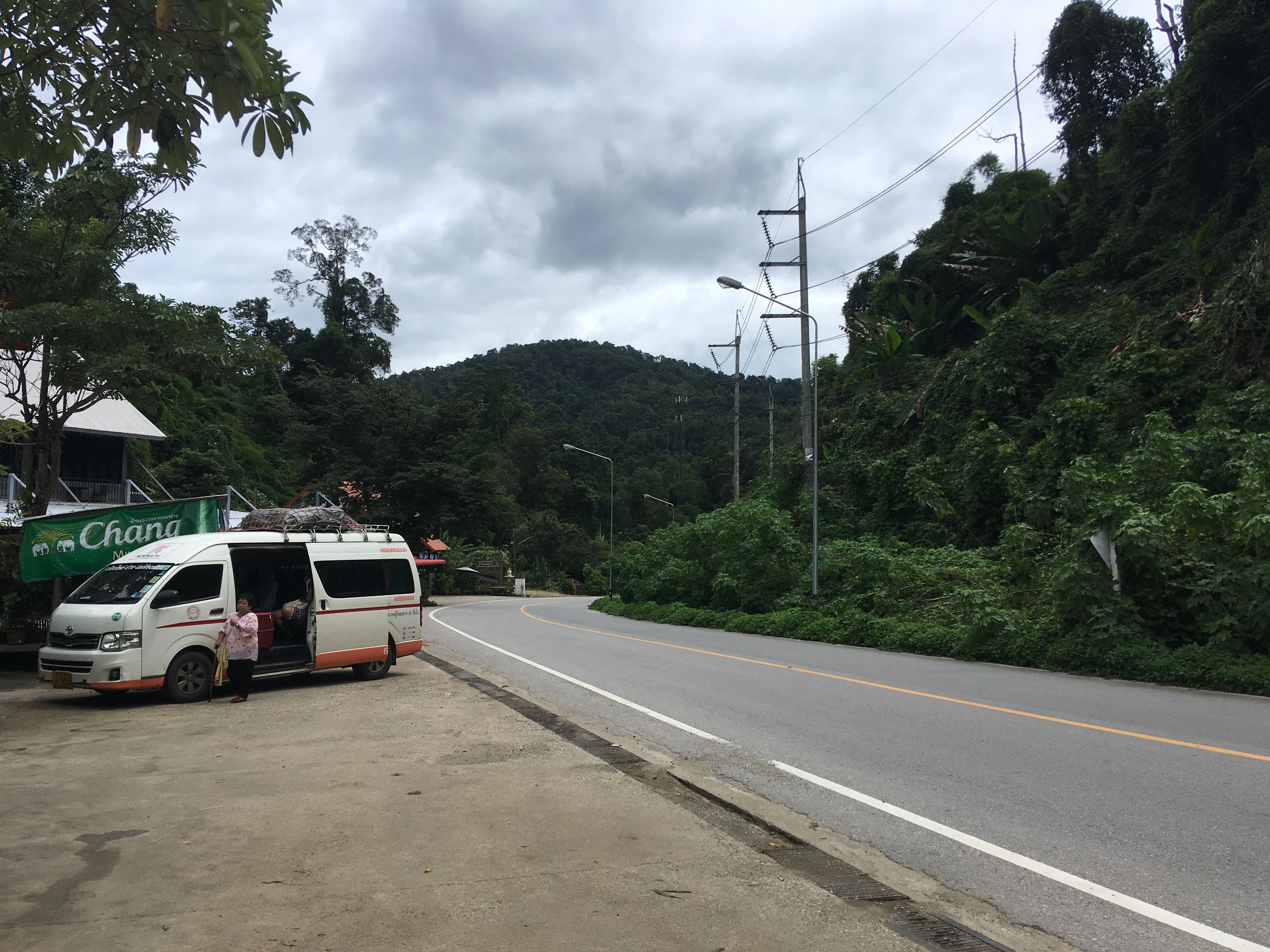
Default for most solo travelers and couples: reserve a seat on the scheduled service, use the boarding point printed on your ticket, and arrange the last ride to your Pai lodging before departure.
Compare a private car: when a group can share the fare, the hotel is awkward to reach with bags, you need a specific pickup time, or you want to control stops and breaks.
The useful comparison is not “van versus car” in isolation. It is Chiang Mai hotel to Pai hotel, including getting to the departure point, waiting, managing bags, and arranging the ride after arrival. Prempracha Transport identifies this corridor as Route 612 between Chiang Mai and Pai, with Chiang Mai Arcade and Pai among its listed stations. The operator says service details can change and should be confirmed before travel, so use its current date-specific booking information instead of planning around an old screenshot.
Start with the whole door-to-door chain
A scheduled van gives you a defined departure and a shared ride. In Chiang Mai, the operator lists Chiang Mai Arcade as the route’s boarding station. Your actual ticket is the useful authority for the precise terminal, time and service: “Arcade” describes a large transport complex, and a booking label should not be replaced with a guessed gate or counter. Allow time to reach the terminal, find the named boarding point, check in and put your luggage where the operator directs.
At the Pai end, the operator lists Pai as a station, but that does not mean the van drops at your guesthouse. Check the arrival pin against your accommodation and ask the property what transport is available at the expected arrival time. A lodge outside the walkable center may need a separate pickup. Agree the meeting point, fare and payment method before you board the van if you are arranging a local ride independently.
A private transfer usually changes the two terminal edges: the driver can collect you at an agreed Chiang Mai address and take you to an agreed Pai address. Confirm that the quote includes your precise pickup and drop-off, not only “Chiang Mai” and “Pai.” A hotel outside the city, a remote hillside stay or a restricted access road can alter the vehicle plan and price. Ask whether the driver can reach reception or whether the last stretch requires a smaller vehicle or a walk.
Use the same four pins for both quotes: your Chiang Mai lodging, the departure terminal, the Pai arrival point and your Pai lodging. If the two local transfers are short and easy, the van’s shared format is probably doing its job. If either end adds a long ride or awkward bag handling, price a direct car on the same door-to-door basis.
When the scheduled minivan is the cleaner choice
For one person or a couple with manageable luggage, a scheduled seat is often the simplest decision. You pay per traveler, the departure is tied to a named service, and you do not need to coordinate a vehicle for the entire route. This works especially well when your Chiang Mai hotel can arrange a straightforward ride to Arcade and your Pai stay can meet you or is close to the arrival point.
The fixed schedule can also protect the rest of the day from negotiation. Choose a departure that leaves enough time for breakfast, checkout and the ride across Chiang Mai; do not try to turn a tight checkout into a race to the terminal. At the Pai end, leave room to collect your bag and get to the lodging before relying on an activity reservation. The drive time shown by a seller is not a safe promise for a meal booking or a tightly timed onward connection.
Book the exact route and direction for your date, and check what the ticket says about boarding and luggage. Prempracha’s booking system supports selecting a route, service, passenger details and a ticket; the operator also lists card and Counter Service payment paths. Which departures and payment options are available can depend on the date and booking flow. If you cannot confirm the required bag space or your booking does not clearly show the departure point, ask the operator or ticket seller before paying.
A shared van is also a reasonable choice if you are traveling alone and would rather not self-drive. You can keep your passport, medication, phone, cash and other small essentials with you, with larger bags handled according to the operator’s instructions. Keep the ticket accessible and check that you are boarding the route shown on it. These simple steps make the station handoff more predictable without pretending that the ride itself is effortless.
Pay for a private transfer when it solves a specific problem
“Private” is useful when it describes a real service difference. It may let you leave from your hotel, pause when agreed, travel with only your party and arrive at a lodging away from central Pai. It does not automatically include sightseeing, unlimited waiting, extra luggage capacity or a second pickup address. Get those details in writing before comparing the total fare.
For three or four travelers, divide the complete car quote by the number of people, then compare it with the total of the minivan tickets plus both local transfers. Include any extra vehicle needed for luggage. A private car can become competitive when several people would otherwise pay for rides on each end, but do the calculation using actual quotes rather than assuming the per-person difference disappears.
Choose the car if the minivan schedule leaves a long, unhelpful gap in your day or conflicts with a confirmed plan. It can also make sense for travelers with mobility limitations who would find the terminal transfer or vehicle boarding difficult, provided the car company confirms an appropriate vehicle and assistance. Explain the need at booking. “Door-to-door” is not a mobility-access guarantee, and a standard sedan may not solve a steep path, stairs or a narrow property entrance.
If a stop is part of the reason to hire a driver, specify the place, time allowed and whether the driver remains with you. Route 1095 connects Chiang Mai and Pai; the Tourism Authority of Thailand identifies this highway as the route through to Mae Hong Son. A request to stop at an attraction is a different service from a direct transfer. Confirm any admission, parking, waiting and schedule implications with the provider and attraction before treating the stop as included.
The mountain road still matters in a private car
Some travelers prefer not to drive this corridor themselves. The scheduled minivan and private transfer both use the road, so changing vehicle type does not remove its bends. A private car may let your party choose where to pause, but only if the driver agrees and the itinerary allows it. It is not a dependable fix for motion sickness; a car can still feel uncomfortable on a winding route.
If someone in your group is prone to motion sickness, plan around that person rather than treating the larger vehicle as a cure. Ask the operator which seat choices are available and follow any advice from your healthcare professional about medication. Keep water and a small bag accessible, avoid a heavy meal immediately before departure if that is a known trigger for you, and do not count on an unconfirmed restroom stop. If you book a private car, ask in advance whether a short break is possible and how it affects the price or arrival time.
Self-driving is a separate decision. It adds the driver’s license and permit requirements, rental insurance terms, road familiarity, navigation, parking and responsibility for the vehicle. The Royal Thai Embassy in London states that visitors driving a vehicle or motorcycle in Thailand are required to hold an international driving license; check the applicable rules for your nationality and the rental company’s requirements before deciding to drive. Do not choose a rental scooter simply because it appears cheaper than a van seat. That comparison leaves out licensing and the rider’s experience on this road.
For a one-way trip, self-drive can also create a return problem: a rental pickup in Chiang Mai may need to be returned there, while your itinerary continues from Pai. Ask the rental company about a permitted one-way return and its fee before building a route around it. If the car must come back to Chiang Mai, include the driver’s return journey in your time and budget calculation.
Chiang Mai stay planning · before departure
Choose a base that fits the Arcade handoff
Compare your Chiang Mai hotel pin with the boarding point printed on the ticket, then allow time for the cross-city ride.
Make the luggage plan before choosing a seat
One carry-on or a compact suitcase is a different load from a large hard-shell case, hiking gear and several day bags. Check the operator’s current baggage conditions for the date and passenger count. Do not assume that a seat reservation includes unlimited hold space, or that a private vehicle’s advertised passenger capacity leaves room for everyone’s luggage. Tell the car provider the number and approximate size of bags, including any stroller or bulky equipment.
Keep valuables and items you may need during the ride in a small bag within reach, subject to the operator’s instructions. Label checked luggage and retain any tag or receipt. If you have medication that must stay cool, mobility equipment, fragile camera gear or a bag you cannot lift, disclose that before booking. It can affect both the correct vehicle and the amount of time needed at each handoff.
For a family with children, compare loading and unloading as well as seats. Ask whether an appropriate child restraint can be supplied and confirmed for the specific vehicle. If the answer is unclear, do not assume that “private transfer” means a child seat is available. A scheduled service may fit a family traveling light, while a properly specified private vehicle can be easier when the group has several bags or needs a confirmed restraint setup.
Plan Pai arrival before you leave Chiang Mai
Pai is not one hotel drop-off point. A central guesthouse, a riverside stay and a property outside town can have very different last-mile needs. Ask your host whether they offer pickup, which meeting point they use and whether they need your exact arrival time. If you are relying on a local taxi or another ride, confirm how to identify the vehicle and where it will wait. Keep a backup contact method in case mobile data is unavailable when you arrive.
Arrival timing should shape the decision. If your lodging expects guests only during a limited reception window, tell them your planned arrival and ask what happens if the road or departure runs late. A scheduled van may be right, but the lodging needs to know the service you booked. A private car may let you leave later or depart at a chosen time; it still cannot promise a specific arrival when traffic, weather or road conditions intervene.
Build a gentle first evening. Do not put a prepaid, nonrefundable activity immediately after the expected arrival, especially when your final journey to the lodging is not arranged. If you arrive early, leave bags only if the accommodation confirms it can accept them. If you arrive later, have a meal and check-in plan that does not depend on finding an open business at the last minute.
Pai stay planning · arrival and last mile
Match your Pai stay to the arrival point
Central Pai and properties outside town have different pickup needs. Check reception hours and confirm who will meet you before departure.
For a day trip beyond town, decide separately how you will get around after reaching Pai. A one-way transfer from Chiang Mai does not solve transport to outlying sights the next day. Our Pai guide distinguishes walkable town time from farther-out visits, while the Pai destination page gives you the broader planning context. Keep the first decision focused on the intercity ride; then arrange local transport around the places you actually intend to visit.
Use a practical rule for each kind of trip
| Your situation | Better starting point | Why |
|---|---|---|
| Solo traveler, flexible departure, central lodging | Scheduled minivan | A per-seat service avoids paying for an entire vehicle when the terminal transfer is manageable. |
| Two people with compact bags and no fixed stop | Scheduled minivan | Use the car only if your combined terminal rides or timing constraints justify the full quote. |
| Three or four people traveling with several large bags | Compare both totals | Divide the complete car price across the party and verify actual luggage capacity. |
| Hotel pickup or a remote Pai drop-off is essential | Private transfer | It may remove local rides, but confirm exact addresses and access before booking. |
| You want an agreed stop on the road | Private transfer with written stop terms | Direct transport does not automatically include sightseeing or waiting time. |
| You feel sick on winding roads | Choose by seating and pause options | Both vehicle types use the same corridor; neither guarantees a comfortable ride. |
| You are considering a rental scooter for the price | Recheck license, experience and full route plan | The seat fare is not comparable to an unlicensed or unfamiliar self-drive plan. |
Before paying, verify these details
For the minivan, confirm the travel date, direction, passenger names, departure time, terminal wording, arrival station and luggage conditions on the current booking. The operator’s route and station pages warn that timetables, fares, stops and conditions can change. Check again close to departure and contact the operator if the ticket conflicts with a route page.
For a private transfer, get the vehicle type, passenger and bag capacity, pickup and drop-off addresses, driver contact process, included waiting time, allowed breaks, payment terms and cancellation rules. Ask whether the quote is for a direct ride or includes any stop. Send the property pin rather than relying on its name alone.
Then compare the real totals. For the van, include Chiang Mai hotel-to-terminal transport, the ticket for each traveler and the Pai arrival transfer. For a private car, include any remote pickup or access surcharge, agreed stops and the total for the party. Keep a buffer if you have a later bus, train or flight: published driving estimates are planning references, not connection guarantees.
The short answer
For a solo traveler or couple with ordinary luggage and a simple hotel-to-terminal ride, take the scheduled minivan if its current departure works. Arrange the Pai last mile before leaving Chiang Mai. Choose a private transfer when the group size, exact pickup, luggage, mobility needs or a genuinely useful road stop makes the full door-to-door service worth its price.
Before confirming, open a map with both hotels and the named station, then check the booking for your exact date. If Chiang Mai is part of a longer northern route, plan the city days separately with our Chiang Mai four-day itinerary and keep the onward transport decision attached to the actual hotel checkout time. The route is easier to plan once the handoffs are visible.
Sources checked
Sources checked 12 October 2026: Prempracha Transport — Chiang Mai–Pai Route 612; Prempracha Transport — stations and boarding points; Prempracha Transport — official booking system; Tourism Authority of Thailand — Pai and Highway 1095 context; Royal Thai Embassy, London — driving in Thailand. Operator schedules, fares, stations, luggage terms and vehicle conditions can change; recheck the current official information for your travel date.
Pai destination guide · All Thailand transport guides · All Guides