
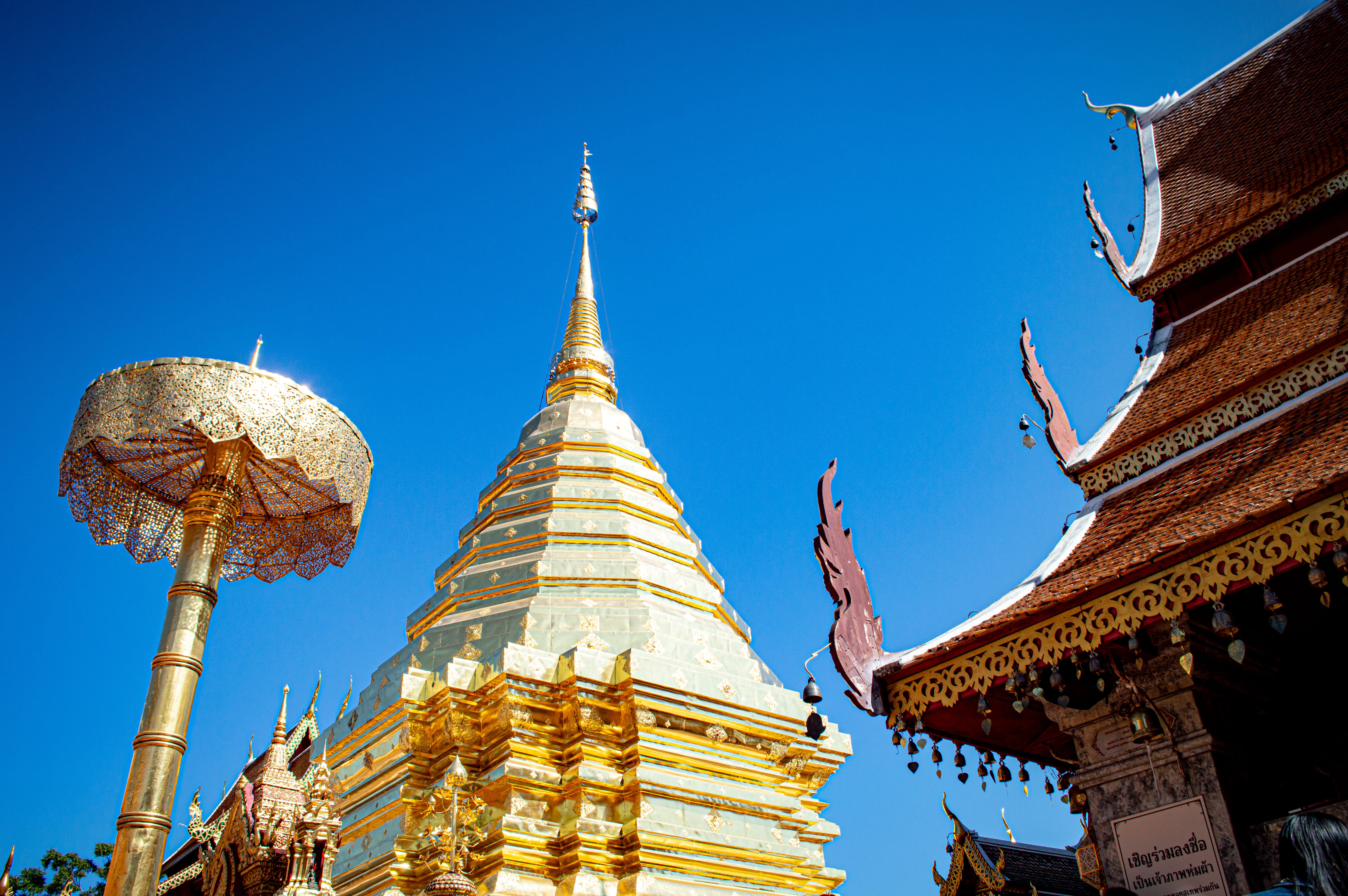

Doi Suthep takes a half-day block once you count the uphill transfer, time at the temple and the return. Put those pieces in the calendar first, then see whether an Old City walk, a meal or a weekend market fits around them. The shorter your Chiang Mai stay, the more important it is to give this visit a usable buffer.
Temple closing, the last cable car and the last ride back down are separate checks. A later temple closing does not extend the cable car schedule. If the lift matters to your group, confirm its last trip in both directions; if you would use the stairs, leave enough daylight and time to return without turning the descent into a rush.
What changes between an early start and a late visit
Morning mainly protects the visit from the clock. Plan from your actual hotel area: an Old City, Nimman or riverside pickup creates a different first leg, especially if you must reach a shared-ride meeting point. The roughly 40-minute central-city drive quoted by tourism information is only a reference; traffic and your starting address change the journey.
Earlier departure also leaves more room to pause at the stairway, upper courtyard and viewing terrace without watching the time. The main approach includes a long naga-flanked stairway, while the paid tram provides an alternative for visitors who prefer not to climb. Confirm that it is operating before making it essential to the plan. If someone in your group has limited mobility, ask about the route from the drop-off point to the lift, its operating hours and any steps that remain at the top; a ride to the temple does not automatically make every surface level.
Choose a base around your mountain start
Compare Old City and Nimman stays
An Old City room can suit temple walks before or after the mountain; Nimman may work better for cafés and a western-side start. Check the address against your actual pickup plan and the rest of your Chiang Mai days.
Use the afternoon only with a confirmed way back
Afternoon suits a traveler who wants a slow city morning more than a long temple visit. It can fit after breakfast and one nearby stop, especially when the group would rather avoid an early alarm. Keep the city plan short enough that you can leave on time even if lunch takes longer, and decide in advance which activity you are willing to drop. Trying to finish several Old City temples, return to the hotel and then reach the mountain creates multiple opportunities for a small delay to eat into the temple visit.
Before choosing this version, check the date-specific temple hours and the last available descent by the mode you intend to use. The available published schedules conflict: the Chiang Mai provincial tourism page lists 6:00 a.m.–5:00 p.m., while a Tourism Authority of Thailand listing gives later hours and a separate end time for the tram. Those listings may not reflect a temporary change or a particular service interruption. Use the earlier closing time as your planning boundary, then confirm directly if a later arrival matters. Do not read a later temple closing as proof that the tram, shared ride or your driver will still be available.
If sunset is the draw, plan around the return, not just the light. Mountain weather can hide the view. A private driver is predictable only when you agree on pickup, waiting and latest departure. Ask shared songthaew operators where to board and what return service runs that day. If the answer is unclear, choose morning or arrange a confirmed ride back.
A practical plan for each time slot
Morning plan: On the previous evening, check the current temple and tram information, confirm the pickup point and agree how you will descend. Leave the city with enough buffer for the ride and the stairs or tram queue. Give the temple the time your group actually wants; do not promise a fixed duration when prayer, crowds, weather and mobility needs differ. Return to town for lunch, then choose a light afternoon activity near your hotel. That keeps a slower-than-expected visit from disrupting the rest of the day.
Afternoon plan: Keep the morning in one compact part of town, eat before departure, and pack water and a light layer. Set a departure time that still gives you a meaningful visit before the earlier published closing time. Confirm the return before leaving the city, save the driver or pickup details, and agree on a fallback if the lift or shared service is unavailable. If those checks do not fit your day, move the temple to another morning instead of turning the final hour into a race.
For groups with different energy levels, settle the transport choice before reaching the staircase. One person may be happy to climb while another needs the tram; agree on a meeting point at the top and leave time for everyone to rejoin. Wear clothing suitable for a working religious site, carry a layer for changing mountain conditions, and keep the visit respectful while worship is taking place. These practical choices matter more than squeezing an extra attraction into the same half-day.
Plan the night around your return
Find a Chiang Mai base that fits the evening
If you expect to return after a late temple visit, compare locations by the ride back and your dinner plan. Old City, Nimman and the Night Bazaar are different bases; check the map and your next morning's first stop before booking.
Keep the temple as the anchor, not a stop between bookings
Choose morning for a larger buffer against delays; choose afternoon only when a slow city start matters more and the return is confirmed. If neither slot leaves enough time for a calm visit, give Doi Suthep its own half-day rather than attaching it to a full-day excursion. A clear view is never guaranteed, so let the temple—not sunset alone—anchor the trip.
That separation matters if you are considering Doi Inthanon, a cooking class or a weekend walking street. Each has its own travel time or operating window. The Sunday Old City walking-street plan is useful for a different evening; it already links back here for travelers deciding where Doi Suthep belongs. For a longer stay, the four-day Chiang Mai itinerary provides more room to separate the mountain visit from other full blocks.
Choose morning when the temple is a priority
Morning makes sense if this is your first visit, your schedule has little spare time, or you would be disappointed to miss the temple. You can spend longer than expected without losing the last part of the day, and a cloudy view does not force you to choose between waiting for clearer skies and racing a closing time. The later slot leaves more room to wait for clearer skies, while visitor levels still depend on the day.
If you arrive in Chiang Mai after an overnight train or a late flight, weigh that fatigue against the value of an early start. A slow first morning may be the sensible choice. In that case, move the visit to another day rather than squeezing it into the final afternoon without checking hours and transport. Our sleeper vs flight guide covers how arrival quality changes the first day.
Afternoon works best after one compact city morning
Keep the morning to a walkable area rather than crossing town between stops. If you are staying in the Old City, choose one temple-and-street circuit, have lunch, then leave on a set schedule. These guides cover useful walking bases: Old City vs Nimman, Tha Phae vs Wat Phra Singh and Chiang Mai Gate vs Tha Phae Gate.
Budget roughly 40 minutes for the drive from central Chiang Mai, then add time for your actual pickup point, traffic, the temple visit and the descent. A shared songthaew and a private car have different return constraints. Decide how you will get down before you go up, and use our songthaew vs private-car comparison to match the ride to your schedule.
Before leaving town, confirm the exact pickup and drop-off points. With a private car, agree whether the driver waits and what happens if your visit runs long. With shared transport, ask where the return ride departs and when service is available; do not assume a vehicle will be waiting after the temple closes.
Do not make a sunset photo the reason to choose this slot. The city view depends on visibility, and a late visit may leave little room if the cable car has stopped or the posted hours on the day differ from what you read in advance. Go for the temple and its setting; treat sunset as a bonus.
Leave another long outing for a different day
Wat Phra That Doi Suthep can be the day’s main outing. Add Wat Pha Lat only if your group has time for the extra stop and transport. A cooking class needs its own block; our half-day vs full-day class guide helps you choose one. If you are considering pairing Doi Suthep with Doi Inthanon, use the same-trip comparison before fixing the route. For several nights in the city, the four-day Chiang Mai plan shows how to give the longer outings separate space.
Saturday or Sunday walking street is another substantial evening, not a quick add-on after a late mountain visit. If that market is a priority, check the Saturday vs Sunday market guide and leave enough time for the descent and dinner.
Sources checked
- Chiang Mai Province tourism page lists the temple hours as 06:00–17:00.
- Tourism Authority of Thailand attraction page describes access via road, stairs, tram and small buses from Chiang Mai University; its published transport details do not establish a guaranteed current departure for a specific date.
- Tourism Authority of Thailand Japanese listing lists later temple hours, an earlier tram window and an approximate central-city drive, demonstrating why a late visit needs date-specific confirmation.
- Source pages checked 12 October 2026. Published hours and service details conflict; confirm with the relevant operator close to travel.